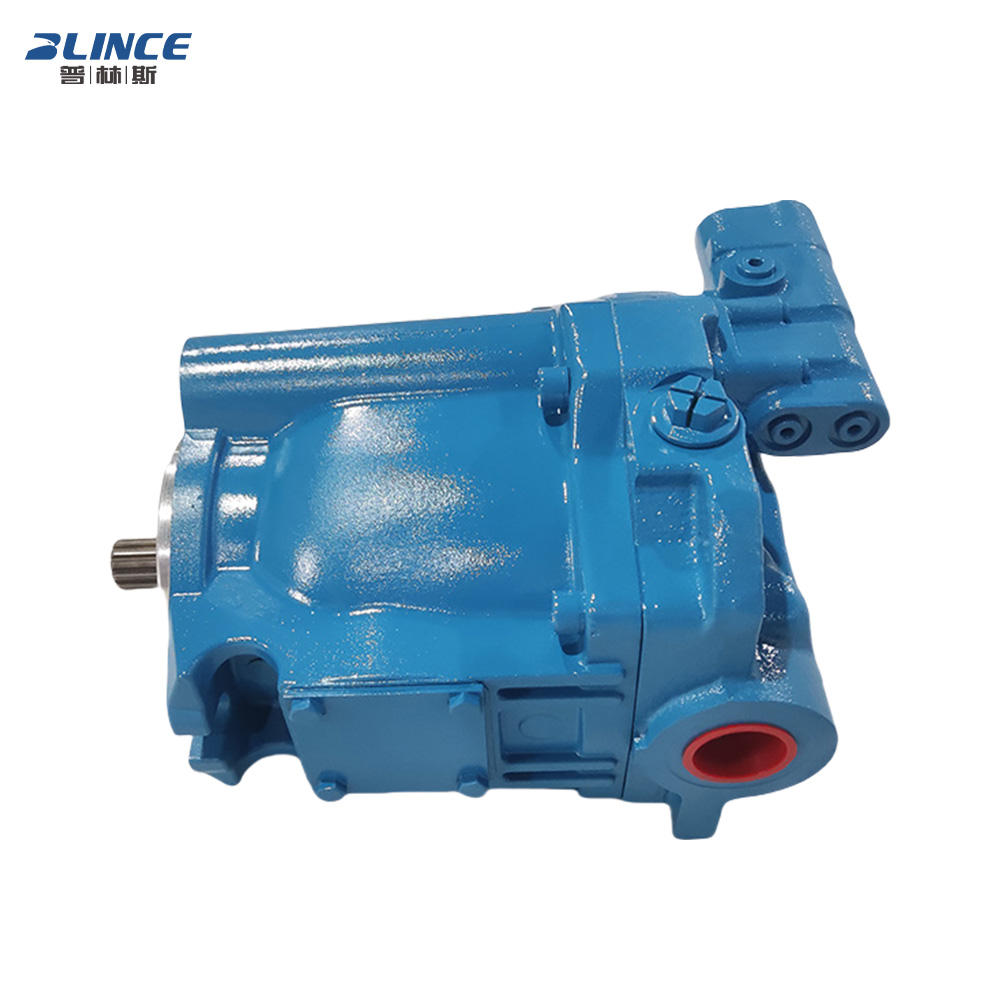
Why Axial Piston Motors Matter in Modern Hydraulic Machinery
In heavy machinery, construction equipment, mining vehicles, marine systems, and industrial power transmission, the axial piston motor is one of the most important hydraulic drive components. Compared with many low-pressure or medium-pressure hydraulic motor designs, an axial piston motor is typically selected when the system requires high pressure, high power density, stable output torque, compact structure, and reliable operation under continuous load.
For equipment manufacturers and procurement buyers in Europe, Southeast Asia, North America, and Hong Kong SAR, selecting the correct hydraulic piston motor is not only a matter of matching displacement or pressure ratings. It also involves understanding the complete working condition: whether the system is open circuit or closed circuit, whether the load changes frequently, whether speed regulation is required, and whether the motor must operate under shock load, high starting torque, or long working cycles.
Axial piston motors are widely used in excavators, road rollers, drilling machines, mining equipment, concrete machinery, forestry machines, agricultural equipment, winches, travel drives, industrial presses, and marine deck machinery. In these applications, the motor converts hydraulic energy into mechanical rotation, delivering torque and speed to the working mechanism.
For global users looking for stable Asia hydraulic components, interchangeable parts, and global hydraulic solutions, understanding the technical logic behind an axial piston motor helps reduce selection errors, improve system efficiency, and extend machine service life.
What Is an Axial Piston Motor?
An axial piston motor is a type of hydraulic piston motor in which pistons are arranged parallel to the drive shaft axis. Pressurized oil enters the motor and acts on the pistons. Through a swash plate or bent-axis structure, the piston force is converted into rotary motion.
The core advantage of the axial piston motor is its ability to operate under high pressure while maintaining compact dimensions and high efficiency. This makes it suitable for heavy-duty systems where gear motors or orbital motors may not provide enough power density or pressure capacity.
Common axial piston motor types include:
Fixed displacement axial piston motor
Variable displacement axial piston motor
Bent-axis piston motor
Swash plate piston motor
Open-circuit axial piston motor
Closed-circuit axial piston motor
A fixed displacement piston motor delivers a constant displacement per revolution. Its output speed mainly depends on flow, while torque depends on pressure difference. A variable displacement piston motor allows the displacement to change during operation, giving the system more control over speed, torque, and efficiency.
Core Technical Parameters for Axial Piston Motor Selection
Displacement
Displacement is one of the first parameters engineers check when selecting an axial piston motor. It is usually expressed in cm³/rev or cc/rev. Displacement determines how much oil the motor consumes per revolution.
A larger displacement axial piston motor generally produces higher torque at the same pressure but runs at a lower speed under the same flow. A smaller displacement motor produces higher speed but lower torque.
In simple terms:
Higher displacement = higher torque, lower speed
Lower displacement = higher speed, lower torque
For equipment such as winches, crushers, travel drives, drilling machines, and heavy-duty rotary mechanisms, displacement must be selected according to the actual load torque, start-up resistance, and expected working speed.
Working Pressure
Pressure directly affects output torque. A high-pressure axial piston motor is commonly used in heavy machinery because many systems operate at pressures above the typical range of gear motors or orbital motors.
When selecting a high-pressure axial piston motor, engineers should consider:
Rated pressure
Peak pressure
Continuous working pressure
Pressure fluctuation
Shock load
Back pressure
Case drain pressure
A motor that only meets the theoretical pressure value may still fail early if the system has frequent pressure spikes, poor filtration, or excessive drain line resistance.
Speed Range
The speed of an axial piston motor depends on flow and displacement. However, the allowable speed range is limited by the internal structure, bearing capacity, lubrication condition, and oil viscosity.
For high-speed applications, attention should be paid to suction conditions, return line pressure, case drain design, and heat generation. For low-speed applications, engineers need to consider starting efficiency, torque ripple, and smooth rotation.
A hydraulic piston motor used in travel drives may require a wide speed range, while a winch or drilling application may require stronger low-speed torque stability.
Efficiency
Efficiency is a critical factor in axial piston motor selection. It affects fuel consumption, heat generation, available torque, and overall machine performance.
Motor efficiency is usually divided into:
Volumetric efficiency
Mechanical efficiency
Overall efficiency
Volumetric efficiency relates to internal leakage. Mechanical efficiency relates to friction losses. Overall efficiency reflects the practical conversion of hydraulic power into mechanical output.
A properly selected axial piston motor can reduce unnecessary heat generation and improve energy utilization, especially in mobile machinery and industrial systems operating for long hours.
Open Circuit vs Closed Circuit Motor Selection
Open-Circuit Hydraulic Systems
In an open-circuit system, the hydraulic pump draws oil from the tank and sends it to the actuator. Return oil flows back to the tank. Open-circuit systems are common in industrial hydraulic power units, auxiliary functions, lifting equipment, and some rotary drive applications.
For open-circuit systems, stability, cooling, filtration, and energy efficiency are important. An open-circuit axial piston motor can be used where continuous rotation, high pressure, and efficient power transmission are required. For example, an open-circuit axial piston motor is often considered in systems where high-pressure operation and energy-saving working conditions must be balanced.
Open-circuit applications often include:
Industrial hydraulic stations
Marine auxiliary drives
Construction machinery attachments
Agricultural equipment drives
Material handling equipment
Rotary tools and mechanical drives
Closed-Circuit Hydraulic Systems
In a closed-circuit system, oil circulates mainly between the pump and motor. This structure is common in hydrostatic travel drives and machines requiring frequent forward and reverse movement.
Closed-circuit systems are widely used in:
Road rollers
Skid steer loaders
Compact track loaders
Mining vehicles
Agricultural harvesters
Forestry machinery
Concrete equipment
Crawler travel systems
A closed-circuit system allows rapid speed and direction control by adjusting pump displacement and flow direction. For heavy-duty travel drives and high-torque closed-loop systems, a variable displacement axial piston motor can help match torque and speed requirements under changing load conditions.
In integrated main hydraulic systems, a closed-circuit axial piston pump motor unit may be used as a technical reference for combined pump-motor configurations where compact structure, high-pressure operation, and system integration are required.
Fixed Displacement Axial Piston Motor Applications
A fixed displacement piston motor provides constant displacement. It is mechanically simpler than a variable displacement piston motor and is often selected when the working condition is relatively stable.
A fixed displacement axial piston motor is suitable for applications where speed control can be achieved by controlling pump flow or valve flow, and where the motor itself does not need to change displacement during operation.
Typical applications include:
Industrial rotary drives
Winch drives
Conveyor drives
Drilling equipment
Mixing machinery
Marine deck equipment
Auxiliary machinery drives
For general high-pressure fixed displacement applications, a fixed displacement axial piston motor can be used as a technical reference when the system requires a compact hydraulic piston motor with stable displacement and high-pressure capability.
The main advantages of a fixed displacement piston motor include simple control logic, predictable speed-torque relationship, and stable output characteristics. However, if the machine requires automatic torque-speed adjustment, a variable displacement piston motor may be more suitable.
Variable Displacement Axial Piston Motor Applications
A variable displacement piston motor changes displacement according to control requirements. This allows the motor to provide high torque at large displacement and higher speed at smaller displacement.
This feature is especially useful in travel drives. For example, when a machine starts moving or climbs a slope, the motor may operate at a larger displacement to provide higher torque. When the machine travels on flat ground, the motor may reduce displacement to increase speed and improve efficiency.
Typical applications include:
Excavator travel drives
Crawler machinery
Road construction machinery
Mining vehicles
Forestry equipment
Hydrostatic transmission systems
Heavy-duty mobile machinery
A variable displacement axial piston motor is often selected when the working condition changes frequently and the machine needs both high starting torque and speed flexibility.
For procurement teams serving Europe, Southeast Asia, North America, and Hong Kong SAR, the variable displacement piston motor is commonly evaluated for heavy-duty mobile equipment where efficiency, reliability, and controllability are important.
Application-Based Selection Guide
Construction Machinery
Construction machinery often works under impact load, contamination risk, long duty cycles, and variable operating conditions. Excavators, loaders, road rollers, drilling rigs, and concrete machines often require a high-pressure axial piston motor because the motor must withstand high torque demand and pressure fluctuation.
For travel drives, a variable displacement piston motor is often preferred because it supports speed-torque adjustment. For auxiliary rotary drives, a fixed displacement piston motor may be sufficient if the load is stable.
Mining Equipment
Mining machinery works in harsh environments with high load, dust, vibration, and continuous operation. A hydraulic piston motor used in mining equipment must have strong bearing capacity, good sealing performance, stable lubrication, and reliable case drain design.
In mining conveyors, drilling machines, crushers, and underground vehicles, the axial piston motor is selected because it can provide high power density in a compact space.
Agricultural and Forestry Machinery
Agricultural and forestry machines often require reliable hydraulic motors for harvesters, seeders, forestry cutters, feed mixers, and travel systems. Working conditions may include dust, mud, temperature variation, and frequent load changes.
For buyers searching for a heavy-duty piston motor for international markets, the most important selection points are pressure rating, speed range, installation interface, displacement matching, and availability of interchangeable components.
Marine and Offshore Equipment
Marine hydraulic systems often use axial piston motors in deck machinery, winches, cranes, steering systems, and auxiliary drives. Corrosion protection, stable low-speed torque, and safe operation under heavy load are important.
A high-pressure axial piston motor used in marine equipment should be selected with careful attention to sealing, drain line routing, oil cleanliness, and cooling capacity.
Industrial Hydraulic Systems
In industrial systems, axial piston motors are often used in presses, test benches, rotary tables, material handling systems, and manufacturing equipment. These systems usually require precise control, stable efficiency, and predictable operating behavior.
For industrial OEMs and system integrators, the choice between a fixed displacement piston motor and a variable displacement piston motor depends on whether the working speed and torque requirements are constant or variable.
Key Installation Considerations
Case Drain Line
Most axial piston motors require a case drain line. The case drain allows internal leakage oil to return safely to the tank. If the drain line is blocked, undersized, or connected incorrectly, housing pressure may increase. This can damage shaft seals, increase temperature, reduce efficiency, and shorten motor life.
The drain line should normally return directly to the tank with minimal back pressure. It should not be connected to a high-pressure return line without checking the motor manufacturer’s requirements.
Oil Cleanliness
Oil contamination is one of the main causes of hydraulic piston motor failure. Axial piston components have precision surfaces, including pistons, cylinder block, valve plate, bearings, and sealing areas.
Contaminated oil can cause:
Internal wear
Reduced volumetric efficiency
Scoring on valve plate surfaces
Abnormal noise
Overheating
Shortened service life
For high-pressure axial piston motor systems, proper filtration is not optional. It is a basic requirement for stable operation.
Oil Viscosity and Temperature
Oil viscosity affects lubrication, leakage, efficiency, and starting performance. If viscosity is too low, internal leakage increases and lubrication may be insufficient. If viscosity is too high, suction resistance, pressure loss, and starting load may increase.
The system should maintain oil temperature within the recommended range. Excessive temperature accelerates seal aging, reduces oil film strength, and increases leakage.
Alignment and Coupling
Incorrect alignment between the motor shaft and driven component can cause bearing overload, vibration, noise, and premature failure. Couplings should be installed according to mechanical alignment requirements, and radial or axial loads should remain within allowable limits.
Operation and Maintenance Tips for Long Service Life
Maintain Proper Filtration
Use filters suitable for the system pressure, flow rate, and cleanliness requirements. Replace filters according to pressure differential indicators or maintenance schedules. A blocked filter can increase pressure drop and may lead to pump starvation or poor system response.
Monitor Drain Flow
Case drain flow is a useful indicator of internal wear. A gradual increase in drain flow may indicate rising internal leakage. Excessive drain flow can reduce motor efficiency and output torque.
For high-pressure axial piston motor systems, regular drain flow inspection helps identify early wear before major failure occurs.
Avoid Long-Term Overload
Even if an axial piston motor can handle peak pressure for short periods, continuous operation near peak pressure can shorten service life. Engineers should distinguish between rated pressure, intermittent pressure, and maximum pressure.
Control Oil Temperature
High oil temperature reduces viscosity, increases leakage, and damages seals. Cooling capacity should match the system’s working cycle and heat generation. In mobile machines, radiator condition and airflow should also be checked regularly.
Check for Abnormal Noise
Noise may indicate cavitation, air in oil, bearing wear, misalignment, excessive back pressure, or internal damage. When abnormal noise appears, the system should be inspected before continued operation.
Confirm Correct Rotation and Port Connection
Before commissioning, confirm motor rotation direction, inlet and outlet ports, drain port position, and circuit type. Incorrect piping may cause immediate malfunction or internal damage.
Global Procurement Considerations
For international buyers, selecting an axial piston motor is not only an engineering decision but also a supply chain decision. Equipment manufacturers and maintenance teams often need interchangeable hydraulic components that can fit existing machines, meet operating requirements, and support long-term service.
A buyer looking for a hydraulic motor supplier Europe may focus on technical interchangeability, documentation, quality consistency, and delivery reliability. Buyers in Southeast Asia may pay more attention to availability, cost-performance balance, and suitability for construction, agriculture, and mining machinery. North American and Hong Kong SAR procurement teams often evaluate both technical compliance and supply chain flexibility.
BLINCE provides reliable, interchangeable hydraulic components suitable for global markets, including axial piston motors, hydraulic pumps, valves, and other system components used in mobile and industrial machinery. In practical selection, the key is to match the axial piston motor to working pressure, displacement, circuit type, installation interface, control method, and actual load profile.
For users comparing Asia hydraulic components with European or North American alternatives, technical interchangeability should always be verified through mounting dimensions, shaft type, port configuration, displacement range, pressure rating, control type, and case drain requirements.
Common Selection Mistakes to Avoid
Selecting Only by Displacement
Displacement is important, but it is not the only parameter. Two motors with similar displacement may have different pressure ratings, speed limits, control methods, shaft designs, and bearing capacities.
Ignoring Circuit Type
An open-circuit axial piston motor and a closed-circuit axial piston motor may have different design requirements. Using the wrong motor type can cause poor performance or early failure.
Overlooking Case Drain Pressure
Excessive case drain pressure is a common but often ignored cause of seal failure. The drain line must be properly sized and routed.
Underestimating Heat Generation
A hydraulic piston motor operating at high pressure and high flow can generate significant heat. If cooling is insufficient, the system may lose efficiency and damage components.
Confusing Fixed and Variable Displacement Needs
A fixed displacement piston motor is suitable for stable operating conditions. A variable displacement piston motor is better when speed and torque requirements change frequently. Selecting the wrong type can reduce efficiency or limit machine performance.
FAQ: Axial Piston Hydraulic Motors
1. What is the main difference between an axial piston motor and a gear motor?
An axial piston motor is generally suitable for higher pressure, higher power density, and more demanding working conditions. A gear motor is simpler and often used in lower-pressure or less demanding applications.
2. When should I choose a fixed displacement piston motor?
A fixed displacement piston motor is suitable when the required speed-torque relationship is relatively stable and displacement adjustment is not necessary. It is commonly used in winches, industrial rotary drives, and auxiliary hydraulic systems.
3. When is a variable displacement piston motor more suitable?
A variable displacement piston motor is suitable for applications requiring both high starting torque and flexible speed control, such as travel drives, hydrostatic transmissions, and heavy-duty mobile machinery.
4. Why does an axial piston motor need a case drain line?
The case drain line returns internal leakage oil from the motor housing to the tank. Without proper drainage, housing pressure may rise and damage shaft seals, reduce efficiency, or cause overheating.
5. Can axial piston motors be used in both open and closed circuits?
Yes, but the motor must be selected according to the circuit design. Open-circuit and closed-circuit systems have different pressure, flow, control, cooling, and drain requirements.
Conclusion: Key Principles for Selecting Axial Piston Motors
The axial piston motor is a core component in many high-pressure hydraulic systems. It is widely used in construction machinery, mining equipment, agricultural machinery, marine systems, and industrial hydraulic drives because it offers high power density, strong pressure capability, and efficient torque output.
When selecting a hydraulic piston motor, engineers and procurement buyers should focus on displacement, pressure rating, speed range, efficiency, circuit type, control method, installation interface, and maintenance requirements. A fixed displacement piston motor is suitable for stable working conditions, while a variable displacement piston motor is better for applications requiring flexible torque and speed control.
For global users in Europe, Southeast Asia, North America, and Hong Kong SAR, successful selection depends on matching the axial piston motor to the real working condition rather than relying only on model numbers or nominal parameters. By considering pressure, flow, duty cycle, load variation, cooling, filtration, and case drain design, equipment manufacturers and industrial buyers can improve system reliability and reduce long-term maintenance risks.
In global hydraulic solutions, the right axial piston motor is not simply a component choice. It is an engineering decision that affects machine efficiency, operating stability, service life, and total system performance.