Hydraulic hoses and fittings are the lifelines of industrial hydraulic systems, enabling the transfer of high-pressure fluid that powers heavy machinery. In Belt and Road Initiative countries – spanning Russian-speaking regions to Spanish-speaking nations – these components are critical in construction, agriculture, heavy machinery, and industrial automation projects. Hydraulic hoses connect pumps to actuators, while fittings join hoses to equipment; if a hose or fitting fails, an entire operation can grind to a halt. Selecting the right hose and fitting for the job is therefore essential to avoid costly downtime and safety hazards. Working with a trusted hydraulic hose supplier (like Blince) and understanding key selection factors will help ensure your hydraulic system remains safe, efficient, and reliable.
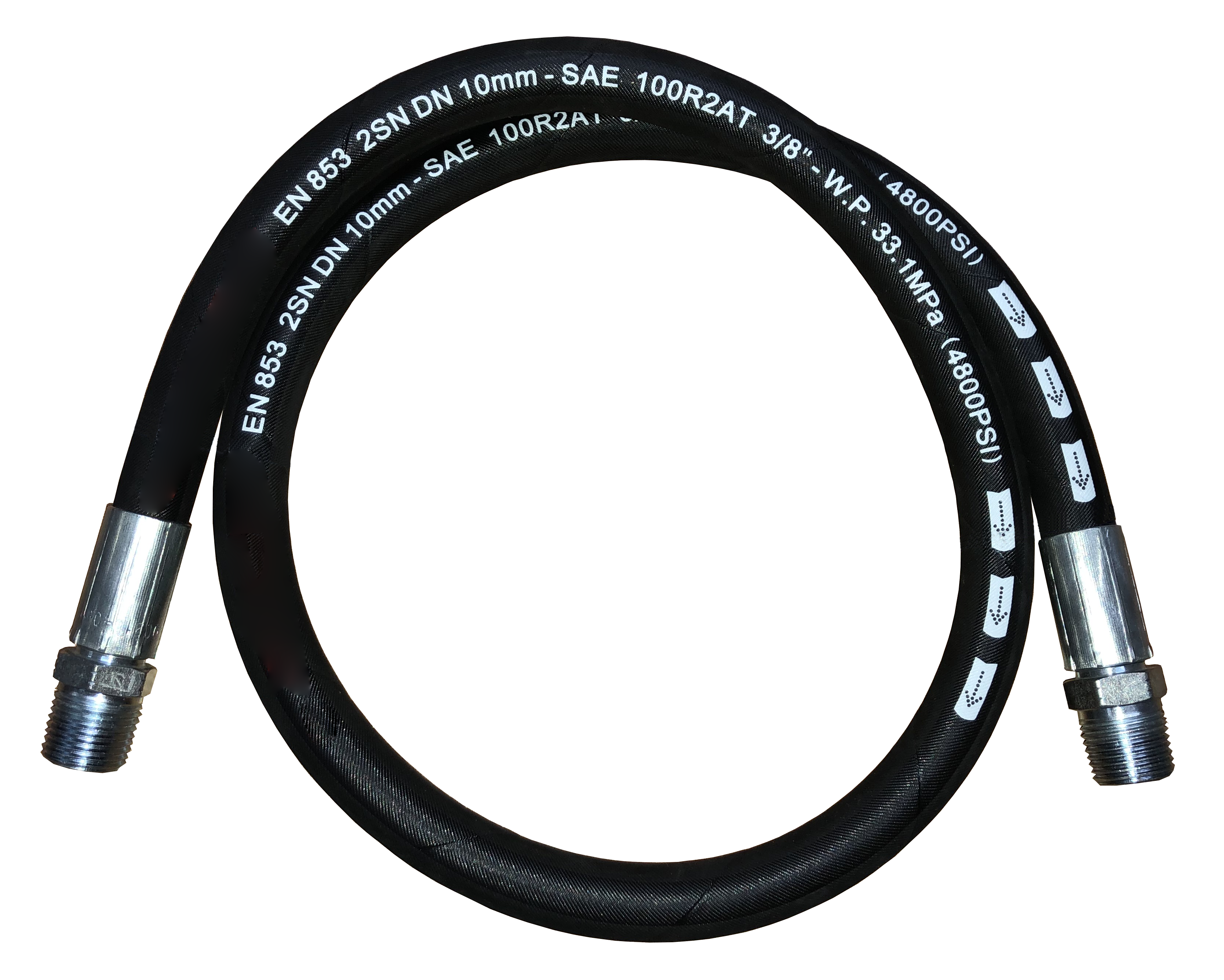
In this guide, we’ll explain how to correctly choose hydraulic hoses and fittings for industrial use. We’ll cover the key factors in industrial hydraulic hose selection (such as pressure, diameter, temperature range, and bend radius), highlight common failure risks (and how to avoid them), share tips for proper installation and maintenance, and discuss why quality matters for longevity, safety, and performance. By the end, you’ll know how to pick the right Blince hydraulic components for your needs – keeping your equipment running smoothly whether you’re managing Belt and Road construction equipment or agricultural machinery in remote regions.
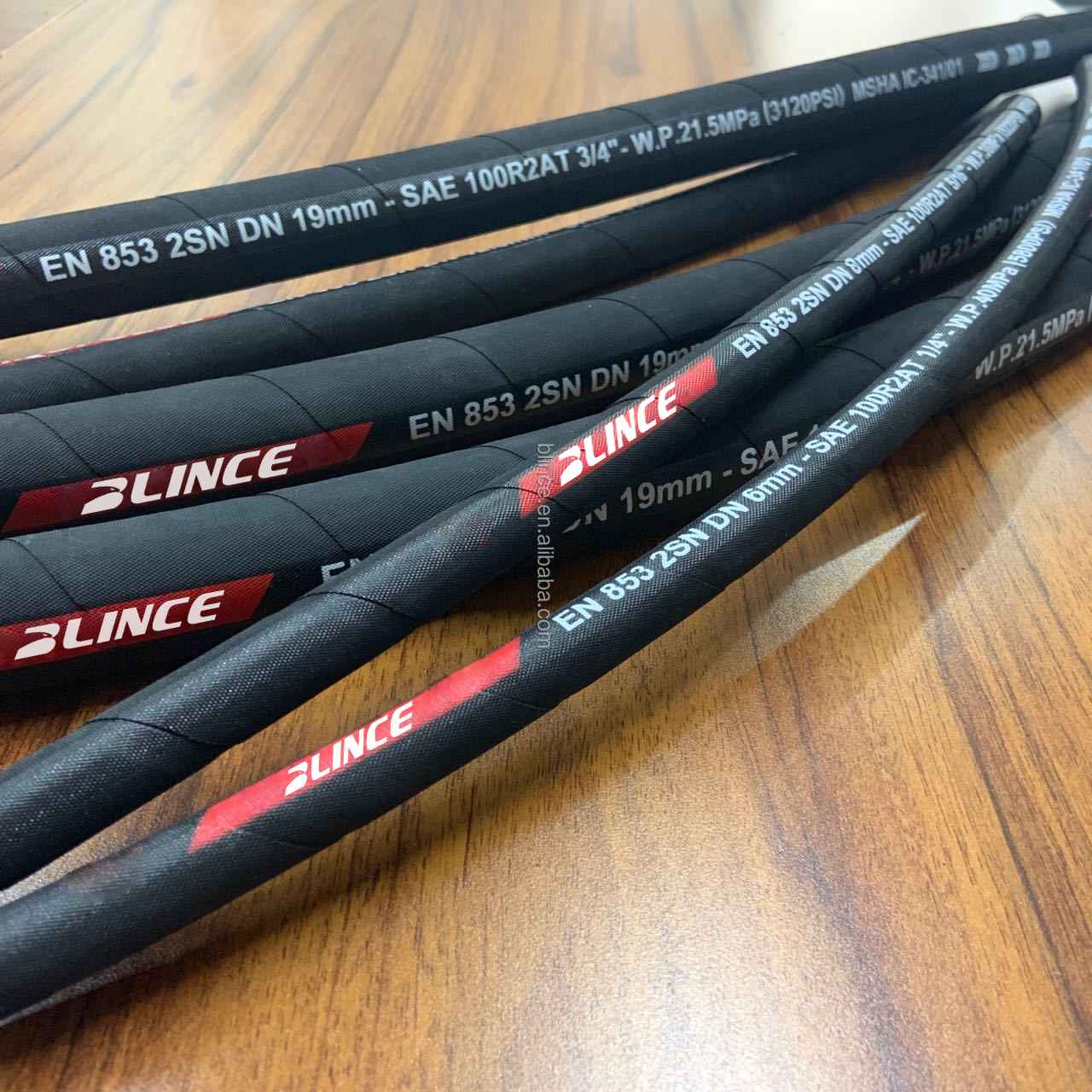
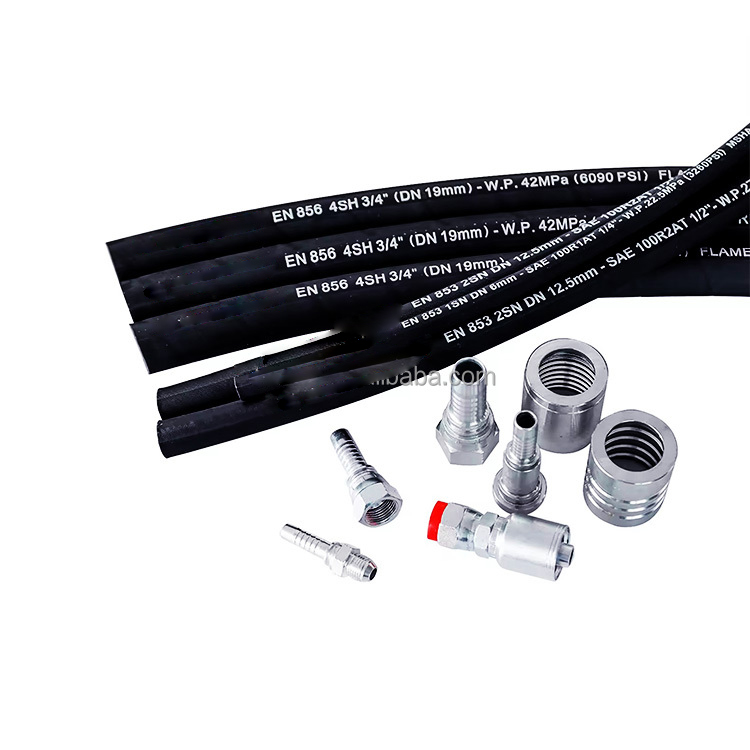
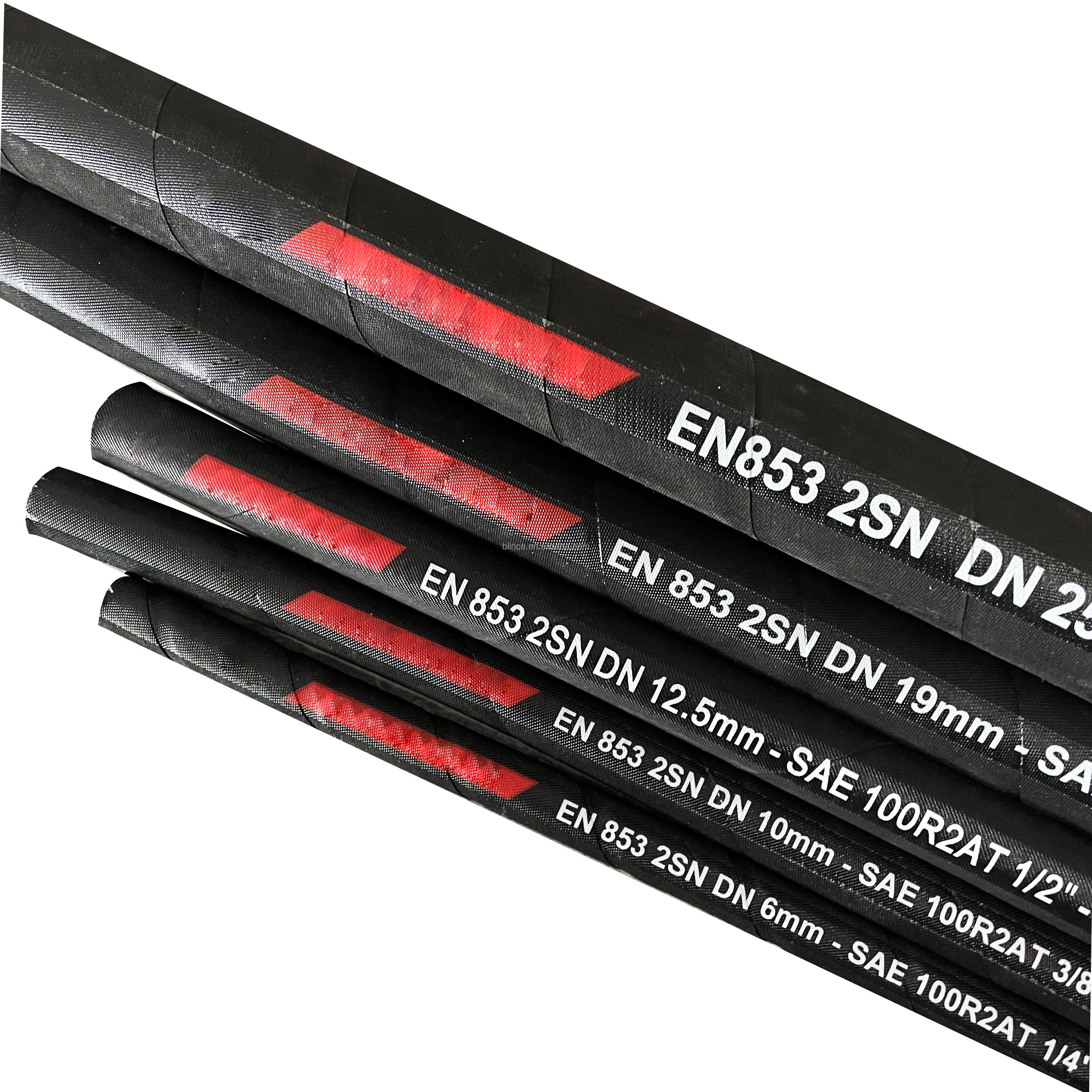
Typical hydraulic hoses (EN 853 2SN type) with specifications (size and pressure rating) printed on the cover. These markings help ensure the hose meets the required standards and working pressure. Selecting hoses and fittings that meet or exceed your system’s requirements is crucial to prevent failures and ensure long-term performance.
Industrial Hydraulic Hose Selection: Key Factors to Consider
Selecting the proper hose and fittings for an industrial hydraulic system involves balancing several critical factors. The wrong choice can lead to premature hose failure or inefficient system performance. Below are the key factors in industrial hydraulic hose selection and how they influence your choices:
Operating Pressure: Hydraulic systems can be low, medium, or high pressure, so always verify the maximum working pressure of the hose and fitting. Choose a hose with a rated working pressure equal to or greater than your system’s maximum pressure – including any surge or spike pressures. Using a hose (or fitting) under-rated for pressure can lead to bulging or bursts under load. For example, if your machinery runs at 2500 PSI with occasional spikes to 3000 PSI, the hose and hydraulic fittings for high pressure should be rated safely above that (with a safety margin). Remember that a hose assembly is only as strong as its weakest component – if the fitting is rated lower than the hose, that lower rating becomes the limit. Always match hoses and fittings that both meet or exceed the needed pressure rating.
Hose Size (Inner Diameter): The hose’s inner diameter (ID) must be sized correctly for the flow of hydraulic fluid. An ID that is too small will choke the flow, causing excessive pressure drop, heat generation, and fluid velocity that can damage components or cause leaks. An ID that is too large might reduce pressure and make the system sluggish. In fact, if flow is too slow the system performance is sluggish, and if flow is too high for the hose size it causes excessive pressure drop, potential damage, and leaks. Always follow manufacturer flow rate recommendations (or use a nomogram) to pick the proper hose diameter. Hose size is usually identified by a "dash number" that corresponds to its ID in sixteenths of an inch – for example, a “-12” hose is 3/4-inch ID. Make sure the fitting sizes (ports and thread ends) match the hose ID as well.
Temperature Range: Hydraulic hoses must withstand both the fluid temperature and the ambient temperature of the environment. Every hose has a specified operating temperature range (for example, -40°F to +212°F, or -40°C to +100°C for many rubber hoses). Exceeding these limits will significantly shorten the hose’s life. High temperatures can accelerate hose material degradation – potentially reducing service life by up to 80% and leading to premature failure. Conversely, extremely low temperatures can make the hose materials stiff and prone to cracking. Be sure to choose a hose rated for the maximum fluid temperature in your system and for the hottest (and coldest) ambient conditions it will see. If the hose will be near heat sources (like an engine or exhaust) or under direct sun in a hot climate, consider a higher temp rating or protective heat sleeves. Also ensure the hose’s tube and cover material are compatible with the hydraulic fluid type, especially if you use special fluids or if there’s exposure to chemicals – fluid incompatibility is a leading cause of hose failure.
Bend Radius and Flexibility: Hydraulic hoses need to route through the machine without kinking. Every hose has a minimum bend radius – the tightest curve it can handle without damage. If you bend a hose tighter than its specified minimum bend radius, you risk kinking the hose, restricting flow, or damaging the hose’s reinforcement layers. Excessive flexing or bending beyond the limit puts extra stress on the hose, opening up gaps in the wire reinforcement and drastically reducing the hose’s pressure capacity. Always check the hose’s minimum bend radius spec (often given for both static and dynamic applications) and ensure your installation respects it. If space is tight, opt for hoses rated for a smaller bend radius or use 90° or 45° elbow fittings and adapters to avoid sharp bends. Also avoid starting a bend right at the hose fitting – use a straight section before the curve to prevent stress at the hose end. In general, more flexible hose constructions (like compact spiral hoses or textile-braid hoses) can help in tight routing situations, but verify they still meet your pressure needs.
In summary, Size, Pressure, Temperature, and Bend are four fundamental selection criteria for hydraulic hoses. These factors are often remembered by the acronym "STAMP," which also includes Application and Media (fluid type) in comprehensive hose selection guides. By choosing hoses and fittings with the right specifications in these areas, you set the foundation for a safe and efficient hydraulic system. Always consult the manufacturer’s catalogs or a hydraulic engineer if you’re unsure – it’s far better to select the proper hose upfront than to deal with a failure later.
Common Failure Risks and How to Avoid Them
Even with the correct hose and fitting selection, improper use or installation can lead to premature failures. Hydraulic hoses operate under tough conditions – high pressure, constant flexing, heat, and exposure to the elements. Understanding common failure modes and their causes can help you prevent them. Here are some common hydraulic hose failure risks and ways to avoid them:
Abrasion and External Damage: Abrasion is one of the most common causes of hose failure. In fact, studies show up to 80% of hydraulic hose failures are due to external physical damage like abrasion, kinking, or crushing of the hose. Abrasion occurs when the hose’s outer cover rubs against other hoses or sharp edges, gradually wearing through the rubber cover and exposing the reinforcement. Once the wire or textile reinforcement is exposed, it can rust or break, leading to leaks or a burst. Avoiding it: Route and clamp hoses so they don’t rub on other components. Use protective sleeves or spiral wraps on hoses in high-wear areas to shield them. Regularly inspect hose covers for scuffing or areas of wear and replace or re-route hoses showing damage before they fail.
Overpressure Surges: Hydraulic systems can experience pressure surges or spikes above normal operating pressure (for example, when a cylinder suddenly stops or a valve snaps closed). These pressure surges can exceed a hose’s rating and cause it to burst. A common failure mode is a hose burst in the middle of a hose’s length due to a momentary high pressure that the hose couldn’t contain. Avoiding it: Ensure a generous safety margin between your system’s peak pressure and the hose’s max working pressure. If your system has frequent pressure spikes, consider using a hose one pressure class higher or install accumulators/dampers to cushion surges. Always follow the rule of selecting a hose with a working pressure rating >= highest pressure including spikes. Never use a hose (or fitting) that is underrated for the pressure of the application.
Excessive Bending or Twisting: Bending a hose beyond its limits or twisting it during installation will greatly reduce its life. If a hose is forced into a tighter bend than it’s designed for, the inner tube can kink or collapse and the reinforcement can be overstressed, often leading to a burst at that spot. Twisting is equally dangerous – even a slight twist (for example, from not holding the hose straight while tightening a fitting) puts torque on the reinforcement wires. Under pressure, a twisted hose can fail at a much lower pressure or fatigue quickly. In fact, a twist of just a few degrees can shorten hose life dramatically. Avoiding it: Follow proper routing practices: do not twist hoses when installing (the layline printed on the hose should not spiral when installed – it should remain straight to indicate no twist). Use swivel fittings or adapters if necessary to allow the hose to align without twisting. And never exceed the hose’s minimum bend radius – use 90°/45° elbow fittings or reroute to accommodate tight turns.
Improper Assembly or Mismatched Components: Sometimes the failure isn’t in the hose itself but at the hose fitting. If a hose is not crimped correctly or if the wrong type/size of fitting is used, the hose can leak or the fitting can blow off under pressure. Using incompatible or mixed-brand hose and fitting components is a known hazard – for example, trying to crimp Brand X’s fitting onto Brand Y’s hose without proper validation. Avoiding it: Always use the correct hose, ferrule, and fitting combination as specified by the manufacturer. Follow the manufacturer’s crimp specifications and use a calibrated crimp machine or the specified assembly method. It’s critical to use matched components – using improper fittings or mixing different manufacturers’ parts can lead to immediate failure or greatly reduced service life. For threaded fittings, ensure you have the correct thread type (JIC, BSP, ORFS, etc.) and use new O-rings or washers where required to get a leak-free seal.
Extreme Temperatures: Hydraulic hoses can fail if exposed to temperatures outside their design range. High heat will cause the hose’s rubber to harden, crack, or even char. Over time, heat exposure might make the hose brittle and prone to leak or burst. Freezing cold can make hoses equally brittle; a hose that must flex in subzero conditions can crack internally or externally. Avoiding it: Use hoses rated for the temperature of both your fluid and environment (for example, a hose might be rated for 212°F fluid, but only 158°F air temperature for air applications). If your hose runs near a hot manifold or engine, shield it or insulate it. Likewise, for cold climates, consider hoses formulated for low temperature flexibility. Remember that high fluid temperatures accelerate aging (as noted, heat can reduce hose life by 80%), so keeping fluid within allowed temperature or using cooling systems will help. Also avoid routing hoses near external heat sources unless absolutely necessary.
Fluid Incompatibility: Not all hydraulic fluids play nice with all hose materials. For instance, a standard nitrile rubber hose that works fine with petroleum oil may degrade quickly if used with biodiesel or phosphate-ester fluid. Incompatible fluids can cause the inner tube of the hose to blister, swell, or delaminate, eventually leading to leaks or hose rupture. Avoiding it: Always check that the hose’s material is rated for the fluid in your system. Manufacturers provide chemical compatibility charts for hose compounds. Incompatibility between hydraulic fluid and hose tube material is a leading cause of hose failure, so using the specified fluid (or a compatible equivalent) is essential. If you need to use special fluids (like synthetic fire-resistant fluids, or water-glycol), choose hoses designed for those. Signs of chemical attack include soft, spongy inner tubes or cracks and blisters – if you see these during maintenance, replace the hose with a compatible type.
By being aware of these failure modes, you can take proactive steps in hose selection and maintenance to avoid them. Regular inspections are key – look for abrasion marks, leaks at fittings, kinks, twists, bulges, or cracked outer covers. Catching these warning signs early allows you to replace a hose before it fails catastrophically. In the next section, we provide specific installation and maintenance tips to further reduce the risk of hose failures.
Tips for Proper Hydraulic Hose Installation and Maintenance
Proper installation and maintenance practices are just as important as choosing the right hose and fitting. A well-selected hose can still fail prematurely if it’s installed incorrectly or neglected. Below are some essential tips and best practices for installing hydraulic hoses and fittings and maintaining them for long service life:
Get the Length Right: Ensure the hose assembly is the correct length. A hose should have just enough slack to accommodate movement and pressure expansion, but not so much that it droops, snags, or chafes on other parts. If a hose is too short, it will be under tension and could pull on the fittings (potentially causing them to loosen or the hose to stretch and fail). If it’s too long, it may hang and rub on machinery or get caught. Aim for a natural hose routing with a gentle slack – hoses often slightly contract under pressure and lengthen when depressurized, so account for that by not pulling them taut. A properly measured hose will reduce strain on both the hose and its fittings.
Respect Minimum Bend Radius: Route hoses with smooth bends and avoid sharp turns. Never bend a hose tighter than its minimum bend radius, or you risk kinking and internal damage. A too-tight bend can restrict flow and weaken the reinforcement layers, leading to a burst. Use elbow fittings or angled adapters if you need to make a tight turn so that the hose itself isn’t forced into a sharp bend. Also, start any bend a little way out from the fitting – don’t bend right at the hose’s end connections, as this is a stress point. Secure hoses so that bends remain in a single plane if possible (no compound “S” shapes), which avoids twisting and uneven stress.
Avoid Twisting the Hose: When installing, do not twist hoses. A subtle twist might not be visible, but once the system is pressurized, that twist will stress the hose reinforcement and can drastically shorten hose life. One way to ensure no twist is to line up the hose’s branding or layline straight when you install it – it should remain straight, not spiraled, once connected. Use swivel fittings or adapters for moving parts to allow rotation without twisting the hose. If you need to tighten a threaded fitting, use a back-up wrench on hose ends to prevent the hose from twisting as you torque the connection.
Protect Against Abrasion: Route and secure hoses so they won’t rub against other hoses or metal edges. Vibration and movement can cause hoses to chafe through their covers quickly if not protected – abrasion is one of the fastest ways to ruin a hose. Use clamps to hold hoses in place and prevent them from flopping around. Where contact with surfaces is likely, add protective measures: wrap the hose in an abrasion-resistant sleeve or use a spiral wrap. Many hydraulic hoses are available with tough outer covers (labeled “abrasion-resistant” covers) that can withstand wear much longer than standard covers – consider these if your application involves a lot of rubbing or harsh conditions. Preventing abrasion will also help fittings and adapters stay tight, since clamps and proper support reduce vibration at the connections.
Keep Hoses Away from Heat (or Use Shields): High temperatures can bake a hose from the outside just as effectively as hot fluid can from the inside. Avoid routing hoses immediately next to hot engine parts, exhaust manifolds, or other heat sources unless the hose is specifically rated for high ambient heat. If you must route near heat, use heat shields or fire sleeves around the hose and ensure there’s some airflow. Similarly, protect hoses from UV exposure if they will be outdoors in direct sunlight for long periods (UV can degrade rubber over time). There are sleeves and hose covers designed for UV and heat protection. Always double-check that the hose’s temperature rating (for both fluid and environment) covers the extremes of your application.
Use the Right Fittings and Assembly Tools: Always assemble hoses using the proper techniques. For field assembly, ensure you have the correct hose fittings (one-piece crimp fittings, two-piece with separate ferrule, or reusable fittings, as appropriate for the hose type). Use a calibrated crimping machine or the recommended wrench torque for threaded connections. Follow manufacturer instructions for insertion depth and crimp dimensions. A poorly crimped fitting can leak or slip off under pressure, so attention to detail is critical. It’s also wise to stick to one brand or manufacturer’s system for hose and fittings – mixing brands can lead to subtle dimensional mismatches. Using matched hose and fitting components from a reputable supplier (like Blince) ensures the assembly will hold the rated pressure and perform as expected. After assembly, always double-check that the fittings are fully secured and the assembly is clean (no debris inside) before installing in your machine.
Perform Regular Inspections: Implement a preventive maintenance schedule for all hydraulic hoses on your equipment. Visual inspection should be done at least monthly for hoses in regular service, and even weekly for hoses in severe service (like very high pressure or high-vibration uses). Look for signs of wear: abrasions on the cover, exposed reinforcement, leaks at fittings, cracked or stiff areas, blisters or bubbles in the hose, and any significant deformation. Feel for areas that have become excessively rigid or excessively soft. If any of these conditions are present, plan to replace the hose immediately. It’s much cheaper and safer to replace a worn hose at a scheduled downtime than to have it burst unexpectedly during operation. Additionally, keep a log of hose installation dates if possible – many hydraulic hoses have a typical service life of about 5 to 7 years under normal conditions. Even if a hose looks fine externally, consider proactive replacement at the 5-7 year mark (or sooner in harsh conditions) to prevent age-related failures.
Keep It Clean: Contamination is a silent killer of hydraulic systems. When installing new hoses or changing fittings, always keep the internal hose passages and connectors clean. Cap the ends of hoses if you prepare them in advance to prevent dirt ingress. A tiny bit of debris can travel into valves or pumps and cause failures (though not a direct hose “failure,” a clogged orifices or scratched valve from dirt is an unwanted repair). Many equipment owners flush new hose assemblies with clean hydraulic fluid or use foam projectiles (“pigs”) to ensure the hose is absolutely clean internally before hooking it up, especially on high-precision machinery. Also, ensure the area around hose connections is wiped clean before you disconnect old hoses, so dirt doesn’t fall into the ports.
Train Personnel & Be Prepared: Make sure your maintenance team and operators know how to visually check hoses and understand the basics of hose care. Simple training on not using hoses as step ladders, recognizing a hose about to fail, and safely depressurizing systems before changing hoses can improve safety. It’s also wise to keep some critical spare hoses or a hydraulic hose repair kit on hand – in remote job sites (common in Belt and Road projects), you may not get a replacement immediately. Having the ability to do a temporary fix or quick replacement will minimize downtime. Of course, any repaired or spliced hose is typically a temporary solution; install a proper replacement as soon as possible.
Following these installation and maintenance tips will greatly extend the life of your hydraulic hoses and fittings. A properly routed, well-maintained hose assembly is far less likely to fail unexpectedly. In addition, proactive maintenance reduces the chance of dangerous accidents (like high-pressure fluid injection injuries) and keeps your machinery available for use instead of sitting idle awaiting repairs.
Why Quality Matters – The Impact of Hose & Fitting Quality on Performance
Choosing high-quality hydraulic hoses and fittings is an investment that pays off in the long run. In demanding industrial environments – from mining sites to busy construction projects – the cost of a hose failure can be far greater than the cost difference between a premium-quality component and a cheap one. Here’s why quality truly matters for hose assemblies:
Safety: Above all, using quality hoses and fittings is a safety issue. Hydraulic systems operate at very high pressures (often thousands of PSI). A sudden hose burst or fitting blow-off can release a jet of fluid with explosive force, risking serious injury to nearby personnel and damage to machinery. Quality hoses are built and tested to adhere to stringent industry standards (SAE, EN/ISO, etc.), so they are less likely to rupture under pressure. They also typically include a 4:1 safety factor, meaning the burst pressure is about four times the rated working pressure, for an added margin of safety. Cheap or substandard hoses might not meet these standards consistently. In short, reliable components keep your workers safe and your operation incident-free. As noted earlier, a failing hose can cause not only downtime but also fluid injection injuries or fires if oil sprays onto hot surfaces – the stakes are high. Quality fittings are also precision-machined to thread together correctly and hold pressure without leaking. Using Blince hydraulic components that are manufactured to high standards ensures your hydraulic system can operate safely even under harsh conditions.
Performance and Efficiency: A hydraulic system’s performance depends on maintaining pressure and flow. Leaky fittings or hoses that swell under pressure (a trait of inferior construction) can rob your machinery of power. High-quality hoses have stable dimensions and don’t expand excessively, so the system responsiveness remains sharp and efficient. They are also less prone to internal degradation, meaning they won’t contaminate the hydraulic fluid with rubber particles or debris. Quality fittings maintain a secure seal, keeping the system closed and efficient. When all components are well-made, your hydraulic pump isn’t wasting energy overcoming leaks or pressure drops – so the machine operates at peak performance. This is especially important in precise industrial automation or heavy lifting operations where consistent pressure is required. In summary, quality parts keep your system running at its designed specifications.
Durability and Lifetime: Investing in better hoses and fittings pays for itself by lasting longer and reducing downtime. Premium hydraulic hoses use top-grade rubber compounds, stronger reinforcement wire, and tougher outer covers – all of which contribute to longer service life, especially in extreme environments. They undergo rigorous impulse testing (flexing under pressure) to ensure they can handle hundreds of thousands of pressure cycles. This means you won’t have to replace hoses as frequently, saving on maintenance labor and parts costs over time. Likewise, high-grade steel fittings with proper plating (to resist corrosion) will withstand repeated assembly and harsh conditions without cracking or rusting. For example, a quality hose assembly might last several years in service, whereas a bargain hose could crack after a few months of heavy use. Additionally, reputable manufacturers batch-test their products and maintain quality control, so there’s consistency in what you install. The product lifetime of quality hoses/fittings is simply greater, especially in Belt and Road projects where equipment may be operating in punishing environments (desert heat, muddy fields, freezing winters, etc.). Fewer failures mean fewer project delays – a critical consideration for large infrastructure projects.
Compliance and Standards: High-quality hydraulic components comply with international standards and certifications that ensure compatibility and reliability. For instance, hoses often meet SAE or ISO standards for construction, burst pressure, and impulse life. Using hoses and fittings that meet these standards means they have passed certain minimum requirements in testing. This is important not only for performance but sometimes for legal or warranty reasons – many equipment manufacturers or job sites require replacement parts that are “as good as or better than” the original spec. Cheaper parts might not carry these certifications. In some regions, using certified hydraulic hoses could also be a safety regulation. Quality suppliers will provide documentation for their products’ standards, giving you peace of mind that you’re in compliance and not cutting corners.
Reduced Downtime and Costs: When you use quality hoses and maintain them well, you dramatically reduce the risk of unplanned downtime. Consider the cost of a single hose burst on a piece of construction equipment: not only do you pay for a new hose assembly, but the machine is down (possibly idling a whole crew), there may be environmental cleanup if oil spills, and there’s potential damage to surrounding components. Such failures often happen at the worst times – like in the middle of a project. By spending a bit more upfront on quality, you’re buying reliability. It’s similar to how you wouldn’t want cheap, unreliable tires on a heavy truck – the risk and consequences of failure are too high. In industries and regions where getting spare parts can be slow (remote project sites along the Belt and Road, for example, or import delays in far-flung locations), having durable hoses that don’t fail frequently is incredibly valuable. It ensures your project stays on schedule and your maintenance team can focus on scheduled service rather than emergency fixes. Over the lifetime of a machine, quality hoses and fittings likely save money by needing fewer replacements and preventing breakdowns.
In conclusion, quality matters because it ties directly to safety, performance, and total cost of ownership. Reputable manufacturers (such as Blince) design and test their hydraulic hoses and fittings to meet high standards, which translates into real-world reliability. When you select hoses and fittings, think of it not just as buying a component, but as investing in the uptime and productivity of your equipment. Cutting costs with cheap hoses is a gamble that can lead to dangerous failures or more frequent replacements. On the other hand, specifying high-quality hydraulic components will support the success of your operations – keeping your fluid power system running smoothly in the toughest conditions.
FAQ: Hydraulic Hose and Fitting Selection
Q: What factors should I consider when selecting a hydraulic hose for my system?
A: You should consider several key factors: size (inner diameter) of the hose, the operating pressure it needs to handle, the temperature range (both fluid and ambient) it will be exposed to, and the bend radius/flexibility required for installation. Also account for the type of fluid (to ensure material compatibility) and the application conditions (abrasion, UV exposure, etc.). A common guideline is the STAMP acronym – Size, Temperature, Application, Media, Pressure (and sometimes Ends and Delivery) – which covers the critical selection criteria. By carefully evaluating each of these factors, you can choose a hose that fits your machine’s requirements and will operate safely without premature failure.
Q: Which hydraulic fittings are best for high-pressure applications?
A: Hydraulic fittings for high-pressure systems should be chosen to match the hose’s pressure rating and the system’s requirements. In general, crimped steel fittings are used for most high-pressure hoses (such as those with steel wire braid or spiral reinforcement). These one-piece or two-piece crimp fittings create a permanent, robust connection. Look for fittings that are rated at or above the maximum working pressure of your hose/system. For example, if you have a 4000 PSI hose, use fittings also rated for 4000 PSI or higher. It’s important to use the correct style of fitting for the hose type (e.g., “bite-the-wire” crimp fittings for wire-braid hoses). Also ensure the fitting’s thread or flange type matches your equipment ports. Popular high-pressure fitting types include JIC 37° flare, ORFS (O-ring Face Seal), BSPP, and DIN metric – each system has specific advantages, but none should leak or blow off if properly selected and installed. The key point is that the entire hose assembly (hose + fitting) must be pressure-rated as a unit. The assembly’s maximum pressure is determined by the lowest-rated component, so both the hose and the fitting must be high-pressure rated. Using quality fittings from a reputable supplier (like Blince) that meet SAE/ISO standards will ensure they hold up under high pressure.
Q: How often should I inspect or replace my hydraulic hoses?
A: Regular inspection is crucial for hydraulic hoses. It’s recommended to visually inspect hoses at least once a month in normal operation, and even weekly for hoses in severe service conditions. Look for any signs of damage (abrasions, cuts, cracks, leaks, bubbles, kinks, corroded fittings). Also pay attention to how the hose feels – if it has become very stiff or very soft in sections, that could indicate internal issues. As for replacement, many hoses have an average service life of about 5–7 years under normal conditions. Industry standards often suggest replacing hydraulic hoses every 5 years regardless of outward appearance, because the internal rubber can deteriorate with time. In harsh conditions (high temperature, heavy use, chemically aggressive environments), hoses might need replacement in as little as 2–3 years. Always replace a hose immediately if you find a major issue (e.g., exposed reinforcement wire, leaking fitting, bulging section) rather than waiting. It’s also a good practice to replace all hoses in critical systems on a schedule (preventive maintenance) rather than only after failures. And whenever you replace a hose, also consider if the matching hose on the opposite side of the machine (for example, the other boom cylinder hose) is of the same age – if so, it may be wise to replace that one too, as it could be near end-of-life.
Q: Can I mix and match hose and fitting brands, or should they be the same?
A: It is strongly recommended to use matching hose and fitting brands or at least combinations approved by the manufacturers. While some experienced technicians do mix brands in a pinch, there’s a risk: dimensions and tolerances can vary slightly between manufacturers, leading to improper crimps or fit. Using improper fittings or mixing components from different manufacturers can lead to immediate failure or reduced service life. For instance, the ferrule (collar) from one brand might not crimp correctly onto another brand’s hose, even if the size seems the same, resulting in a weak connection. To ensure a secure, leak-free assembly, stick to one manufacturer’s system or consult compatibility charts. Companies like Blince test their hoses with their fittings to guarantee performance as a set. If you find yourself in a situation where mixing is unavoidable, be very cautious: double-check hose and fitting dimensions, perform a proof test at working pressure, and monitor that assembly closely in service. However, the safest approach is to use the matched hose and fitting combination as specified – this way you maintain the warranty and safety ratings of the assembly.
Q: How tight can I bend a hydraulic hose? What is the minimum bend radius?
A: Each hydraulic hose has a specified minimum bend radius, which is the smallest radius (imagine bending the hose around a cylinder of a certain radius) at which the hose can be bent without kinking or damaging it. This value depends on the hose construction (wire braid vs. spiral, etc.) and size. For example, a 1/2-inch SAE 100R2 hose might have a minimum bend radius around 4 inches (10 cm), whereas a heavier 1/2-inch 4-wire spiral hose might require a larger radius. The hose’s datasheet will list this. You should never bend the hose tighter than its minimum bend radius. If you do, the inner tube can collapse and cut off flow, and the reinforcement can crack or fatigue. It’s also important to note that bending stress is highest right at the fittings, so avoid starting a bend immediately at the hose end – leave a straight section next to the fitting (often about 2x the hose diameter in length) before the bend begins. If you find your installation needs a tighter bend than the hose allows, use a 90° fitting or a different routing to accommodate. As a rule of thumb, design your hose routing to be as gentle as possible; hoses last longer when flexed less. Also remember that the minimum bend radius is often given for the hose in a static condition – if the hose is constantly moving/flexing, using a larger bend radius than the minimum will further prolong its life.
Q: What should I look for in a hydraulic hose supplier?
A: Look for a reputable hydraulic hose supplier who offers quality products, technical expertise, and good support. Key things to consider include: Product Range and Quality – the supplier should carry hoses and fittings that meet international standards (SAE, ISO) and are suitable for your pressure and application needs. Brands like Blince, for example, specialize in a wide range of hydraulic components and adhere to strict quality standards. Technical Support – a good supplier will help you select the right hose and fitting, provide specifications, and even assist with custom assembly if needed. Availability – in regions along the Belt and Road, timely supply is crucial. Choose a supplier who can ensure stock availability or quick delivery of the hoses and fittings you use frequently. Certifications and Experience – check if the supplier has experience with your industry (construction, agriculture, etc.) and whether they have any certifications (like ISO 9001 for quality management, or specific hose assembly training certifications) that indicate professionalism. Local Presence – since your target regions are Russian- and Spanish-speaking areas, it helps if the supplier has local distributors or service centers in those areas, or at least multilingual support. Communication in your preferred language can smooth the process of getting advice or resolving issues. Finally, consider suppliers that offer value-added services like on-site hose assembly, emergency call-out service for hose replacement, or hose management programs. In summary, choose a supplier who is known for quality, reliability, and support – this partnership will help keep your hydraulic equipment running with minimum downtime.


