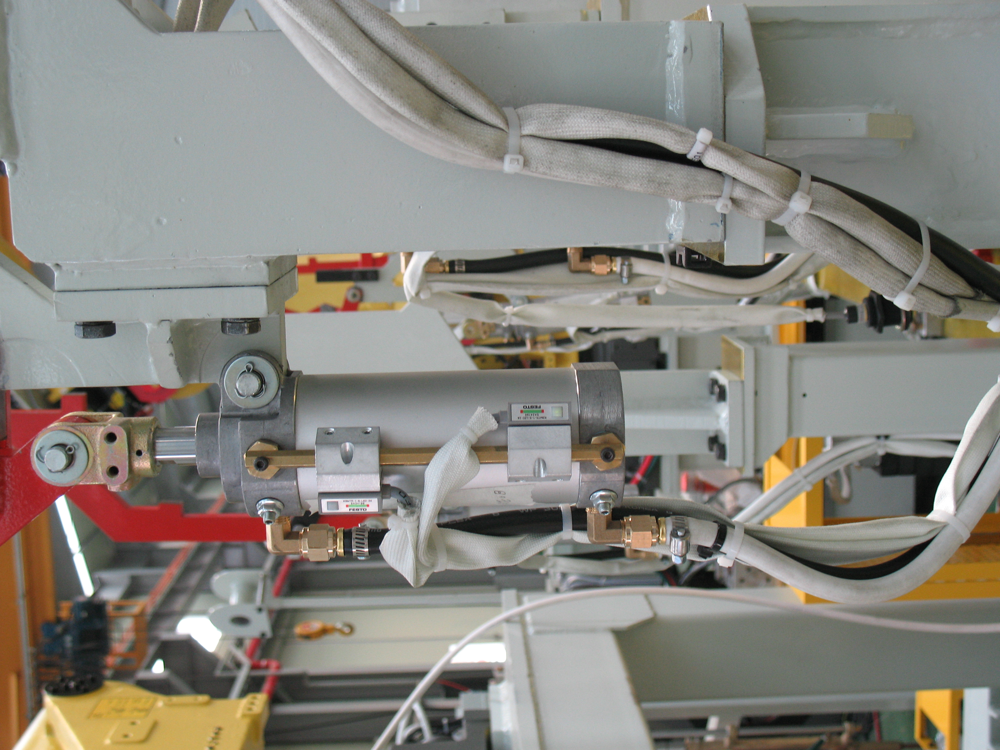
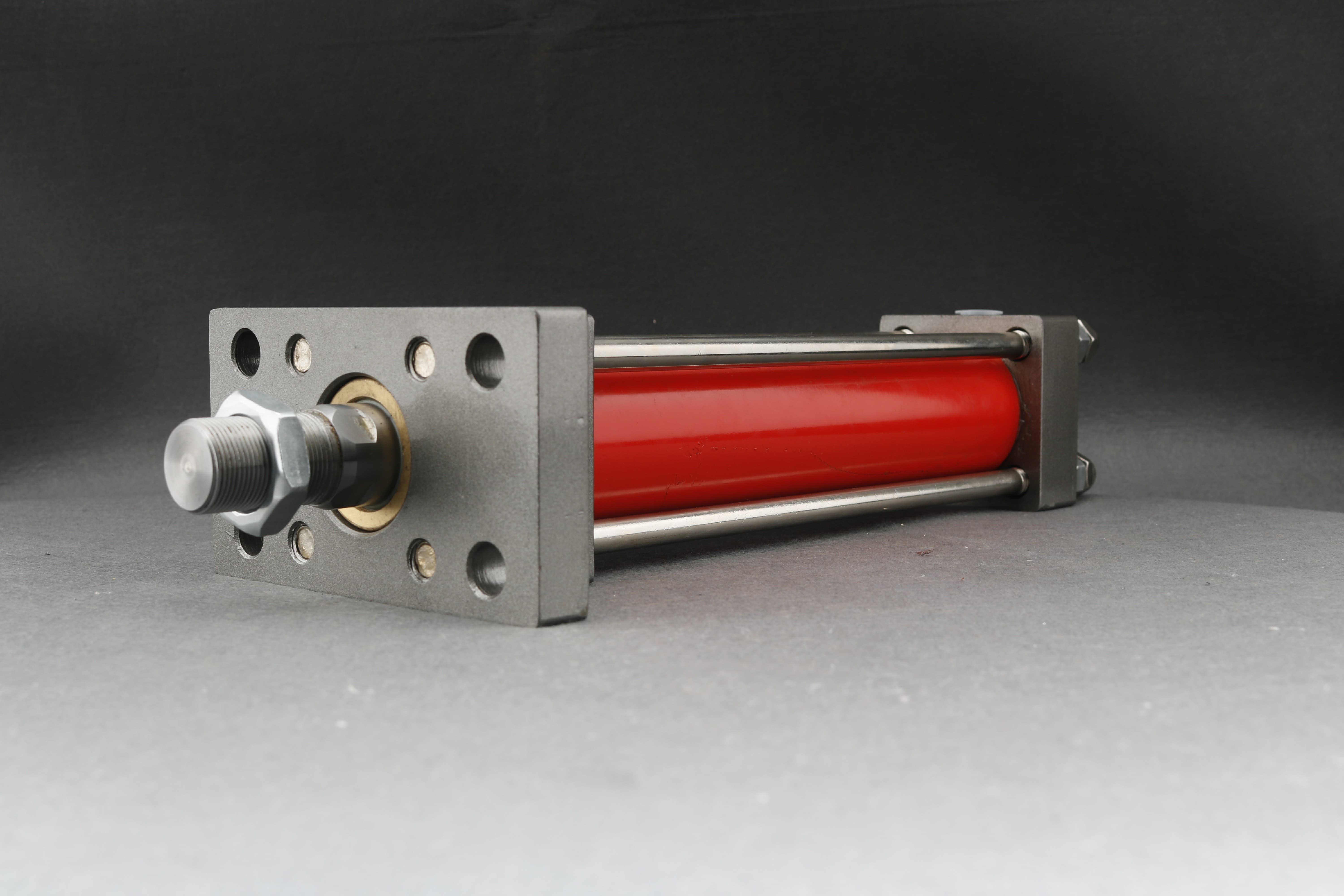
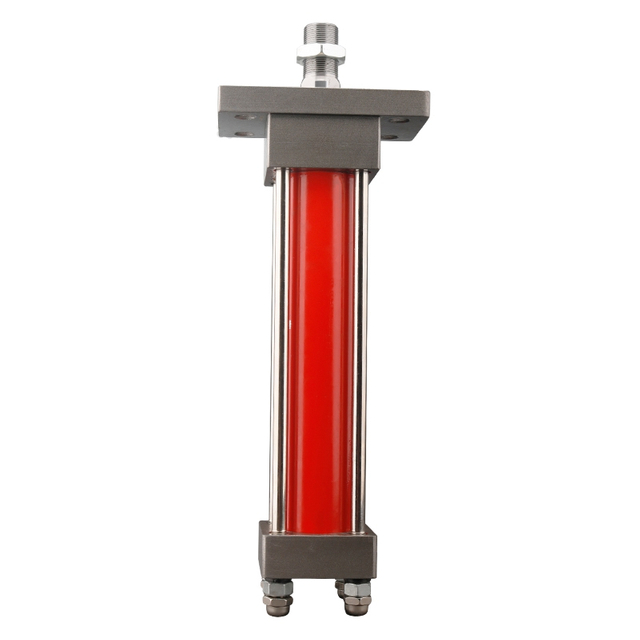
Pneumatic and hydraulic cylinders are essential mechanical actuators that convert pressure (compressed air or hydraulic fluid) into linear motion. These devices form the “muscle” of industrial machinery, powering movements in factory automation, construction equipment, and robotics. Pneumatic cylinders use compressed air and are prized for being quiet, clean, and compact, making them ideal for assembly lines and sanitary environments. Hydraulic cylinders use pressurized oil to deliver much higher force, so they drive heavy-duty equipment like excavators, loaders, and lifts. In manufacturing (especially in Southeast Asia), pneumatic cylinders often open valves, pick up parts, or load/unload conveyor belts, while hydraulic cylinders handle large lifting tasks.
Pneumatic Cylinders (Air Actuators)
A pneumatic cylinder (air cylinder) is a mechanical device that uses compressed gas (usually air) to produce force in a straight-line motiontitan-automation.com. It consists of a cylinder barrel, piston, and rod. When pressurized air enters the cylinder, it pushes the piston and extends the rod, creating motion. Pneumatic systems are popular because they are relatively low-cost and simple to maintain—air leaks do not contaminate or cause damagetitan-automation.com. These cylinders are widely used in manufacturing, packaging, electronics, and food-processing industries, where a clean, quiet operation is important. They come in many types (single-acting, double-acting, telescopic, rodless, etc.) to suit different task.
Operation: Compressed air (typically 80–100 psi) is directed by valves into the cylinder chamber. Air pressure pushes the piston to extend or retract the rod. Designs may use springs (single-acting) or dual ports (double-acting) for motion in both directions.
Advantages: Lightweight and portable, with straightforward installation. They offer fast response and long life with minimal maintenancetitan-automation.com. Pneumatic cylinders are inherently safe for clean or explosive environments (no oil leaks) and work well in small to medium force applications.
Limitations: Air is compressible, so achieving very high forces requires large cylinders. Pneumatic actuators provide less precise control and constant force than hydraulic ones. They’re also sensitive to air supply quality (dryness, contamination).
Hydraulic Cylinders (Fluid Actuators)
A hydraulic cylinder is a mechanical actuator that uses pressurized liquid (usually oil) to generate linear force and motion. It features a robust steel barrel, piston, and rod, sealed to hold hydraulic fluid. Because hydraulic fluid is virtually incompressible, these cylinders can produce very high force and smooth motion under heavy loads. They power the lifting arms of excavators, cranes, tractors, and industrial presses. Hydraulic cylinders often act like the “muscles” of large machinery: when the hydraulic pump forces oil into one side of the piston, the rod extends; releasing or rerouting the oil causes retraction.
Operation: Oil is pressurized by a pump and sent into the cylinder’s cap or rod end. The pressure times the piston area generates force on the rod. Telescoping designs allow long strokes within compact casings.
Advantages: Extremely powerful and controllable at high pressures (1,000–5,000+ psi typical). They handle very heavy loads, making them ideal for earthmoving, construction, and industrial presses. Hydraulic systems can integrate lubrication and cooling, and multiple cylinders can be combined (tandem) for greater force or longer travel.
Limitations: More complex and costly than pneumatics (requires pump, reservoir, seals). Fluid leaks are a concern—oil can contaminate products or cause safety hazards. Routine maintenance is essential to prevent leaks and ensure reliable operation.
Industrial Applications
Cylinders are ubiquitous in industry. Key applications include:
Assembly and Manufacturing: Pneumatic cylinders drive linear motions on assembly lines, handling tasks like stamping, welding, clamping, and pick-and-place. They boost speed and precision in electronics, packaging, and consumer-goods factories. Hydraulic cylinders are used in heavy machinery on the production floor, such as presses and hydraulic presses for molding or metal forming.
Automotive Industry: Factories use both types: pneumatics for robot arms and conveyors (body welding, panel alignment), and hydraulics for high-force operations like stamping body panels and powering hydraulic jacks.
Material Handling & Logistics: Pneumatic actuators open gates, control conveyor stops, and lift small loads in warehouses and shipping facilitiestitan-automation.com. Hydraulic lifts handle heavy pallets, elevators, and dock equipment, where high force is needed.
Construction & Heavy Equipment: Hydraulic cylinders dominate earth-moving (excavators, backhoes, loaders) and lifting equipment for construction. Pneumatic cylinders may assist smaller functions (such as air brakes on trucks or simple lifts).
Infrastructure & Energy: In sectors like rail, wind turbines, and oil & gas, hydraulic cylinders perform tasks such as track leveling, turbine blade positioning, and pipeline valve operation. Pneumatics are used in processing plants for actuating valves and dampers.
Specialized & Consumer: Pneumatic cylinders appear in medical beds, adjustable chairs, and animatronic devices due to their clean, quiet operation. Hydraulics are used in heavy presses for materials, automobile lifts in garages, and hydraulic jacks in industry.
Pros and Cons: Pneumatic vs Hydraulic
Pneumatic Cylinders:Pros: Low cost, simple design, easy maintenance. Safe for clean/medical environments (no oil leaks). They work well for medium-load, high-speed tasks and generate constant force with minimal shock. Cons: Limited force compared to hydraulics; less precise control (air compressibility). Performance can vary with supply pressure.
Hydraulic Cylinders:Pros: Very high force and precise control under load. Ideal for lifting heavy objects and smooth motion in demanding tasks. They can be designed for extremely high pressures (over 10,000 psi in specialized cases). Cons: More expensive and complex (need pumps, filters, fluid). Risk of fluid leaks means extra precautions and maintenance. Heavy and bulky – not as portable as pneumatics.
Leak & Safety: Pneumatic systems leak air (safe) if worn; hydraulic leaks risk oil spills and fire. Therefore, pneumatics are preferred in food, pharmaceuticals, and sensitive manufacturing, whereas hydraulics are used where environmental contamination is not critical.
In summary, manufacturers choose pneumatic cylinders when they need a fast, clean, and cost-effective solution for moderate loads, and hydraulic cylinders when they need maximum power and stiffness for heavy-duty machinery. Both are fundamental in industrial automation worldwide.
Regional Perspectives
Southeast Asia: Rapidly growing manufacturing economies (Thailand, Vietnam, Malaysia, Indonesia) drive demand for pneumatic and hydraulic cylinders. Local factories use pneumatic actuators extensively for automated lines (electronics, assembly, packaging) due to lower cost and ease of maintenancem. Hydraulic systems are common in regional construction and agriculture equipment. China, a key player, produces large volumes of both cylinder types for export.
Central Asia: Industries like oil & gas, mining, and transportation in countries (Kazakhstan, Uzbekistan, etc.) rely heavily on hydraulic cylinders to move massive loads and operate drilling rigs. Pneumatic systems also appear in regional manufacturing plants for material handling and processing, reflecting global trends toward automation.
United States: Hydraulic cylinders are ubiquitous on U.S. construction sites and heavy machinery (excavators, cranes, dump trucks). Pneumatic cylinders power assembly robots, packaging machines, and material handling equipment in factories and warehouses. Both actuator types are integral to the U.S. industrial sector.
Spanish-speaking Countries: In Spain and Latin America, the terms “cilindros neumáticos” and “cilindros hidráulicos” are commonly used. Industries across Latin America (Mexico, Brazil, Argentina) employ pneumatic cylinders in car manufacturing, packaging, and consumer goods lines, and use hydraulic cylinders in mining, utilities, and heavy infrastructure projects. The applications mirror global patterns, adapted to local needs.
FAQ: Regional Applications and Terminology
What are pneumatic cylinders used for in manufacturing in Southeast Asia? In Southeast Asian factories, pneumatic cylinders power conveyor and assembly line motions – for example, pushing, lifting, and positioning components in electronics, automotive, and packaging plants. They handle tasks like stamping, welding, and material transfer quickly and cleanly, which is ideal for high-throughput manufacturing.
Are hydraulic cylinders better for heavy-duty equipment in the US? Yes. Hydraulic cylinders generate far more force than pneumatic ones, making them suited for heavy-duty equipment prevalent in the US, such as excavators, cranes, dump trucks, and factory presses. They lift and move extremely heavy loads that pneumatics cannot.
How are pneumatic and hydraulic cylinders used in Latin America? In Latin America, cilindros neumáticos (pneumatic cylinders) are widely used in automated manufacturing (e.g. automotive assembly, consumer goods) for clean, fast motion, while cilindros hidráulicos (hydraulic cylinders) are used in mining, construction, and agriculture for high-force task. The choice depends on whether the application needs speed and cleanliness (pneumatic) or raw power (hydraulic).
What industries in Central Asia commonly use these cylinders? Central Asian industries like mining, oil & gas, rail, and heavy manufacturing use hydraulic cylinders extensively for drilling operations, pipeline work, and heavy machinery. Pneumatic cylinders are also used in local factories for assembly and material handling, following global industrial practices.
How do terminology and applications vary by region? English-speaking regions use terms like “pneumatic actuator” or “hydraulic cylinder,” while Spanish-speaking areas say “cilindro neumático” and “cilindro hidráulico.” Applications are similar worldwide: regions focus on industries where they have strength (e.g. electronics in Southeast Asia, heavy machinery in Central Asia, automotive in Europe/America), but both cylinder types appear in any region’s automation systems.