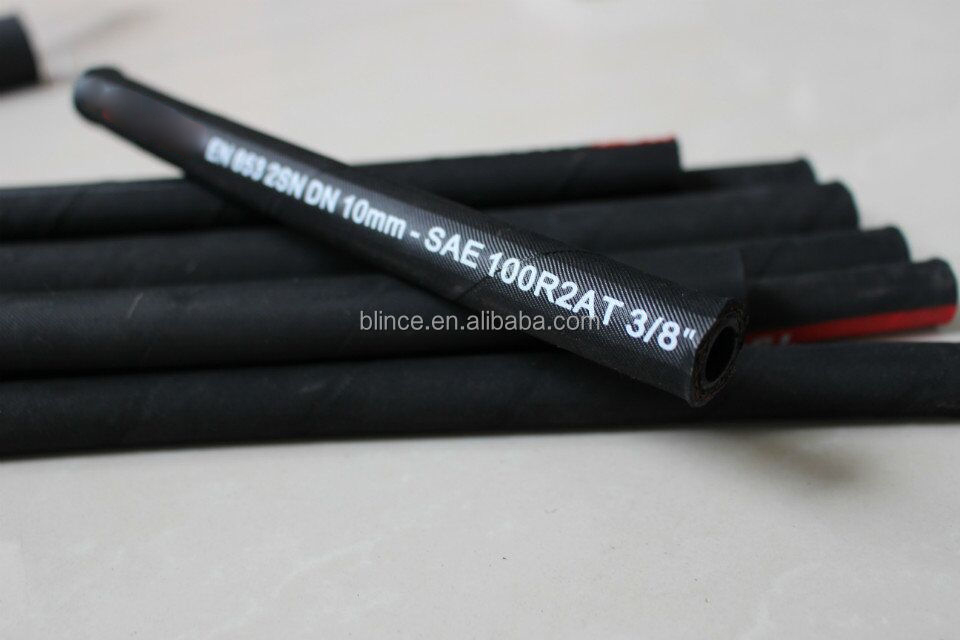
Choosing the right hydraulic hose materials is essential for maintaining system performance, preventing premature hose failure, and controlling maintenance costs. Different materials offer different levels of flexibility, pressure resistance, temperature tolerance, and chemical compatibility. Selecting a hose based on price alone can lead to leaks, material degradation, or unexpected equipment downtime.
The three material categories commonly discussed are rubber, thermoplastic, and PTFE (polytetrafluoroethylene). Each has advantages and limitations depending on the hydraulic fluid, operating conditions, and application requirements.
In this guide, we compare rubber, thermoplastic, and PTFE hydraulic hose materials, explain their key properties, and outline the factors to consider when selecting a hose for industrial equipment, construction machinery, agricultural machinery, and other hydraulic systems.
Table of Contents
Toggle
1. What Are Hydraulic Hose Materials?
Hydraulic hose materials determine how a hose interacts with hydraulic fluid, withstands operating pressure, responds to temperature changes, and resists environmental damage.
A hydraulic hose assembly generally consists of three main components:
Inner tube: Contacts the hydraulic fluid and must be compatible with the fluid being conveyed.
Reinforcement layer: Usually made from textile, synthetic fiber, or steel wire to provide pressure resistance.
Outer cover: Protects the hose against abrasion, weathering, oil exposure, and other external conditions.
The complete hose construction matters as much as the individual material. Two hoses made from similar materials may have significantly different pressure ratings, flexibility, and service requirements because of differences in reinforcement and design.
For this reason, material selection should always consider the hose assembly's specifications rather than the inner tube material alone.
2. Rubber vs. Thermoplastic vs. PTFE Hydraulic Hose Materials
The main differences between these materials relate to fluid compatibility, operating temperature, flexibility, pressure capability, and cost.
2.1 Rubber Hydraulic Hoses
Rubber hydraulic hoses are widely used in industrial and mobile hydraulic systems. Their construction often combines a synthetic rubber inner tube, textile or steel wire reinforcement, and a protective rubber outer cover.
Common rubber compounds include nitrile rubber (NBR), EPDM, and fluorocarbon rubber (FKM). Their properties vary, so the specific compound must be selected according to the fluid and operating environment.
Key advantages:
Good flexibility for routing through machinery.
Suitable for many petroleum-based hydraulic fluids when the compound is compatible.
Available in reinforced designs for demanding pressure requirements.
Protective outer covers can resist abrasion, weathering, and oil exposure.
Widely used in construction, agriculture, mining, and industrial equipment.
Potential limitations:
Compatibility varies significantly between rubber compounds.
Heat, ozone, abrasion, and unsuitable fluids can accelerate degradation.
The outer cover and inner tube may have different resistance characteristics.
Performance depends on reinforcement, hose construction, and the manufacturer's specifications.
Rubber hoses are a practical option for many conventional hydraulic systems, particularly when flexibility, mechanical durability, and established hose designs are important.
For example, the Blince SAE 100 R1AT hydraulic rubber hose uses an oil-resistant synthetic rubber inner tube, steel wire braid reinforcement, and a synthetic rubber outer cover.
2.2 Thermoplastic Hydraulic Hoses
Thermoplastic hydraulic hoses use polymer-based materials for the inner tube and outer layers. Depending on the design, materials may include nylon, polyurethane, and other engineered polymers.
These hoses are often selected when low weight, compact routing, or specific fluid compatibility requirements are important.
Key advantages:
Lightweight construction can simplify handling and installation.
Certain designs offer excellent abrasion resistance.
Polymer liners can provide suitable compatibility with specified fluids.
Some reinforced designs support high-pressure hydraulic applications.
Compact construction can benefit equipment with limited installation space.
Potential limitations:
Temperature capability depends on the specific polymer and hose design.
Chemical resistance varies by polymer and fluid composition.
Minimum bend radius and pressure ratings must be checked for each model.
Compatibility with fittings and connection systems is essential.
Thermoplastic hoses are used in applications such as hydraulic lifts, mobile equipment, and systems that benefit from lightweight hose assemblies.
Blince offers examples of this construction in its SAE 100 R7 / EN 855 R7 hydraulic hose range. The listed construction includes a nylon inner tube, synthetic fiber reinforcement, and a polyurethane outer layer.
This illustrates an important distinction: thermoplastic hoses are not defined by one universal material. Their performance depends on the polymer combination and reinforcement structure.
2.3 PTFE Hydraulic Hoses
PTFE, or polytetrafluoroethylene, is a fluoropolymer known for its broad chemical resistance, low-friction surface, and ability to operate across a wide temperature range in appropriately designed assemblies.
PTFE hoses are often considered for applications involving aggressive chemicals, specialized fluids, or operating conditions that exceed the capabilities of conventional elastomeric materials.
Key advantages:
Excellent resistance to many chemicals.
Low-friction inner surface.
Wide temperature capability when supported by the hose manufacturer's specifications.
Suitable for applications requiring a chemically resistant fluid-contact surface.
Can be manufactured with reinforcement to meet defined pressure requirements.
Potential limitations:
Higher initial cost in many applications.
Reinforcement and assembly design strongly influence pressure capability.
Installation must respect the specified bend radius and handling requirements.
Chemical resistance does not automatically guarantee suitability for every fluid or operating condition.
PTFE hoses are commonly considered for chemical processing, specialized industrial fluid transfer, and selected aerospace or high-temperature applications.
However, PTFE should not automatically be treated as the best choice for every hydraulic system. For conventional hydraulic equipment, a properly specified rubber or thermoplastic hose may provide the required performance at a lower overall cost.
Important: Confirm the manufacturer's pressure, temperature, fluid compatibility, and installation specifications for the complete hose assembly before selecting PTFE.
3. Comparison of Rubber, Thermoplastic, and PTFE Hydraulic Hose Materials
The following table summarizes the general characteristics of these materials. Actual performance depends on the compound, hose construction, reinforcement, and manufacturer's specifications.
Selection factor
Rubber
Thermoplastic
PTFE
Flexibility
Generally good
Depends on polymer and design
Depends on liner and reinforcement
Weight
Moderate
Often lightweight
Depends on construction
Chemical resistance
Compound-dependent
Polymer-dependent
Excellent against many chemicals
Temperature capability
Compound-dependent
Polymer-dependent
Broad range in suitable assemblies
Pressure capability
Available in low- to very-high-pressure designs
Available in specified pressure-rated designs
Depends on reinforcement and design
Abrasion resistance
Depends on outer cover
Often good in suitable designs
Depends on external protection
Initial cost
Often economical
Application-dependent
Often higher
Typical selection priority
General hydraulic service
Low weight and specialized routing
Chemical compatibility and temperature requirements
No material is universally superior. A suitable choice must meet all relevant operating requirements simultaneously.
4. How to Choose the Right Hydraulic Hose Material
Choosing the correct hydraulic hose materials requires evaluating the entire operating environment rather than comparing material names alone.
4.1 Check Hydraulic Fluid Compatibility
Start by identifying the exact fluid used in the system. Petroleum-based hydraulic oils, water-glycol fluids, phosphate ester fluids, and other specialized fluids may require different hose materials.
Check compatibility with both the inner tube and any components exposed to the fluid. Consult the hose manufacturer's chemical compatibility information whenever the fluid contains additives or has an unusual composition.
A material that performs well with one hydraulic oil may not be suitable for a different fluid.
4.2 Confirm Working Pressure and Pressure Spikes
Determine the system's normal working pressure and consider pressure spikes that occur during startup, load changes, or valve operation.
Select a hose with a rated working pressure suitable for the actual system. Do not use burst pressure as the normal operating pressure.
The reinforcement structure is particularly important. Textile reinforcement, wire braid, and wire spiral designs support different pressure requirements.
For example, Blince's EN 856 4SH hydraulic hose uses four layers of steel wire spiral reinforcement. Its published operating specifications vary by hose size, so verify the exact model before selection.
4.3 Evaluate Operating and Ambient Temperatures
Consider the temperature of the hydraulic fluid and the temperature surrounding the hose. Both can affect hose performance.
High temperatures may accelerate aging or reduce pressure capability, while low temperatures can affect flexibility and minimum bend radius.
The acceptable operating range must come from the manufacturer's specifications for the complete assembly. Do not assume every rubber, thermoplastic, or PTFE hose shares the same temperature limits.
4.4 Consider Abrasion and Environmental Exposure
Hoses installed near moving components, sharp edges, or rough surfaces may require enhanced outer-cover protection.
Outdoor machinery may also need resistance to weathering, ozone, and environmental exposure.
Inspect the installation route and consider protective sleeves, suitable clamps, and routing adjustments where necessary.
4.5 Check Bend Radius and Installation Space
A hose that is bent too tightly may experience restricted flow, reinforcement damage, or premature failure.
Check the minimum bend radius specified for the selected hose. Avoid twisting the hose during installation, and ensure fittings do not place excessive strain on the assembly.
If installation space is limited, compare the bend radius and flexibility of the actual hose models rather than relying on material category alone.
4.6 Compare Total Cost of Ownership
The lowest purchase price does not always result in the lowest long-term cost.
Consider:
Initial hose and fitting costs.
Installation labor and assembly requirements.
Expected inspection and replacement needs.
Downtime associated with failures.
Fluid leakage, cleanup, and potential equipment damage.
A more expensive hose may be justified when it addresses a specific compatibility or operating challenge. However, a premium material is not automatically more economical if a lower-cost alternative already meets every required specification.
5. Hydraulic Hose Materials for Different Applications
Different industries place different demands on hose assemblies.
Construction and Agricultural Machinery
Excavators, loaders, tractors, and harvesters often require flexible hoses that withstand pressure, vibration, and external wear.
Reinforced rubber hoses are commonly considered for these applications. The selected model must match the machine's pressure, temperature, fluid, and routing requirements.
Mining equipment and industrial machinery can involve high pressure, continuous operation, abrasion, and challenging environmental conditions.
Wire-reinforced rubber hoses may be appropriate when their specifications match the application. Spiral-reinforced designs should be evaluated where the required pressure and service conditions call for them.
Equipment with limited installation space may benefit from lightweight hoses and compact routing.
Thermoplastic hoses, including suitable SAE 100 R7 and R8 designs, can be considered when their pressure, fluid compatibility, and temperature ratings meet the application requirements.
Applications involving aggressive chemicals or specialized fluids require careful material compatibility assessment.
PTFE may be appropriate for certain demanding chemical environments, but compatibility must be checked against the actual fluid, concentration, temperature, pressure, and hose assembly design.
Do not substitute a general-purpose hydraulic hose for a specialized chemical hose without confirming its suitability.
6. Hydraulic Hose Standards and Quality Checks
Standards help define hose construction, dimensions, performance requirements, and test methods. However, the relevant standard depends on the type of hose and its intended application.
Examples include:
SAE J517: Covers hydraulic hose requirements for applicable hose types.
EN 853: Covers specified rubber hydraulic hose types.
EN 856: Covers specified wire spiral-reinforced rubber hydraulic hose types.
EN 855: Covers specified thermoplastic hydraulic hose types.
Always confirm the current edition and applicability of the standard for the particular hose.
Before purchasing, check the following:
Hose type and applicable standard.
Rated working pressure and required safety margins.
Fluid compatibility.
Operating temperature range.
Minimum bend radius.
Fitting compatibility and assembly requirements.
Manufacturer documentation and applicable quality tests.
A standard designation alone does not guarantee that a hose is suitable for every hydraulic system. The actual model specifications must match the intended operating conditions.
7. Common Hydraulic Hose Material Selection Mistakes
Choosing by Price Alone
A low-cost hose can become expensive if it is incompatible with the hydraulic fluid or cannot withstand the operating environment.
Compare technical requirements before comparing quotations.
Confusing Burst Pressure with Working Pressure
Burst pressure is not the pressure at which a hose should routinely operate. Always use the manufacturer's rated working pressure and follow the applicable system design requirements.
Ignoring the Outer Cover
The inner tube may be compatible with the fluid, but the outer cover can still be damaged by abrasion, weathering, or environmental exposure.
Evaluate the complete hose assembly.
Overlooking Fittings and Installation
Even a correctly selected hose can fail prematurely if fittings are incompatible, the hose is twisted, or the bend radius is too small.
Confirm the complete assembly and installation procedure.
Assuming All Hoses of the Same Material Perform Alike
Rubber compounds, polymer formulations, reinforcement layers, and manufacturing designs vary. Select a specific model using its technical data rather than its general material category.
Conclusion
Selecting the right hydraulic hose materials requires balancing fluid compatibility, working pressure, temperature, flexibility, abrasion resistance, and total ownership cost.
Rubber hoses are widely used in conventional hydraulic systems, while thermoplastic hoses can offer advantages in weight and specialized routing. PTFE hoses are worth considering when chemical resistance or temperature requirements justify their use.
The best choice is the hose assembly that meets the application's actual requirements—not simply the material with the most impressive individual properties.
BLINCE supplies hydraulic components and hose products for a range of industrial and mobile equipment applications. Explore the BLINCE hydraulic hose catalog to review available models, or visit the BLINCE company website to learn more about the company and its hydraulic solutions.
For product selection, prepare your required working pressure, fluid type, operating temperature, hose size, and application details before requesting a quotation.
Frequently Asked Questions
1. What are the main hydraulic hose materials?
The main categories discussed in hydraulic hose selection include rubber, thermoplastic, and PTFE. Each has different characteristics, and suitability depends on the hose design and operating conditions.
2. Which hydraulic hose material is best for high-pressure applications?
There is no single best material for every high-pressure application. Rubber, thermoplastic, and PTFE hose assemblies can have different pressure capabilities depending on their reinforcement and construction. Select a model with an appropriate rated working pressure.
3. Are thermoplastic hydraulic hoses better than rubber hoses?
Not in every application. Thermoplastic hoses may offer lower weight or advantages in specific routing and abrasion conditions, while rubber hoses are widely used for conventional hydraulic service. The correct choice depends on the application requirements.
4. When should I consider a PTFE hydraulic hose?
Consider PTFE when the fluid compatibility or temperature requirements make it suitable. Confirm the hose assembly's pressure rating, temperature range, fittings, and chemical compatibility before use.
5. How do I check hydraulic hose chemical compatibility?
Identify the exact hydraulic fluid, including its composition and concentration where relevant. Consult the hose manufacturer's compatibility information and confirm the acceptable temperature and pressure conditions.