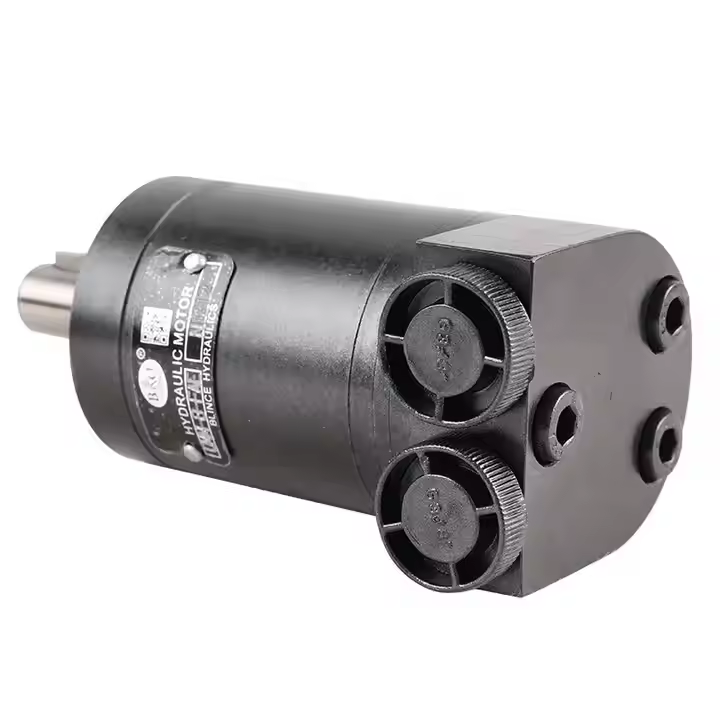
Hydraulic motors are the hidden powerhouses behind many heavy-duty applications. But did you know there are different types, each designed for specific tasks? In this article, we’ll explore the four main types of hydraulic motors—orbital, radial piston, axial piston, and gear motors. You'll learn how each type works, their advantages, and where they’re best used. By the end, you'll be able to choose the right motor for your needs, ensuring optimal performance in your systems.
Hydraulic Orbital Motors
What are Hydraulic Orbital Motors?
Hydraulic orbital motors are a type of hydraulic motor that uses a set of gears to convert hydraulic energy into mechanical rotational energy. These motors operate by using a gear mechanism known as a "gerotor" or "gearset" where an internal rotor rotates within an external rotor housing. The movement of hydraulic fluid causes the gears to rotate, generating torque and driving the motor.
Orbital motors are widely recognized for their compact design and high efficiency. These motors are commonly used in mobile equipment and industrial machinery that require reliable, low-speed, high-torque performance. Their ability to generate a substantial amount of power in a small, lightweight unit makes them a go-to solution for systems that need continuous, smooth rotation with high torque at low speeds.
Features and Benefits of Orbital Motors
Hydraulic orbital motors come with a number of unique features that set them apart from other motor types. Their compact size is one of the most notable features, making them an excellent choice for applications with limited space. Despite their small size, orbital motors are capable of producing high torque, making them ideal for heavy-duty applications where power and efficiency are required.
Some of the key benefits of orbital motors include:
High Torque at Low Speeds: They excel in applications where high torque is needed without requiring high speeds.
Compact and Lightweight: Their design allows them to fit in smaller spaces while still delivering significant power.
Reliability in Demanding Applications: These motors are known for their long service life, even under harsh conditions.
Key Industries Relying on Orbital Motors
Orbital motors are used in a wide range of industries, particularly those requiring compact, efficient power transmission. Some of the primary industries include:
Agricultural Machinery: Used in tractors, harvesters, and other farm equipment.
Material Handling: Conveyor belts and other equipment that require reliable, low-speed power.
Construction Equipment: Excavators, bulldozers, and similar machinery.
Industry
Common Applications
Agriculture
Tractors, Harvesters, Irrigation Systems
Material Handling
Conveyor belts, Rollers
Construction
Excavators, Wheel loaders, Road rollers
Applications of Orbital Motors
Hydraulic orbital motors are versatile and excel in numerous applications, especially in environments where compact size, high torque, and low-speed operation are essential. They are frequently used in systems that demand reliable and continuous motion in a confined space.
Some common applications include:
Mobile and Agricultural Equipment: These motors are used in machines like forklifts, compact tractors, and irrigation systems where they provide consistent power while remaining space-efficient.
Industrial Machinery: Orbital motors can be found in equipment like material handling conveyors and lifting devices, where they provide torque and control in automated systems.
Hydraulic Radial Piston Motors
What are Hydraulic Radial Piston Motors?
Hydraulic radial piston motors are a type of hydraulic motor that features a unique design where multiple pistons are arranged around a central cam. These pistons are powered by hydraulic fluid under pressure, generating torque and converting hydraulic energy into mechanical rotary motion. The motor’s design ensures high efficiency and a smooth performance even under heavy loads.
One of the key distinguishing features of radial piston motors is their ability to handle high torque at low speeds. Unlike other motor types, such as orbital motors, which rely on gears, radial piston motors use pistons arranged radially around a central cam. This design is particularly useful for applications that require a significant amount of torque at low speeds.
Advantages of Radial Piston Motors
Hydraulic radial piston motors are known for their ability to provide high torque in low-speed applications. They offer several advantages that make them ideal for certain industrial applications:
High Torque at Low Speeds: These motors excel in producing substantial torque even when operating at low speeds, making them ideal for heavy-duty machinery.
Heavy-Duty Capability: Radial piston motors are built to handle demanding applications, such as winches or other machinery that experiences heavy loads.
Reliability for Continuous Operation: These motors are designed to operate reliably under continuous use, providing stable and consistent performance over time.
Their robust design and efficiency make them a preferred choice in industries where high power output is needed without sacrificing durability or performance.
Common Applications of Radial Piston Motors
Radial piston motors are commonly used in heavy-duty and high-torque applications across various industries. Their ability to operate at low speeds and provide constant, reliable power makes them invaluable in environments where precision and force are critical.
Some of the key applications include:
Winches and Marine Equipment: Radial piston motors are often used in winches for marine vessels, where high torque is needed to handle heavy loads.
Construction Equipment: Machines like bulldozers and excavators benefit from the radial piston motor’s high torque for digging, lifting, and heavy pushing tasks.
Industrial Applications: These motors are used in equipment such as rolling mills, industrial presses, and other machinery that requires consistent power for heavy-duty operations.
By using radial piston motors, these industries benefit from enhanced power, reliability, and long-term operational efficiency, even under the most demanding conditions.
Hydraulic Axial Piston Motors
What are Hydraulic Axial Piston Motors?
Hydraulic axial piston motors are a type of motor where the pistons are arranged parallel to the motor's shaft. These pistons are powered by hydraulic fluid, and the motion is converted into rotary power through a swashplate or bent-axis design. The main advantage of axial piston motors is their ability to deliver high efficiency and high-pressure performance over a wide range of operating conditions.
Axial piston motors are different from radial piston motors in the way the pistons are arranged. While radial piston motors use pistons arranged around a central cam, axial piston motors have pistons aligned along the axis of the drive shaft. This design allows them to provide better power density, more precise control, and higher efficiency, especially under high pressure and variable load conditions.
Features of Axial Piston Motors
Axial piston motors are known for their exceptional performance and durability. These motors are engineered to work efficiently under high-pressure environments, making them ideal for demanding applications that require continuous operation. Some of the standout features of axial piston motors include:
High Efficiency: These motors offer superior energy conversion, ensuring that the hydraulic power is effectively transformed into mechanical motion, which leads to better performance and lower energy consumption.
Compact Design: Despite their high power output, axial piston motors are compact, making them suitable for applications where space is limited, without compromising on performance.
Wide Operating Range: They can operate at a wide range of pressures, providing versatility across different applications. Their design allows them to maintain optimal performance under both high and low pressure, which adds to their versatility in various environments.
Best Applications for Axial Piston Motors
Hydraulic axial piston motors are used in a variety of industries and applications that demand high efficiency and high torque. Their ability to handle high pressures while maintaining smooth operation makes them a top choice for heavy-duty equipment. Some common applications include:
Excavators and Loaders: Axial piston motors provide the power needed for digging, lifting, and moving heavy materials.
Hydrostatic Drives: These motors are widely used in hydrostatic drive systems, which are found in machines such as tractors, skid-steer loaders, and other mobile machinery.
Wind Turbine Drives: Axial piston motors can be used in the drive systems of wind turbines, where high efficiency and reliable performance are crucial.
Hydraulic Gear Motors
What are Hydraulic Gear Motors?
Hydraulic gear motors are a type of hydraulic motor that converts hydraulic energy into mechanical energy using meshing gears. The hydraulic fluid enters the motor, causing the gears to rotate and generate rotary power. This power is then used to drive mechanical systems or equipment.
Gear motors are known for their simplicity and cost-effectiveness, making them an ideal choice for low-pressure systems. They differ from other hydraulic motor types, such as axial and radial piston motors, which use pistons and more complex mechanisms to generate torque. While gear motors are simpler, they still provide a reliable and consistent power output, but they operate best under lower pressure conditions compared to more complex piston-based motors.
Benefits of Hydraulic Gear Motors
Hydraulic gear motors come with several key benefits, making them a popular choice in industries that require compact and reliable solutions:
Simple, Cost-Effective Solution for Low-Pressure Applications: Gear motors are one of the most affordable and straightforward types of hydraulic motors. Their simple design reduces manufacturing and maintenance costs, making them a popular choice for budget-conscious applications.
Compact Size with Consistent Power: Despite their small size, hydraulic gear motors can provide steady and reliable power. This makes them perfect for applications where space is limited but consistent motor output is still required.
Low Maintenance and Durability: The simple design of gear motors means there are fewer parts that wear out, making them easier to maintain and more durable over time.
Key Applications for Hydraulic Gear Motors
Hydraulic gear motors are widely used in applications where low-pressure operation and reliable, continuous power are essential. Some of the key industrial uses of gear motors include:
Conveyors: Gear motors are commonly used in conveyor systems, providing reliable and consistent movement in industries such as manufacturing, logistics, and packaging.
Power Units: Hydraulic gear motors are often found in power units, where they drive hydraulic systems that power other machinery.
Cooling Fan Systems: Many industrial cooling systems use hydraulic gear motors to drive their fans, ensuring consistent airflow in heating, ventilation, and air conditioning (HVAC) systems.
Hydraulic gear motors provide an efficient, space-saving, and cost-effective solution for industries that need a compact motor that delivers consistent power without requiring high-pressure performance. Their simplicity and reliability make them essential in many industrial and commercial applications.
Conclusion
Hydraulic motors are essential components used in various industries for converting hydraulic energy into mechanical power. The four main types of hydraulic motors include hydraulic orbital motors, radial piston motors, axial piston motors, and gear motors. Each motor type has its unique advantages and is suited for specific applications, such as low-speed high-torque operations or heavy-duty machinery. Blince offers a range of hydraulic motors designed to provide high efficiency, reliability, and performance. The company ensures customers receive products that meet their power transmission needs while supporting seamless integration with other hydraulic components.
FAQ
Q: What are hydraulic motors?
A: Hydraulic motors convert hydraulic energy into mechanical rotational motion. They are widely used in various industrial applications.
Q: How do hydraulic orbital motors work?
A: Orbital motors use a gearset to convert hydraulic fluid into rotary motion, making them ideal for low-speed, high-torque applications.
Q: What are the advantages of radial piston motors?
A: Radial piston motors provide high torque at low speeds and are suitable for heavy-duty applications like winches and construction machinery.
Q: Why are axial piston motors preferred in heavy machinery?
A: Axial piston motors are highly efficient and can handle high pressure, making them perfect for machines like excavators and hydrostatic drives.
Q: What industries use hydraulic gear motors?
A: Hydraulic gear motors are commonly used in conveyors, power units, and cooling fan systems due to their compact size and reliable power output.