Hydraulic hose failures can lead to unplanned downtime, expensive repairs, fluid loss, and serious operator injuries. Effective hydraulic hose protection helps reduce these risks by preventing external damage, improving hose routing, and identifying potential failures before they become critical.
Hydraulic hoses are exposed to abrasion, vibration, pressure fluctuations, extreme temperatures, and repeated bending. Without proper installation and maintenance, these conditions can weaken the hose cover, damage reinforcement layers, and shorten service life.
The right protection strategy combines suitable hose selection, correct routing, protective sleeves or guards, and regular inspection. In this guide, we explain the common causes of hydraulic hose damage, compare available protection methods, and outline practical steps for improving hydraulic system reliability.
Understanding why hydraulic hoses fail is the first step toward selecting effective protection.
1.1 Abrasion and Hose-to-Hose Contact
Abrasion occurs when a hydraulic hose repeatedly rubs against another hose, a metal bracket, a machine frame, or another nearby component. Continuous friction gradually wears away the outer cover and may expose the reinforcement layer.
This problem is particularly common in mobile equipment, compact machinery, and applications where hoses move during operation.
Prevention tips:
Maintain adequate clearance between hoses and surrounding components.
Use suitable abrasion-resistant hose covers or protective sleeves.
Secure hose assemblies with appropriately positioned clamps.
Inspect contact points regularly for wear and exposed reinforcement.
1.2 Pressure Surges and Hose Bursts
Hydraulic systems can experience temporary pressure spikes caused by rapid valve operation, sudden load changes, or other operating conditions. Repeated pressure fluctuations can accelerate fatigue, especially when a hose is incorrectly selected or already damaged.
A hose must be rated for the system's maximum operating pressure, including relevant transient conditions. The pressure ratings of the hose, fittings, and complete assembly must be considered together.
Prevention tips:
Select hoses with suitable working-pressure ratings.
Verify compatibility between hoses, fittings, and hydraulic fluid.
Investigate recurring pressure spikes rather than relying on an external sleeve to compensate.
Replace hoses that show signs of reinforcement damage or other deterioration.
1.3 Excessive Bending, Kinking, and Crushing
Hydraulic hoses need sufficient space to flex during operation. Excessive bending, twisting, or compression can damage the hose structure and restrict fluid flow.
A kink may create localized stress in the reinforcement layers, while crushing can deform the hose and compromise its pressure-carrying capability.
Prevention tips:
Follow the manufacturer's minimum bend-radius specifications.
Avoid twisting a hose during installation.
Allow sufficient movement for articulated or vibrating equipment.
Protect hoses from crushing by moving machine parts and external loads.
1.4 Heat, Chemicals, and Environmental Exposure
High temperatures can accelerate material aging, while incompatible hydraulic fluids or chemicals may cause swelling, hardening, cracking, or other forms of deterioration.
Outdoor installations may also expose hoses to moisture, sunlight, ozone, and changing temperatures.
Choose hose materials and protective covers according to the actual fluid, temperature, environmental conditions, and applicable specifications. An abrasion-resistant cover alone does not guarantee resistance to every chemical or temperature extreme.
2. Hydraulic Hose Routing and Material Selection
Correct routing and suitable hose construction are essential parts of hydraulic hose protection.
2.1 Best Practices for Hydraulic Hose Routing
A well-designed hose route minimizes friction, bending stress, vibration damage, and interference with moving components.
Follow these practices during installation:
Avoid sharp bends. Maintain the specified minimum bend radius throughout the hose's operating range.
Prevent twisting. Align fittings correctly and avoid torsional stress during assembly.
Provide sufficient clearance. Keep hoses away from sharp edges, hot surfaces, and moving parts.
Use suitable supports. Position clamps and brackets to limit excessive movement without pinching the hose.
Allow for machine movement. Check the complete movement range of cylinders, booms, steering systems, and other articulated components.
Inspect the full route. Look for potential rubbing points that may appear only when the equipment is moving.
Hose cover material affects resistance to abrasion, weathering, oils, and other environmental conditions. However, cover performance varies by formulation and product specification.
When comparing hose materials, consider the following factors:
Selection factor
What to evaluate
Abrasion resistance
Resistance to rubbing against machine surfaces and other hoses
Fluid compatibility
Compatibility of the inner tube and other wetted components with the hydraulic fluid
Temperature range
Permitted operating and ambient temperatures
Flexibility
Suitability for the required bend radius and movement
Weather resistance
Exposure to sunlight, ozone, moisture, and outdoor conditions
Pressure rating
Maximum permitted working pressure for the intended application
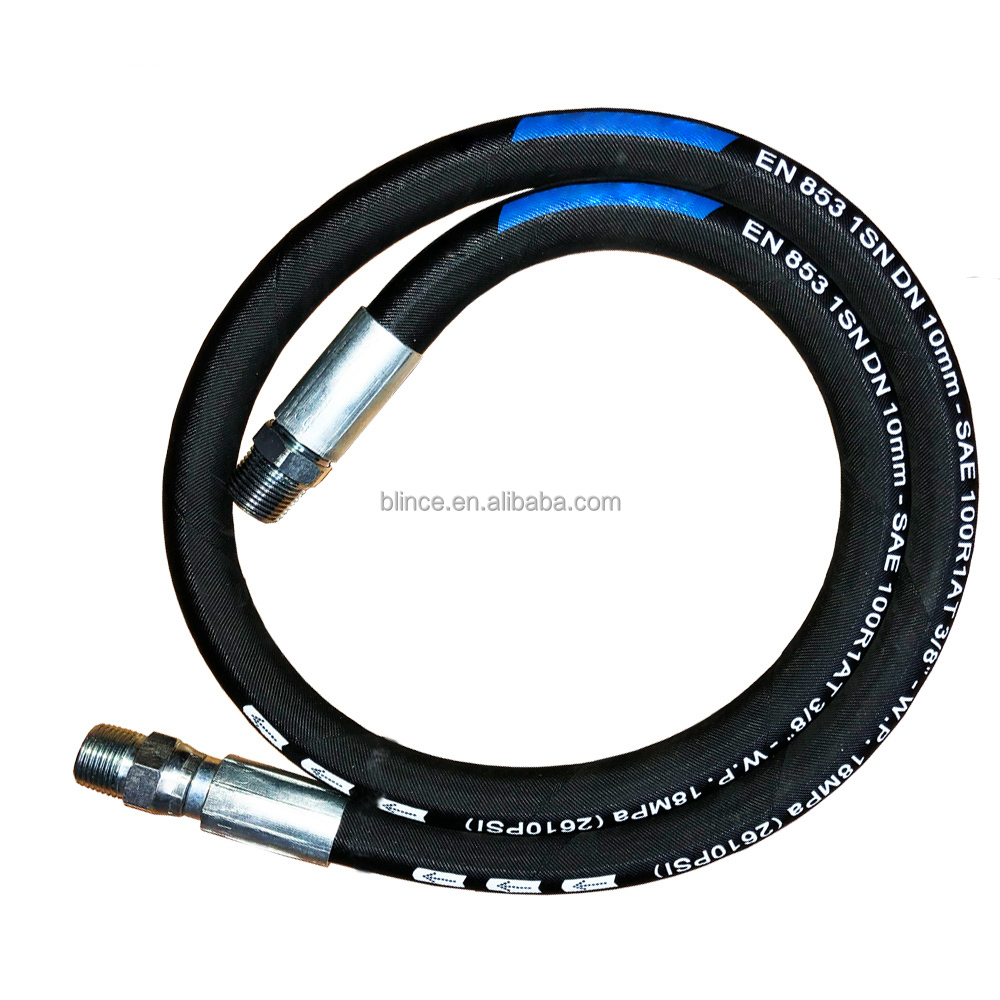
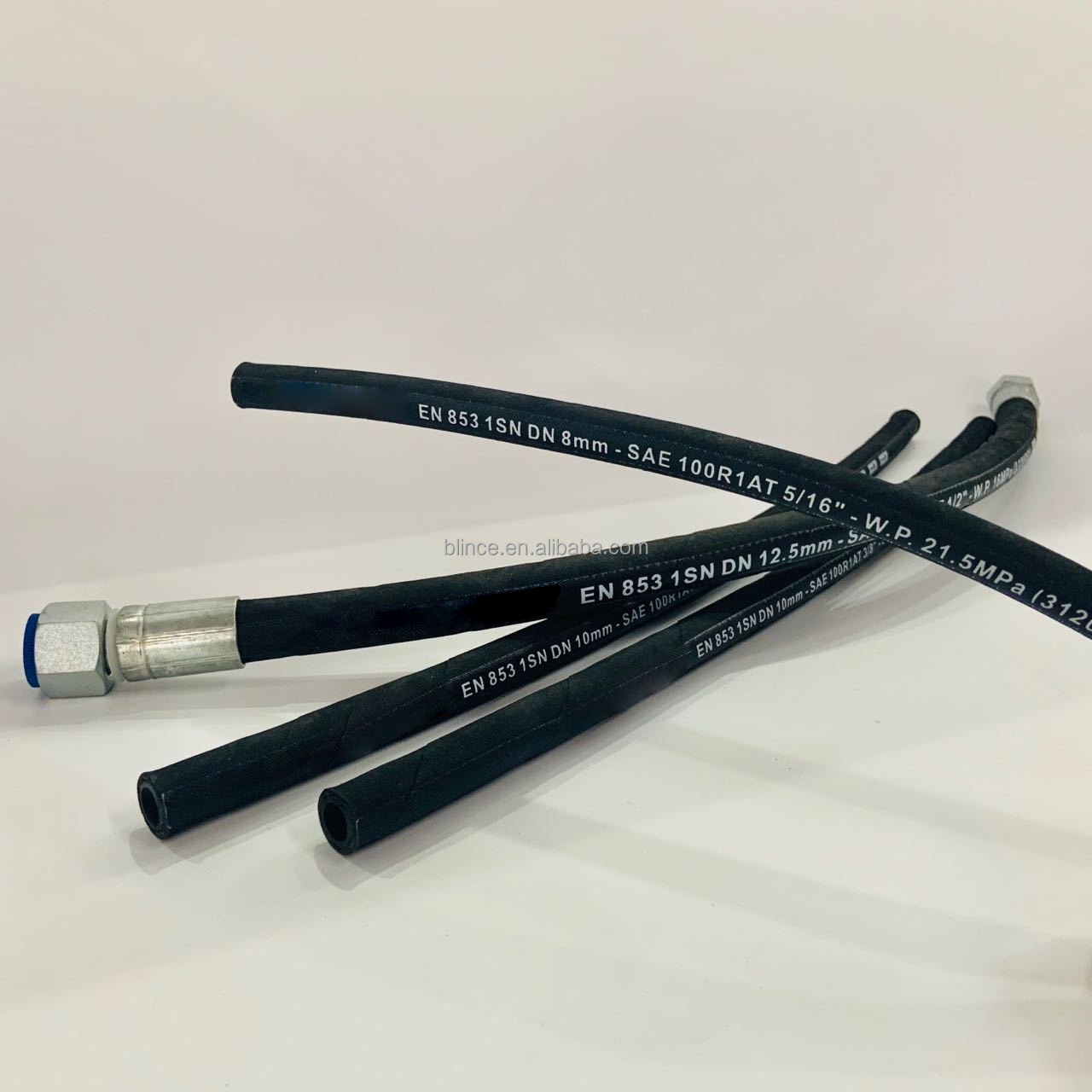
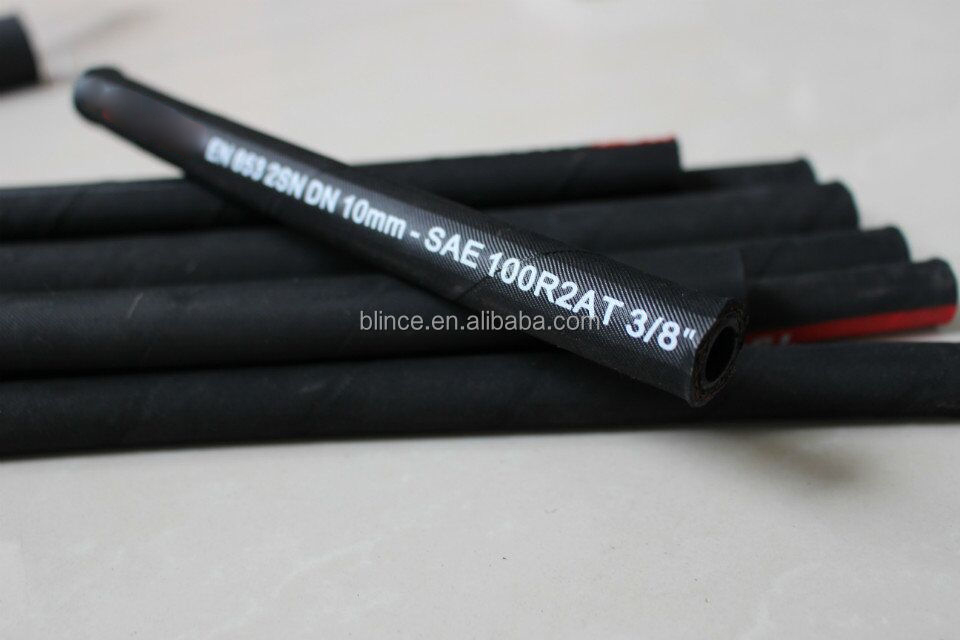
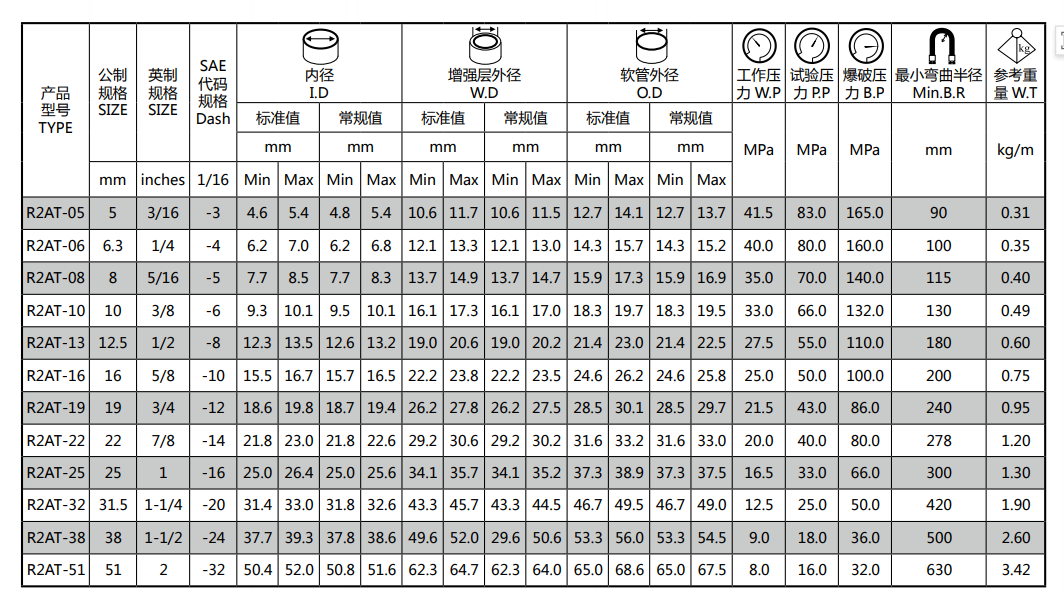
Different hose constructions serve different requirements. For example, BLINCE's SAE 100 R2AT / DIN EN 853 2SN hydraulic hose uses two layers of high-tensile steel-wire braid and an oil- and weather-resistant synthetic rubber cover, according to its product description.
The correct choice should be based on the complete specification rather than cover material alone.
3. Types of Hydraulic Hose Protection Sleeves and Guards
Protective sleeves and guards can reduce external damage, but they are not interchangeable. The appropriate solution depends on the hazard, installation method, and required level of protection.
3.1 Metal Spring Guards
Metal spring guards wrap around a hose to help protect it from external contact, abrasion, and certain forms of localized mechanical damage.
Potential advantages include:
Robust mechanical construction.
Protection at selected contact points.
Suitability for some demanding industrial environments.
However, a metal guard does not eliminate every risk of crushing or kinking. Its shape, fit, installation, and compatibility with the hose assembly must be evaluated.
3.2 Plastic Spiral Guards
Plastic spiral guards wrap around a hose to reduce abrasion and help protect the outer cover.
They are often useful when hoses need additional external protection or when an existing installation requires a retrofit solution.
Potential advantages include:
Lightweight construction.
Corrosion resistance.
Convenient installation on suitable hose assemblies.
Protection against selected forms of rubbing and surface wear.
Spiral guards should not be treated as pressure-containment devices unless the specific product has been tested and rated for that purpose.
3.3 Textile and Nylon Sleeves
Textile and nylon sleeves form a protective layer around one or more hoses. Depending on their construction, they can reduce abrasion and help shield hoses from environmental exposure.
They may be useful in confined installations where hoses pass close to other components.
Before selecting a sleeve, check its abrasion resistance, temperature limits, fluid compatibility, installation requirements, and ability to accommodate hose movement.
Important: Conventional abrasion sleeves are not automatically designed to contain high-pressure hydraulic fluid. Do not assume that an ordinary nylon sleeve will prevent an injection injury if a hose develops a pinhole leak.
3.4 Choosing Protection for Different Applications
Application or hazard
Protection to consider
Important limitation
Repeated rubbing against surfaces
Abrasion sleeve or spiral guard
Inspect the contact area regularly
Hoses moving with machinery
Suitable supports, correct routing, and abrasion protection
Preserve the required bend radius
Hot environments
A hose and protective cover rated for the actual temperature
Verify the complete assembly's limits
Chemical exposure
Compatible hose and protective materials
Confirm chemical compatibility
High-pressure leak or burst hazard near personnel
Purpose-designed fluid-containment guarding or engineered shielding
Verify documented performance and installation requirements
Select protection based on the actual hazard rather than choosing a sleeve based on appearance or price alone.
4. Preventing Hydraulic Hose Leaks and Burst-Related Injuries
4.1 Why Pinhole Leaks Are Dangerous
A small opening in a pressurized hydraulic hose can release a fine, high-velocity fluid jet. The jet may penetrate skin and cause a hydraulic injection injury, even when the wound initially appears minor.
Never use your hand to locate a suspected leak. Depressurize the system according to the equipment manufacturer's procedure before inspecting or servicing a hose.
Suspected hydraulic fluid injection injuries require immediate emergency medical assessment. Do not wait for symptoms to worsen.
4.2 The Limits of Conventional Protective Sleeves
Standard abrasion sleeves are primarily intended to reduce external wear. They generally do not eliminate internal reinforcement fatigue, correct an unsuitable pressure rating, or prevent all hose bursts.
Likewise, an external guard cannot compensate for incorrect routing, excessive pressure, incompatible fluids, or a damaged hose assembly.
For applications where a pressurized leak could reach an operator, consider purpose-designed containment sleeves, rigid shielding, hose rerouting, or other engineered controls. The appropriate solution depends on the operating pressure, temperature, fluid, hose assembly, and personnel exposure.
4.3 Evaluating Advanced Hose Protection Solutions
Advanced hose protection solutions should be evaluated according to their documented performance, operating limits, and compatibility with the hose assembly.
Before choosing a product, verify:
The pressure and temperature conditions covered by its testing.
Compatibility with the hydraulic fluid.
Suitable hose sizes and installation requirements.
Whether the product is designed for abrasion protection, leak containment, or both.
Any maintenance and replacement requirements.
Do not assume that a conventional protective sleeve can contain a high-pressure leak. Use a solution specifically designed and tested for the intended hazard.
5. Hydraulic Hose Protection Standards and Safety Considerations
Standards and regulations help establish minimum requirements for equipment design and operator safety. Their applicability depends on the equipment type, installation, jurisdiction, and standard edition.
ISO 3457 and EN 474-1 are references associated with earth-moving machinery and machine safety. Before applying a specific guarding requirement, consult the current official standard and confirm its scope and relevant clauses.
For mining equipment in the United States, applicable Mine Safety and Health Administration (MSHA) requirements should also be reviewed.
A practical compliance process includes:
Identifying the standards and regulations applicable to the equipment.
Checking hose pressure, temperature, location, and operator exposure.
Selecting guards or sleeves suitable for the identified hazards.
Confirming that any claimed containment performance is supported by relevant test documentation.
Recording inspections, repairs, and replacement activities.
Training personnel in safe hydraulic-system isolation and leak reporting.
Do not assume that a product is compliant simply because it is described as a protective sleeve. Verify the relevant certification, test evidence, and installation requirements.
6. Hydraulic Hose Protection Maintenance and Inspection
Even correctly selected protective equipment requires regular inspection. A sleeve or guard can become damaged, move out of position, or conceal deterioration underneath it.
6.1 Routine Inspection Checklist
During scheduled maintenance, inspect the hose assembly and its protective components for:
Abrasion, cuts, cracking, bulging, or exposed reinforcement.
Kinks, flattening, twisting, or unusual deformation.
Loose fittings, damaged supports, or displaced clamps.
Fluid staining or other signs of leakage.
Cracked, frayed, corroded, or displaced protective sleeves and guards.
Contact with sharp edges, hot surfaces, or moving machine parts.
Where a protective sleeve conceals the hose surface, follow the manufacturer's inspection procedure to check the underlying hose safely.
Never inspect a pressurized leak with your hands or loosen fittings while the system is under pressure.
6.2 When Should a Hydraulic Hose or Sleeve Be Replaced?
Replace a hose assembly or protective component when it has reached its specified service limit or shows damage that compromises its intended function.
Examples include:
A hose with exposed reinforcement, bulging, severe cracking, or other signs of structural damage.
A sleeve with tears or wear that no longer provides the required protection.
A guard or clamp that is broken, loose, or unable to remain correctly positioned.
A hose assembly with evidence of leakage or an unresolved pressure-related failure.
Follow the equipment manufacturer's replacement guidance. A protective sleeve should not be used to conceal a damaged hose or justify continued operation.
6.3 Building a Preventive Maintenance Program
A practical preventive maintenance program should include:
Scheduled inspections based on operating conditions and equipment requirements.
Records of hose installation dates, specifications, and replacement history.
Checks of hose routing after repairs or machine modifications.
Verification of pressure ratings and fluid compatibility when components are replaced.
Training for operators and maintenance personnel.
Prompt investigation of recurring leaks, abrasion, or pressure fluctuations.
Consistent inspection and corrective action can help reduce unplanned downtime and improve hydraulic system reliability.
Conclusion
Effective hydraulic hose protection requires more than adding a protective sleeve. Proper hose selection, correct routing, abrasion control, suitable guarding, and routine inspection all contribute to safer and more reliable hydraulic systems.
The most appropriate solution depends on the operating pressure, temperature, fluid, movement, environment, and potential exposure of personnel. Abrasion sleeves can reduce external wear, while applications involving high-pressure leak hazards may require purpose-designed containment systems or engineered shielding.
BLINCE provides a range of hydraulic hoses for different hydraulic applications. Review the product specifications carefully to identify a hose construction suited to your system's operating requirements.
Hydraulic hose protection includes routing practices, abrasion-resistant covers, sleeves, spiral guards, supports, and purpose-designed containment systems that help reduce hose damage and related safety risks.
2. What is the best way to prevent hydraulic hose abrasion?
Maintain adequate clearance from sharp edges and moving parts, avoid hose-to-hose contact, use suitable abrasion-resistant protection, and inspect high-wear areas regularly.
3. Do hydraulic hose protection sleeves prevent bursts?
Not all sleeves do. Conventional abrasion sleeves mainly protect against external wear. Burst containment requires a product specifically designed and tested for the relevant pressure, temperature, fluid, and hose configuration.
4. How do I choose the right hydraulic hose protection sleeve?
Consider the type of hazard, operating temperature, fluid exposure, hose diameter, movement, installation method, and required protection level. Verify the manufacturer's specifications before selecting a product.
5. How often should hydraulic hoses and protective sleeves be inspected?
Inspection frequency should follow the equipment manufacturer's instructions, applicable safety requirements, and the severity of operating conditions. Inspect immediately if leakage, unusual movement, abrasion, or other damage is suspected.