Ever wonder why hydraulic hose pressure ratings matter so much? Choosing the wrong hose can lead to costly failures, unexpected downtime, and safety risks. Understanding hydraulic hose pressure ratings helps ensure your hose can withstand the demands of your hydraulic system.
This guide explains working pressure, burst pressure, and impulse resistance, while comparing common SAE, EN, and ISO standards. You’ll also learn how temperature, hose construction, and fluid compatibility affect hose selection. Explore our hydraulic hose products to better understand your options and choose a hose that meets your application requirements.
Table of Contents
Toggle
1. Understanding Hydraulic Hose Pressure Ratings
Hydraulic hose pressure ratings indicate the pressure a hose is designed to withstand under specified operating conditions. Selecting the correct rating is essential for maintaining system reliability, protecting equipment, and reducing the risk of leaks or hose failure.
However, a hydraulic hose does not have just one pressure value. Its specifications may include working pressure, burst pressure, proof pressure, and impulse performance. Each describes a different aspect of the hose’s pressure capability.
1.1 Working Pressure
Working pressure is the maximum pressure at which a hydraulic hose is rated to operate under the conditions specified by its manufacturer. It is one of the most important values to check when selecting a hose.
For example, if a hydraulic hose is rated for a working pressure of 3,000 PSI (approximately 207 bar), that rating represents its specified operating limit—not a target that should be exceeded during normal use.
When choosing a hose, consider the system’s maximum operating pressure and any pressure surges that may occur. The hose assembly’s working-pressure rating must meet the requirements of the application, including the ratings of its fittings and connectors.
Operating above the rated limit can accelerate wear, damage reinforcement layers, cause leakage, and increase the risk of sudden failure.
1.2 Burst Pressure
Burst pressure is the pressure at which a hose is expected to rupture during a pressure test. It is generally higher than the working-pressure rating and provides a measure of the hose’s structural strength.
For example, a hose with a working pressure of 3,000 PSI may have a specified minimum burst pressure of 12,000 PSI if its applicable specification requires a 4:1 burst-to-working-pressure ratio.
The exact ratio depends on the relevant hose type and standard. Always verify the manufacturer's technical data rather than assuming that every hydraulic hose uses the same ratio.
Important: Burst pressure is not an allowable operating pressure. A hose must never be selected or operated on the assumption that it can routinely withstand pressure close to its burst rating.
1.3 Proof Pressure
Proof pressure is a test pressure used to check the integrity of a hose or hose assembly under specified testing conditions. The hose or assembly must meet the applicable acceptance criteria at that pressure.
Proof pressure is different from working pressure and burst pressure. It is used for verification and quality control, not as a normal operating limit.
The required proof pressure and test procedure depend on the applicable standard and product specification. Follow the manufacturer's instructions and the relevant test requirements.
1.4 Impulse Pressure and Impulse Resistance
Hydraulic systems often experience repeated pressure fluctuations as pumps, valves, and actuators operate. These repeated cycles can fatigue a hose's reinforcement and other components over time.
Impulse resistance describes a hose's ability to withstand repeated pressure cycles under defined test conditions. It is especially important in equipment such as excavators, loaders, agricultural machinery, and industrial hydraulic systems that operate frequently or under changing loads.
Two hoses with similar working-pressure ratings may have different impulse performance. When selecting a hose for a high-cycle application, check its impulse-test requirements and suitability for the expected operating conditions.
2. Factors That Affect Hydraulic Hose Pressure Ratings
A hose's pressure rating depends on more than its outside appearance or diameter. Construction, size, temperature, fluid compatibility, and operating conditions all influence whether a hose is suitable for a particular system.
2.1 Hose Construction and Reinforcement
Hydraulic hoses use different reinforcement designs to handle different pressure requirements and operating conditions.
Textile-reinforced hoses: Used in applications where the hose design and pressure rating suit relatively lower-pressure hydraulic or return-line duties.
Wire-braided hoses: Commonly used in medium- to high-pressure hydraulic systems. Single- and multiple-wire-braid designs offer different pressure capabilities.
Wire-spiral hoses: Designed for demanding applications that require high pressure resistance and strong performance under repeated pressure cycles.
The actual pressure rating depends on the specific hose type, nominal size, materials, and manufacturer specification. A wire-spiral hose is not automatically the right choice for every high-pressure application; routing, flexibility, temperature, and required impulse performance must also be considered.
2.2 Hose Diameter and Size
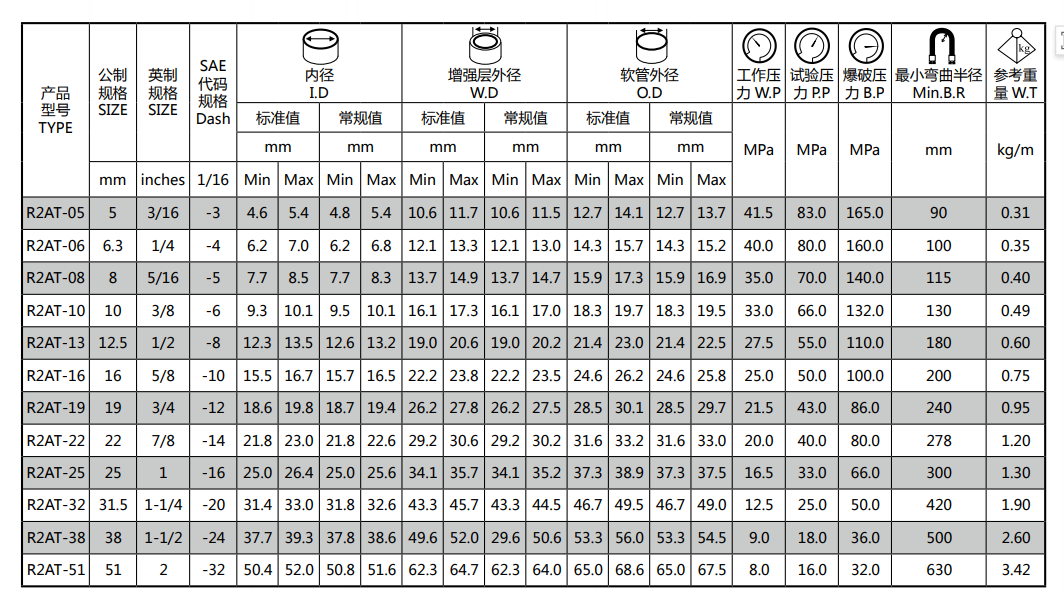
Hose size is another important factor. Within many hose series, the rated working pressure decreases as the inside diameter increases. However, this relationship is not universal across all designs.
For this reason, buyers should never select a hose based on diameter alone. Check the working-pressure rating for the exact hose series and size listed in the manufacturer's technical data.
Hose size also affects flow velocity and pressure loss. An undersized hose can increase flow resistance and heat generation, while an oversized hose may add unnecessary cost or make installation more difficult.
2.3 Temperature
Both the temperature of the hydraulic fluid and the surrounding environment can affect hose performance.
High temperatures may accelerate the aging of rubber compounds, reduce material strength, and shorten service life. Low temperatures may reduce flexibility or affect the hose's ability to bend safely.
A hose's published pressure rating is valid only within its specified operating conditions. If a system operates at elevated temperatures, consult the manufacturer's temperature limits and any applicable pressure-derating guidance.
2.4 Hydraulic Fluid Compatibility
Hydraulic hoses use different inner-tube materials to accommodate different fluids. A hose that is suitable for one hydraulic oil may not be compatible with another fluid or additive package.
Fluid incompatibility can cause the inner tube to swell, soften, harden, crack, or deteriorate. This damage can eventually lead to leakage or failure, even if the system pressure remains within the hose's nominal rating.
Before choosing a hose, confirm compatibility with the hydraulic fluid, additives, concentration, and expected operating temperature.
2.5 Pressure Surges and Operating Cycles
Actual hydraulic pressure may fluctuate as machinery starts, stops, changes direction, or encounters varying loads. Short-duration pressure peaks can place additional stress on a hose and its connections.
A hose that appears suitable based on average operating pressure may not be suitable if the system experiences frequent or severe pressure spikes.
When evaluating a hose, consider the maximum pressure the system can produce, transient pressure peaks, and the frequency of pressure cycles. Where necessary, use appropriate instrumentation or engineering analysis to identify pressure surges that ordinary gauges may not capture.
3. Common Hydraulic Hose Pressure Standards: SAE, EN, and ISO
Standards help manufacturers, equipment builders, distributors, and maintenance teams specify and evaluate hydraulic hoses. They define requirements for hose construction, dimensions, performance, and testing, depending on the standard and hose category.
Three commonly encountered standards families are SAE, EN, and ISO.
3.1 SAE Standards
SAE standards are widely used in North American hydraulic applications and in equipment supplied to international markets.
For example, SAE J517 covers hydraulic hose requirements and includes hose designations such as SAE 100R1, SAE 100R2, and other series. These designations refer to specific hose constructions and performance requirements.
When specifying an SAE hose, verify the complete designation and the pressure rating for the required size. A series name alone is not enough to establish the working pressure of every hose within that series.
3.2 EN Standards
EN standards are European standards commonly referenced in industrial and mobile hydraulic applications.
Examples include:
EN 853: Covers specified types of rubber-covered wire-braid hydraulic hoses.
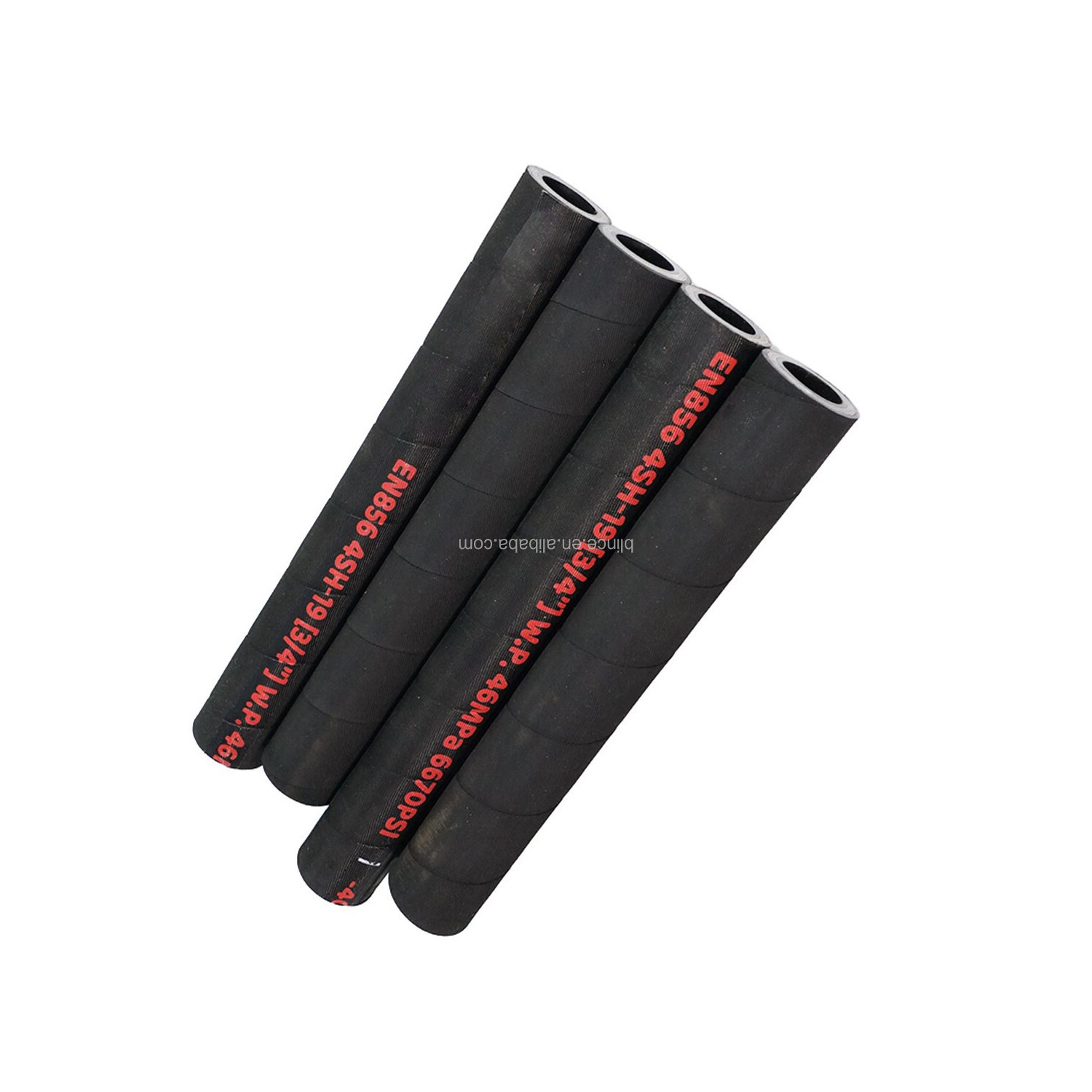
EN 856: Covers specified types of rubber-covered wire-spiral hydraulic hoses.
EN 857: Covers specified compact wire-braid hydraulic hose types.
Each standard covers particular hose designs and requirements. Buyers should check the relevant edition, hose type, size, and manufacturer data when confirming suitability.
3.3 ISO Standards
ISO standards provide internationally used technical requirements and test methods across a wide range of industries.
For hydraulic hoses, the relevant ISO standard depends on the hose construction and application. For example, ISO 18752 addresses rubber hoses and hose assemblies for hydraulic applications and classifies hoses according to specified performance requirements.
An ISO reference should therefore be checked in the context of the exact product rather than treated as a universal pressure rating.
3.4 How Do SAE, EN, and ISO Compare?
Consideration
SAE
EN
ISO
Common use
North American and international equipment
European and international equipment
International specifications and applications
What it defines
Requirements for specified hose types
Requirements for specified hose types
Requirements for specified hose types or test methods
What buyers should check
Exact series, size, and pressure rating
Exact standard, type, and size
Applicable standard, class or type, and size
Can ratings be assumed equivalent?
No
No
No
Although some hose types under different standards may have similar applications, their dimensions, test requirements, and pressure ratings are not automatically interchangeable. Confirm the manufacturer's published specifications before replacing one hose type with another.
4. How to Choose the Right Hydraulic Hose Pressure Rating
Choosing the correct hydraulic hose involves more than matching a pressure number. The hose must meet the system's pressure requirements while remaining compatible with its fluid, temperature, installation layout, and operating cycle.
Follow these steps to make a more informed selection.
Step 1: Determine the Maximum System Pressure
Identify the system's maximum operating pressure, including any pressure peaks that may occur during operation.
Do not rely solely on the average pressure shown by a gauge. Pressure can change rapidly during valve switching, sudden load changes, or equipment startup and shutdown.
Step 2: Check the Hose Working-Pressure Rating
Select a hose whose rated working pressure meets or exceeds the maximum pressure the system can generate under the specified operating conditions.
Do not use burst pressure as the basis for normal operation. If the application involves severe pressure fluctuations, frequent cycling, or other demanding conditions, consult the equipment designer or hose manufacturer for the appropriate specification.
Step 3: Verify the Complete Hose Assembly
The hose is only one component of the hydraulic connection. Fittings, couplings, adapters, and assembly methods also affect pressure capability.
The allowable working pressure of the complete assembly is limited by the lowest-rated applicable component. Use compatible hose and fittings and follow the manufacturer's specified crimping and assembly procedures.
Step 4: Confirm Temperature and Fluid Compatibility
Check the hose's specified temperature range and ensure that its inner-tube material is compatible with the hydraulic fluid.
If the application involves elevated temperatures, unusual fluids, or demanding environmental conditions, request confirmation from the manufacturer before ordering.
Step 5: Check Bend Radius and Installation Space
Every hose has a minimum bend radius. Bending it too tightly, twisting it during installation, or subjecting it to excessive mechanical stress can damage the reinforcement and shorten its service life.
Route the hose according to the manufacturer's instructions. Allow for movement where necessary and avoid contact with sharp edges, hot surfaces, and other potential sources of damage.
Step 6: Evaluate Impulse Requirements
For applications with frequent pressure cycles, check whether the hose is suitable for the expected impulse conditions.
Consider the machine's duty cycle, load variation, operating temperature, and expected service life. A hose with a suitable working-pressure rating may still be unsuitable if its impulse performance does not meet the application requirements.
Step 7: Verify the Manufacturer's Technical Data
Before placing an order, confirm the following specifications:
Hose type and applicable standard
Inside diameter and nominal size
Rated working pressure
Operating temperature range
Hydraulic fluid compatibility
Minimum bend radius
Impulse performance, where applicable
Fitting compatibility and complete assembly rating
For product selection, explore the Blince hydraulic hose range and compare the available specifications with your system requirements.
5. Common Mistakes When Selecting Hydraulic Hose Pressure Ratings
Even when a hose appears suitable, a few common mistakes can increase the risk of premature wear, leakage, and unexpected downtime.
5.1 Confusing Working Pressure With Burst Pressure
Burst pressure is a structural performance value, not the pressure at which the hose should operate. Selecting a hose based on its burst rating can result in an unsafe specification.
How to avoid it: Use the published working-pressure rating for selection and verify the applicable burst-pressure requirement separately.
5.2 Ignoring Pressure Spikes
A system's normal operating pressure may not reflect the highest pressure experienced during its duty cycle.
How to avoid it: Evaluate transient pressure peaks and select a hose suitable for the actual pressure conditions.
5.3 Overlooking Temperature Limits
A hose may not perform as expected if it operates outside its specified temperature range. Heat can accelerate material degradation, while low temperatures can affect flexibility.
How to avoid it: Check both fluid and ambient temperatures against the manufacturer's limits and derating guidance.
5.4 Assuming Similar Standards Are Interchangeable
Hoses with similar designations or applications may have different pressure ratings, dimensions, or test requirements.
How to avoid it: Verify the exact standard, hose type, size, and manufacturer's technical data before selecting a replacement.
5.5 Choosing the Wrong Hose Size
An unsuitable inside diameter can affect flow velocity, pressure loss, heat generation, and system performance.
How to avoid it: Select the diameter according to the required flow rate, pressure conditions, and installation requirements—not pressure rating alone.
5.6 Neglecting Fittings and Installation Quality
An appropriate hose can still fail prematurely if it is connected to incompatible fittings, crimped incorrectly, twisted, or bent beyond its permitted radius.
How to avoid it: Use a compatible hose-and-fitting combination, follow the manufacturer's assembly instructions, and inspect the completed installation.
6. How to Maintain Hydraulic Hoses and Reduce Failure Risks
Correct hose selection is only the first step. Routine inspection and proper maintenance help identify deterioration before it leads to an unexpected shutdown.
6.1 Inspect Hoses Regularly
Check hoses for visible signs of damage, including:
Cracks, cuts, or abrasion on the outer cover
Bulging, deformation, or exposed reinforcement
Fluid leakage around the hose or fittings
Kinks, crushing, or excessive twisting
Signs of heat damage or chemical deterioration
Any damaged hose should be evaluated and replaced as necessary in accordance with the equipment manufacturer's instructions.
6.2 Follow the Manufacturer's Service-Life Guidance
Hose service life depends on pressure cycling, temperature, fluid compatibility, installation, environmental exposure, and maintenance. A hose that looks acceptable externally may still have internal deterioration.
Follow the manufacturer's inspection and replacement recommendations. Do not rely on appearance alone to determine whether a hose remains safe for service.
6.3 Use Safe Inspection and Replacement Procedures
Hydraulic systems can retain dangerous pressure even after machinery has stopped. Before inspecting, disconnecting, or replacing a hose, follow the equipment's isolation and depressurization procedures.
Never use your hands to search for a pressurized hydraulic-fluid leak. A high-pressure fluid jet can penetrate the skin and cause a medical emergency. If an injection injury is suspected, seek emergency medical care immediately.
Pressure testing should be performed only by qualified personnel using suitable equipment and the specified test procedure. Never exceed the applicable test limits.
7. Frequently Asked Questions About Hydraulic Hose Pressure Ratings
Q1: What is a hydraulic hose pressure rating?
A hydraulic hose pressure rating specifies the pressure performance of a hose under defined conditions. The working-pressure rating indicates the pressure at which the hose is designed to operate, while burst pressure and proof pressure describe different testing or performance limits.
Q2: What is the difference between working pressure and burst pressure?
Working pressure is the rated operating limit under specified conditions. Burst pressure is the pressure at which the hose is expected to rupture during testing. Burst pressure must not be treated as an allowable operating pressure.
Q3: How do I know what pressure a hydraulic hose can handle?
Check the manufacturer's technical data and the markings on the hose, where available. Confirm the exact hose series, inside diameter, working-pressure rating, temperature limits, and applicable standard. Also verify the ratings of the fittings and the complete hose assembly.
Q4: Does a larger hydraulic hose have a lower pressure rating?
In many hose series, working pressure decreases as inside diameter increases. However, the relationship depends on the hose design and series. Always check the published pressure rating for the exact size rather than assuming that all hoses follow the same pattern.
Q5: What does a 4:1 burst-pressure ratio mean?
A 4:1 ratio means the specified minimum burst pressure is four times the rated working pressure. For example, a hose rated at 3,000 PSI working pressure would have a minimum burst-pressure value of 12,000 PSI if that ratio applies to its specification. The applicable requirement must be confirmed for the exact hose type and standard.
Conclusion
Understanding hydraulic hose pressure ratings is essential for selecting the right hose, protecting hydraulic equipment, and maintaining reliable system performance. Working pressure, burst pressure, proof pressure, and impulse resistance describe different aspects of hose performance and should not be used interchangeably.
When selecting a hose, evaluate the maximum system pressure, hose construction, diameter, operating temperature, fluid compatibility, installation requirements, and applicable SAE, EN, or ISO specifications. Always verify the manufacturer's technical data and ensure that the complete hose assembly meets the system's requirements.
Blince provides hydraulic hose products for a range of hydraulic applications. Explore our hydraulic hose product range to review available options and identify specifications that fit your application.