A heavy-duty hydraulic motor. When paired with a reduction gearbox, such motors can lift or pull very heavy loads. Hydraulic motors convert fluid pressure into rotational power, but in many applications the raw motor output needs adjustment. A gear reducer (gearbox) is a mechanical transmission that “reduce[s] the input motor speed … and increase[s] the … torque”. In other words, by adding a gearbox to a high-speed hydraulic motor, you slow the output shaft while multiplying torque, matching the motor’s output to the load requirements. This combination is common in both industrial and mobile equipment where heavy forces must be controlled precisely. For example, winches, cranes, and conveyor drives often use a hydraulic motor with a gear reducer to handle the load.
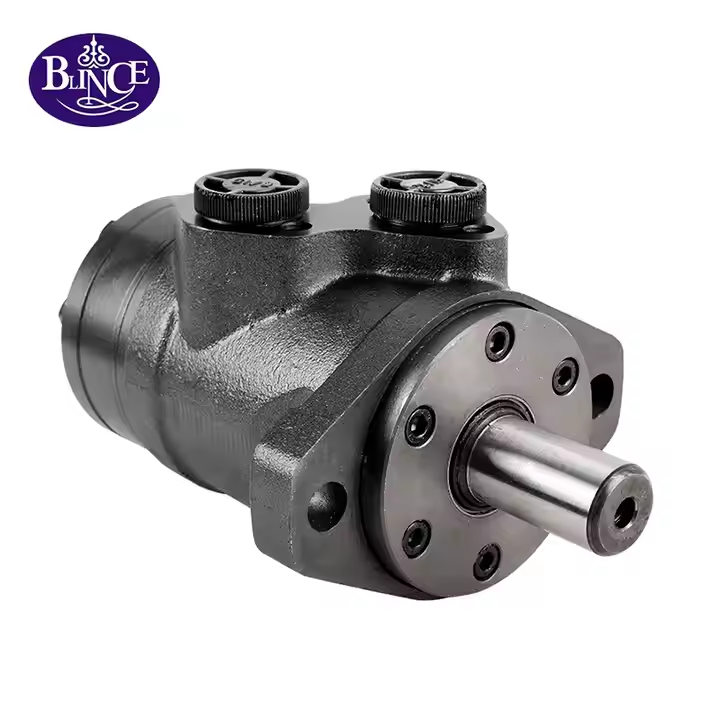
When to Use a Gear Reducer with a Hydraulic Motor
Use a gearbox whenever a hydraulic motor’s speed or torque alone isn’t sufficient for the task. In practice, this means pairing with a reducer in scenarios like:
Heavy loads: When equipment must lift, pull, or carry very large weights (for example in cranes, backhoes or industrial winches), the motor’s torque must be multiplied with a gearbox. Without a reducer, the motor would spin too fast and struggle under the load.
Low-speed precision: Tasks like controlled digging, drilling, or positioning require very slow motion with high force. A gearbox “slows down motion” from a fast motor, allowing precise low-speed operation. Slow output speed is actually an advantage when accuracy and safety are needed.
Multiple speed ranges: Some machines must operate at both high travel speeds and low working speeds (e.g. an excavator that drives fast but digs slowly). Multi-stage gear reducers provide selectable speed ratios so one motor can cover all needs.
Space constraints: In tight equipment layouts, using a compact high-speed motor plus a small gearbox can be better than a huge low-speed motor. The combined motor+gearbox often fits into confined spaces more easily while delivering the required torque.
Specialized machines: Many industrial devices – mixers, conveyors, augers, winches – pair hydraulic motors with inline or planetary gearboxes to match their exact speed and torque requirements. For example, Blince’s OMER orbital motors incorporate internal geroler gears to be inherently high-torque at low speed (so “a gearbox is not required” for many low-speed tasks), whereas higher-speed motor models can add an external gearbox when needed for heavier loads.
In short, a hydraulic motor needs a gear reducer when “the load requires slower output or higher torque than the motor alone can deliver”.
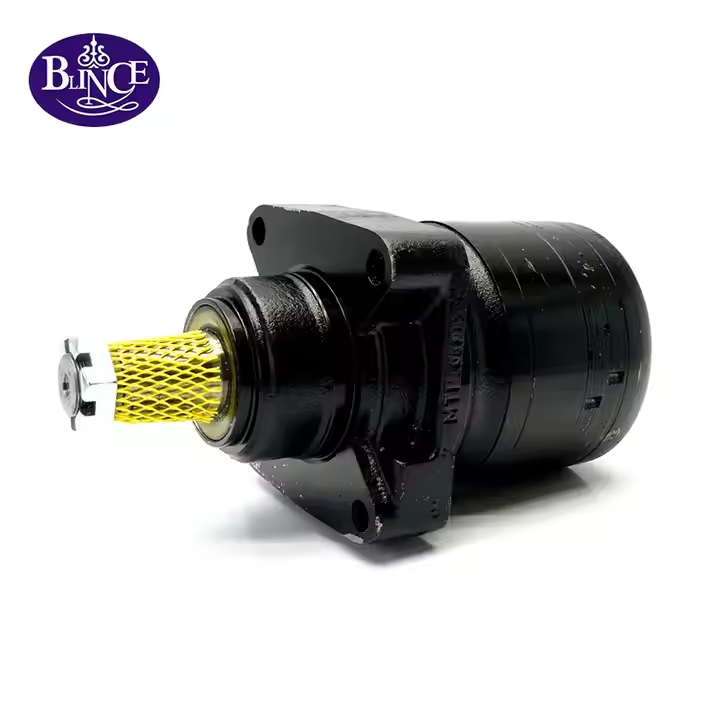
Benefits of Pairing Hydraulic Motors with Gear Reducers
Using a gear reducer with a hydraulic motor offers clear advantages for industrial and mobile drives:
Torque Multiplication: The gearbox provides a mechanical advantage, converting the motor’s high-speed output into much higher torque. This lets a modest-size motor handle heavy-duty tasks. As one source notes, gearboxes “serve as the source of mechanical advantage,” enabling equipment to lift and move heavy loads.
Controlled Speed: Slower output speeds from the reducer allow precise, safer operation. High-speed motors can be hard to manage under load; reducing their speed cuts shock loads and makes positioning easier. In equipment like crane lifts or conveyor controls, being able to move slowly and steadily is critical.
Optimized Drive Design: A gearbox lets designers match the motor’s output exactly to the machine’s needs. Instead of buying a larger slow-speed motor, one can use a standard motor with a custom reduction ratio. This means each application – whether a mining conveyor or a road-paving machine – can get the ideal speed-torque profile without changing the motor.
Compact Power: Integrating a motor and reducer can be more space-efficient. For a given torque, a small high-speed motor + gearbox often takes less room than a large low-speed motor. Modern gearmotors achieve high torque in a surprisingly compact package. This is especially valuable in mobile equipment where space and weight are at a premium.
Overall, pairing motors and gearboxes “optimizes the performance” of hydraulic drives by ensuring the motor’s output matches the task. It’s why gearmotors are ubiquitous in heavy machines from tractors to tunnel boring rigs. (Of course, gearboxes add some cost, weight, and efficiency loss; but in industrial and mobile applications in countries like Mexico, Brazil, or Russia, the performance gains usually justify these trade-offs.)
Hydraulic Motor Types: Gear, Piston, and Orbital
Hydraulic motors come in several types, and each may or may not need a gearbox depending on the application:
Hydraulic Gear Motors: These use two meshing gears and are known for their robustness and simplicity. They handle high pressures and are durable in dirty environments. Gear motors are commonly used in agriculture and material handling – for example, powering seeders, mixers, and conveyor belts. They produce good torque at moderate speeds. Sometimes gear motors directly drive equipment, but in very high-torque tasks (e.g. heavy conveyance), they can be paired with a reducer to boost torque further.
Hydraulic Piston Motors: Available in axial or radial designs, piston motors offer very high efficiency and power density. They can spin at high RPM and deliver large horsepower, making them ideal for heavy machinery. Piston motors drive excavators, cranes, marine winches, and injection molding machines. When the application demands extreme torque (like lifting massive loads), a piston motor is often mated to a robust planetary gearbox. This combination yields the very high torque needed for the toughest jobs.
Hydraulic Orbital (Gerotor) Motors: These use an internal gerotor (one gear orbiting another) and are compact but high-torque. Orbital motors are prized for smooth, quiet operation and excellent low-speed control. They excel in mobile equipment where size and reliability are key. For instance, skid-steer loaders, mini-excavators, forestry mulchers, and agricultural sprayers often use orbital motors because they deliver strong torque from a small package. Many orbital motors run well at low RPM without extra gearing, but they can still be paired with reducers in very demanding applications. Blince’s own OMER series uses advanced geroler gear sets to maintain high efficiency at low speed, so “a gearbox is not required” for many applications.
Each motor type has its sweet spot. By choosing the right motor (gear, piston, or orbital) and adding a gear reducer when needed, equipment builders can optimize for power, size, and cost.
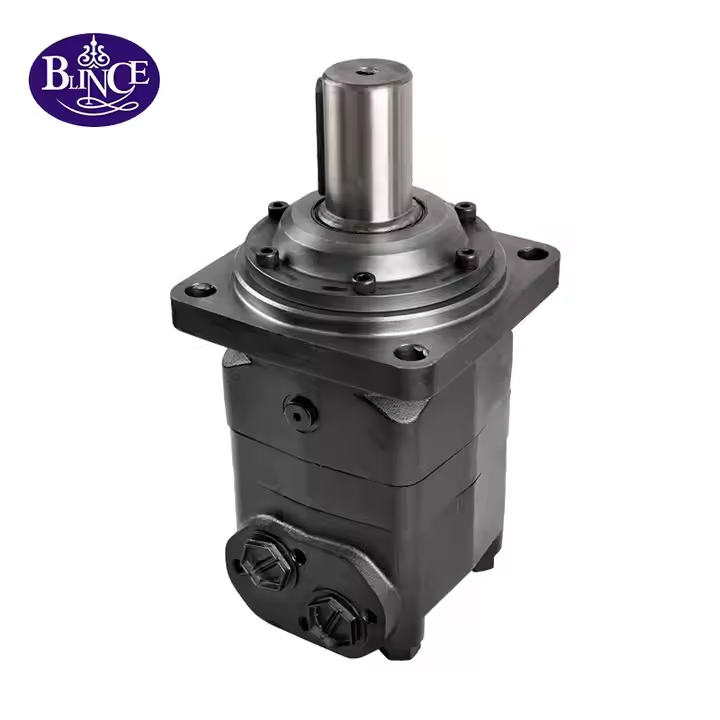
Industrial and Mobile Applications in B&R Markets
In Belt & Road regions like Russia, Mexico, Argentina, Brazil, Peru, and Chile, hydraulic gearmotor systems are crucial for infrastructure and industry. These countries have large mining, construction, and agricultural sectors that use mobile and stationary hydraulic machinery. For example:
In mining operations (Peru, Chile, Brazil), conveyor systems, stackers, and drilling rigs rely on gearmotors to move massive ore loads. The slow, high-torque drives allow long conveyors and bucket elevators to run reliably under heavy stress.
In construction and municipal equipment (Mexico, Russia), excavators, dumpers, concrete mixers, and cranes use hydraulic motor + reducer combos. A powerful piston or gear motor with a gearbox can both travel quickly and apply strong digging or lifting force when needed. Blince notes that its customers in Russia and Latin America often use their gearmotors in heavy machinery.
In agriculture and forestry (Argentina, Brazil, Chile), gear motors power tractors, harvesters, and sawmill machinery. These markets value durable, easy-to-service equipment. Gear motors (with optional reducers) drive attachments like mulchers and log splitters with steady torque.
In industrial plants (all these countries), hydraulic conveyors, mixers, and presses take advantage of gearmotors for precise control. For instance, hydraulic mixers in food processing or concrete plants use gear reducers to run at the exact slow speeds required.
The common thread is that demanding loads and precise control are everywhere in these regions’ industries. By pairing motors with gearboxes, system designers in Latin America and Russia can deliver the performance needed. As Blince reports, this flexibility “helps equipment builders in Russia, Latin America, Brazil and other markets get reliable power exactly how they need it”.
FAQ
Q: When should I use a gearbox with a hydraulic motor?
A gearbox is required whenever the motor’s natural speed/torque doesn’t match the load requirements. In practice, that means using a gear reducer when the application needs much more torque or much slower speed than the bare motor provides. For example, heavy lifting or slow, precise movement will demand a reduction drive. In such cases, adding a gearbox converts the motor’s high-speed output into a low-speed, high-torque drive that can handle the job.
Q: What benefits do hydraulic gearmotors offer to heavy machinery in Latin America?
Hydraulic gearmotors (motors with integrated gearboxes) are very popular in Latin American industries because they pack high torque and reliability into a compact unit. They enable heavy equipment—like excavators, crushers, and harvesters—to operate smoothly under load. The gear reduction gives extra torque for tasks such as mining or road construction, while the hydraulic motor supplies power density and ease of control. This is ideal for countries like Mexico, Brazil, and Argentina, where robust mobile equipment is needed in mining, farming, and infrastructure projects.
Q: How are orbital (gerotor) motors used in Spanish-speaking markets?
Orbital hydraulic motors, known for their compact size and high torque, are widely used in mobile and industrial machines in Spanish-speaking countries. For instance, in Chilean and Peruvian mining operations, gerotor motors drive conveyor belts and screw feeders at low speed. In Argentine farming equipment, they power augers and sprayers. Their smooth low-speed performance makes them excellent for applications like vineyard and greenhouse machinery. Often, orbital motors are paired with small gearboxes or operate alone for medium loads. In cases of very heavy demand, they can be coupled with a gear reducer to further boost torque.
Q: Are hydraulic gear reducers available for equipment in Russia and Mexico?
Yes. Gear reducers for hydraulic motors are standard components for heavy equipment manufacturers servicing Russian and Mexican markets. Local distributors supply planetary or worm gearboxes that bolt onto hydraulic motors. These drives appear in everything from Siberian forest harvesters to Mexican roadwork machines. The key advantage in both regions is reliable power: as Blince notes, its gearmotor solutions help customers “get reliable power exactly how they need it” in diverse applications. Whether the task is a Colombian oil-field winch or a Brazilian sugar-cane harvester, pairing a hydraulic motor with an appropriate reducer is a proven way to achieve the needed torque and control.
Q: What industries in the Belt & Road region use hydraulic gear motors?
Almost every sector with heavy equipment can use them. In mining (e.g. Peru, Chile), gearmotors drive crushers, conveyors and drills. In construction (Russia, Mexico), they operate excavators, cranes and tunnel-boring machines. In agriculture (Argentina, Brazil), they run combines, sprayers, and irrigation systems. Gearmotors also appear in factories – powering conveyors, extruders, and material handling systems. The result is high reliability and easier maintenance, which are especially valuable in remote or harsh Belt & Road environments.


