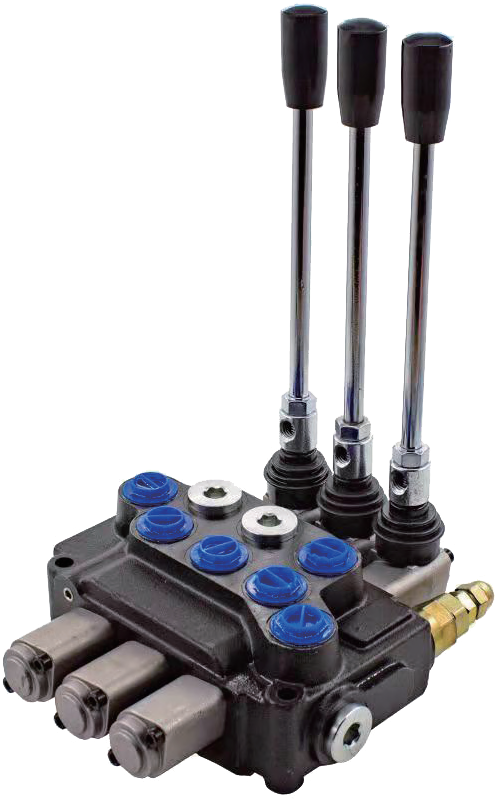
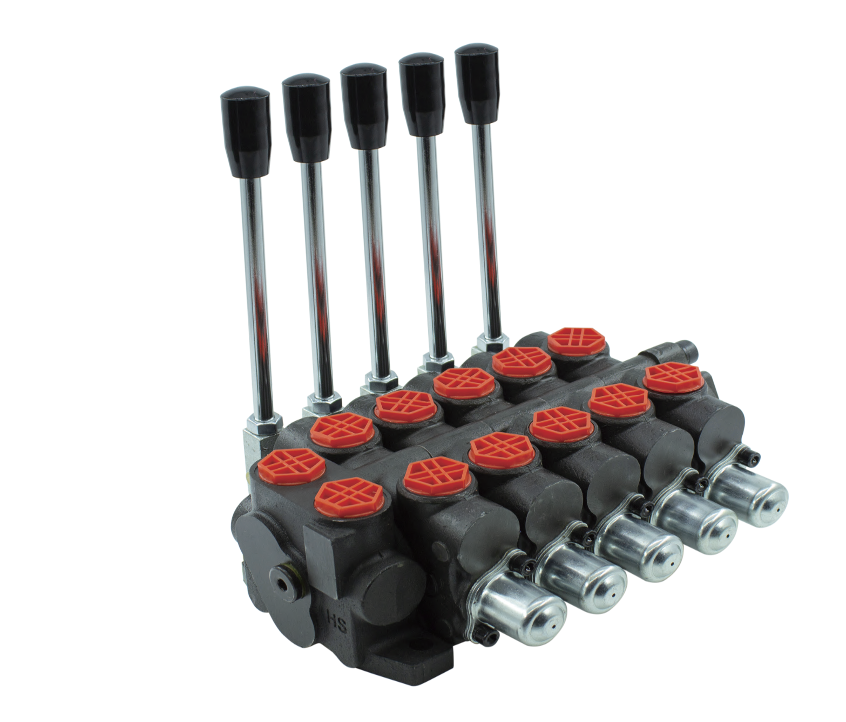
1. Introduction to Hydraulic Directional Control Valves
A hydraulic directional control valve (commonly called a multi-way valve) is a key component in any hydraulic system, responsible for controlling the flow direction, flow rate, and pressure of hydraulic oil. It is typically composed of a valve body, spool, spring, sealing rings, and control mechanism. By operating the valve, hydraulic oil can be distributed among different circuits, enabling multiple actuators—such as hydraulic cylinders or hydraulic motors—to work in coordination. Directional control valves are widely used in agricultural machinery, construction equipment, lifting systems, and various hydraulic power units, making them one of the core control elements of modern hydraulic systems.
2. Main Manufacturing Process of Hydraulic Directional Valves
The production process of a hydraulic directional valve includes eight major steps: raw material rough machining, rough cleaning, precision machining, phosphating & salt spray testing, fine cleaning, spool fit inspection, assembly, and final testing. Among these, the most critical—and often most overlooked—stage is testing.
Testing mainly includes:
Incoming material inspection
Spool fit inspection
Final oil flow test before shipment
3. Incoming Material Inspection
This is the first line of defense in quality control.
Main inspection tasks include:
Casting appearance: Check for sand holes, cracks, pores, inclusions, or deformation.
Dimensional accuracy: Use calipers, bore gauges, and surface roughness testers to measure key dimensions, center distances, and machining allowances.
Material composition: Perform random metallographic and chemical analysis to ensure mechanical strength and pressure resistance meet design standards.
Only qualified raw materials ensure stable precision machining and reliable assembly quality in later stages.
4. Spool Fit Inspection
The fit between the valve spool and the valve body determines operational smoothness and sealing performance. During machining, both parts have tolerance deviations—if the clearance is too large, it leads to internal leakage, sluggish operation, or unstable pressure; if too tight, it causes sticking, overheating, or poor switching.
To ensure precision, skilled technicians manually perform spool-to-body matching:
Insert the spool into the bore and assess the sliding resistance by hand;
Fine-tune, polish, or replace spools until the optimal sliding resistance is achieved;
Record and mark matched pairs to ensure one-to-one assembly.
Although this process is time-consuming, it is the key factor distinguishing high-quality valves from inferior ones.
5. Final Oil Flow Testing
This is the final quality verification of the assembled valve.
The testing includes:
Leakage test: Inject hydraulic oil at rated pressure to check for internal and external leaks.
Function and switching test: Verify that each spool position operates smoothly and that response feedback is stable.
Pressure holding and response test: Maintain pressure for a set duration to detect any pressure drop.
Flow and temperature rise test: Evaluate valve stability and heat generation during continuous operation.
Every qualified valve must pass a complete bench test, and even an experienced inspector can test only around 100 units per day.
6. Conclusion
In summary, these three testing steps—incoming inspection, spool fit testing, and final oil flow testing—are indispensable. Especially the spool fit and final testing stages directly determine whether a valve performs well in the field: smooth operation, accurate response, and reliable function.
Unfortunately, in today’s highly competitive market, some manufacturers focus on reducing costs rather than improving technology and process quality. To cut corners, manual spool fitting and full oil flow testing are sometimes skipped, leading to poor product performance. A truly reliable hydraulic valve requires strict craftsmanship and testing discipline, not shortcuts.
The hydraulic industry is complex and demanding—manufacturers should pursue long-term quality and innovation, and users should look beyond appearances to ensure lasting performance and safety.