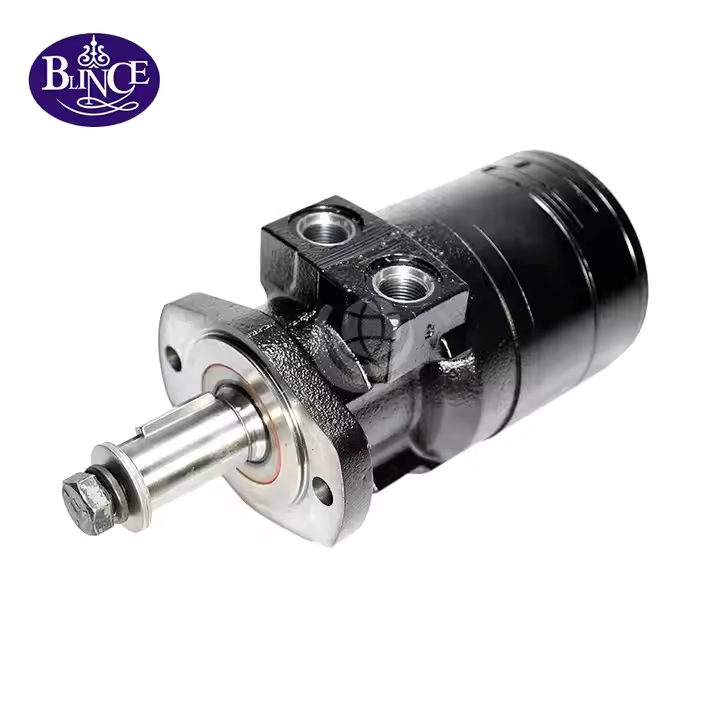
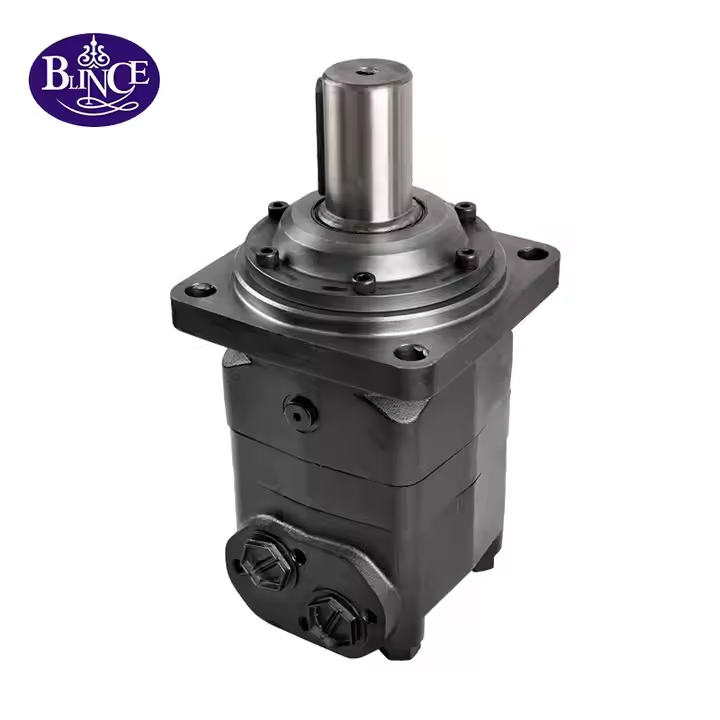
A hydraulic winch with an integrated gearbox converts the motor’s high-speed rotation into the slow, high-torque output needed for heavy lifting. Hydraulic motors excel at high RPM, but they inherently trade off torque for speed. In many industrial drive systems—such as winches, conveyors, mixers, and drilling rigs—the raw output of a standalone motor is too fast and too weak for heavy loads. By adding a gearbox (speed reducer), designers can exchange speed for force, yielding higher torque at controlled, slower speeds. In short, a gearbox lets a hydraulic motor drive heavy-duty equipment safely and precisely: “Hydraulic motors provide high-speed rotation but lack the raw torque required for heavy loads. The gearbox acts as a critical intermediary, converting the motor’s high speed into the high-torque, low-speed rotation needed”.
Speed-Torque Tradeoff in Hydraulics
Hydraulic motors generate torque by pressurizing fluid. They can spin very fast under fluid power, but their torque output is limited by internal design. In any mechanical system there’s a fundamental trade-off: high speed comes with lower torque. For example, connecting a motor directly to a heavy winch drum is like using a small screwdriver to loosen a lug nut—you need mechanical advantage. A gearbox provides that advantage. Common industrial gearboxes (often planetary designs) use small high-speed gears driving larger low-speed gears. This multiplies torque while reducing shaft speed, enabling the motor to move heavy loads that it could not turn directly.
High Torque at Low Speed: Gearboxes take the motor’s fast, low-torque output and convert it into slow, high-torque rotation. This is essential for lifting, pulling, or moving heavy mass in equipment like cranes, excavators, and heavy conveyors.
Precise Speed Control: The reduction ratio not only boosts torque but also slows down motion. In practice, increased torque naturally means slower shaft speed. Slower output speeds are not a drawback; they give operators precise control in lifting and positioning heavy loads.
However, gearboxes introduce trade-offs. No gearbox is 100% efficient: gear friction generates heat and small energy losses. They also add complexity and maintenance: extra shafts and gears require lubrication and eventually wear out. So it’s important to only use a gearbox when needed for the load.
When to Use a Gearbox with a Hydraulic Motor
Use an external gearbox on a hydraulic motor whenever the application’s speed or torque demands exceed what the motor alone can provide. Key scenarios include:
Heavy Loads: When the equipment must lift, pull, or carry heavy weights, the motor’s torque must be multiplied. Industrial winches, cranes, and backhoes all rely on gear reductions to achieve necessary torque. Without a gearbox, a hydraulic motor would spin too fast and slip under heavy load.
Low-Speed Requirements: Some tasks need very slow, controlled motion. For example, digging or drilling slowly with high force. A gearbox reduction slows the output shaft, allowing for precise low-speed operation.
Multi-Speed Needs: If a machine must operate at multiple speeds (e.g. fast travel vs. slow digging), a gearbox or multi-stage reduction can provide selectable speed ranges that a fixed-displacement motor cannot.
Space Constraints: A compact gearbox can sometimes allow a smaller, higher-speed motor to drive a load that otherwise would require a much larger low-speed motor. The combined motor+gearbox can actually fit better in tight equipment designs.
Special Applications: Equipment like mixers, conveyors, or augers often pair hydraulic motors with planetary or inline gearboxes to match the process speed and torque. For example, Blince’s OMER series motors use advanced geroler gear sets that maintain high volumetric efficiency even at low speeds. These motors run smoothly at low RPM and often eliminate the need for an extra gearbox. (In contrast, higher-speed motor models might need a gearbox to meet slow-speed torque requirements.)
In many industrial drive systems, gearboxes serve to “optimize the performance of hydraulic motor units by matching the output characteristics of the motor to the specific requirements of the application”. Whether in construction machines, agricultural equipment, or factory conveyors, pairing a hydraulic motor with a gearbox ensures the drive delivers the right torque and speed for the task.
Benefits of Pairing Motors with Gearboxes
Torque Multiplication: The main benefit is a direct increase in output torque. As one source notes, “gearboxes serve as the source of mechanical advantage,” converting high-speed motor output into high torque for heavy-duty tasks. This is why gearmotors are ubiquitous in heavy equipment.
Controlled Speed: Slowing the output provides safer, more controllable operation. Lower shaft speeds reduce shock loads and make precise positioning easier. This is critical when lifting valuables or working in confined spaces, as slower speeds are “a key safety and operational feature”
Optimized Drive Systems: Many industrial systems demand specific torque-speed profiles. A gearbox lets OEMs fine-tune that profile without redesigning the motor. As one hydraulic components supplier explains, gearboxes are “essential components for a myriad of industrial applications,” offering durable construction, precise gear ratios, and efficient power transfer. In short, they let designers match the motor to the load perfectly.
Compact Strength: Integrating a motor and gearbox can be more space-efficient than using a much larger direct-drive motor. For example, using a high-speed motor with a reducer can fit in a smaller envelope than a large low-speed motor that produces the same torque. Some gearmotors achieve high torque in a surprisingly compact package, which is attractive in modern, tight equipment layouts.
Blince’s own product line illustrates these benefits. Their hydraulic gearmotors and motors-with-integral reductions are widely used in heavy machinery applications worldwide (from agriculture to mining). For instance, Blince’s OMER geroler motors maintain a steady high volume efficiency at low RPM, so “a gearbox is not required” for many low-load, low-speed applications. Blince also offers motors explicitly designed to couple with planetary gearboxes when maximum torque is needed. This flexibility helps equipment builders in Russia, Latin America, Brazil and other markets get reliable power exactly how they need it.
Drawbacks and Considerations
While gearboxes enable higher torque and control, they come with some disadvantages that OEMs and buyers should consider:
Efficiency Loss: Every set of gears adds friction. Mechanical systems “never reach 100% efficiency”, so some power is lost as heat in the gearbox. This means a slightly larger motor or higher pump pressure might be needed to compensate.
Added Complexity: A gearbox introduces more moving parts. These must be properly lubricated and maintained. Over time gears and bearings wear, so maintenance becomes critical. In harsh environments, seals and lubricant should be monitored to avoid premature failure.
Increased Cost and Weight: An extra gearbox raises the unit cost and adds weight and bulk to the machine. It also can negate hydraulic advantages like infinite speed variability: once a gearbox is added, the drive no longer offers continuous hydraulic speed control in the same way. (Multi-speed features must be built into the gearbox instead.)
Less Flexibility: If an application rarely needs the extra torque, the gearbox may be overkill. Some modern motors (like those by Blince) are so efficient that in moderate-load applications, the gearbox can be skipped to save cost and complexity.
In summary, use a gearbox with a hydraulic motor when torque and speed requirements demand it—but weigh the benefits against the added cost and maintenance. For many heavy equipment and industrial drive systems, the performance gain justifies the trade-offs; for lighter or variable-speed tasks, it may be better to rely on the hydraulic motor alone or choose a different motor type.
FAQ
Q: When does a hydraulic motor require a gearbox? A: A gearbox is needed whenever the load requires slower output or higher torque than the motor alone can deliver. For example, heavy lifting, drilling, or any task that moves large masses usually needs a reduction drive. If the hydraulic motor’s normal RPM is too high or its torque too low for the application, pairing it with a gearbox solves that.
Q: What benefits does a hydraulic motor with gearbox provide? A: The main benefit is torque multiplication: the gearbox converts the motor’s high-speed output into low-speed, high-torque output. This allows the drive to handle heavier loads and provides more precise speed control. Other advantages include better matching of motor output to load requirements and potentially a more compact drive solution for heavy equipment.
Q: What are the downsides of using a gearbox with a hydraulic motor? A: Adding a gearbox reduces overall efficiency (some power is lost to gear friction), and it adds complexity, weight, and cost. The gear set requires lubrication and maintenance, and it limits the variability of the drive (speed changes become stepwise based on gear ratios). In light-duty or highly dynamic applications, these drawbacks may outweigh the torque benefits.
Q: Can modern hydraulic motors eliminate the need for external gearboxes? A: Some advanced hydraulic motor designs can operate smoothly at low speeds without an external gearbox. For example, Blince’s geroler-style motors maintain high volumetric efficiency at low RPM, often removing the need for a separate reduction unit. However, in high-demand heavy-duty cases, an external gearbox is still the best way to boost torque.
Q: What industries commonly use hydraulic motors with gearboxes? A: Heavy industries and mobile equipment sectors frequently use gearmotors. This includes construction (e.g. cranes, excavators, concrete mixers), agriculture (harvesters, tractors), mining, forestry, and material handling (conveyor and winch drives). Essentially, any heavy equipment in the Belt & Road markets, Latin America, or Russia that needs robust, controllable power may use hydraulic motors with gearboxes to get the job done.