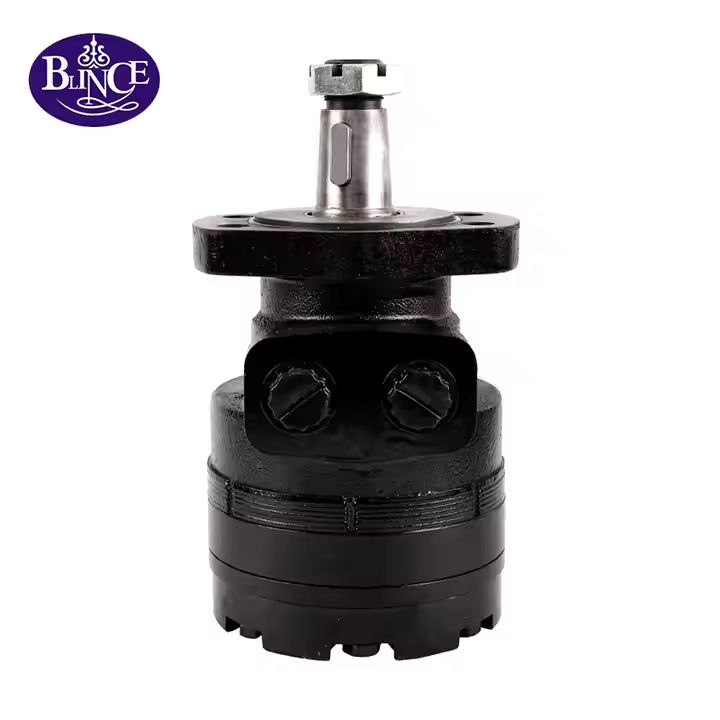
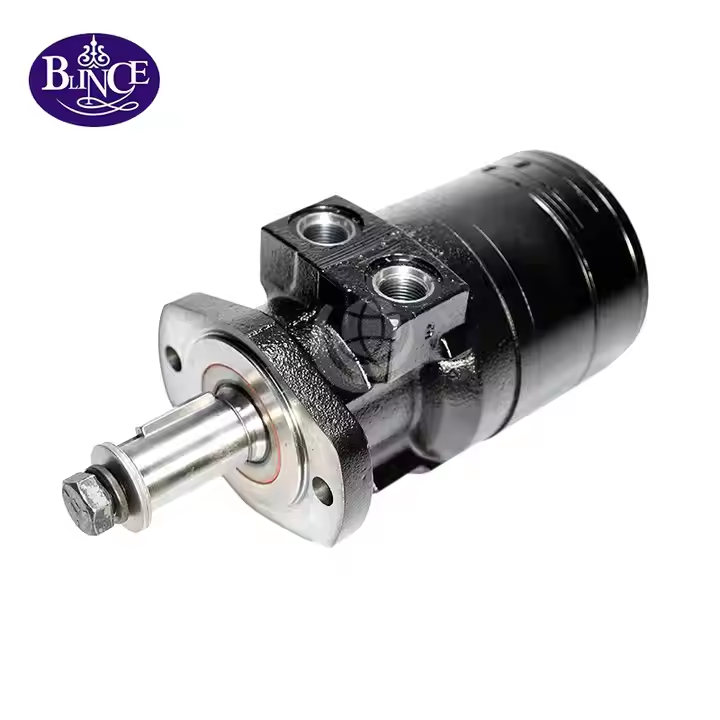
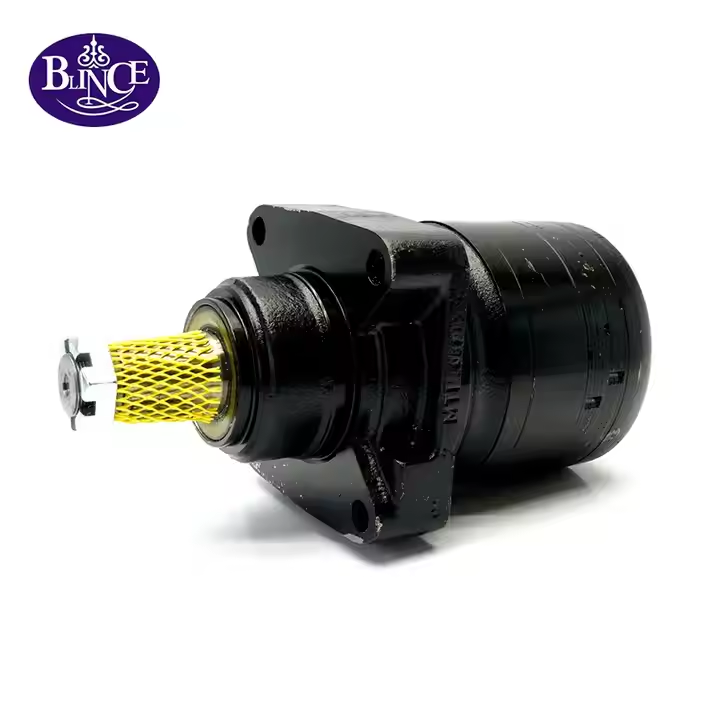
OMER continuous intermittent and peak pressure
The reviewed OMER sheet identifies a geroler orbital motor and a high-speed flow distribution arrangement. The table provides separate pressure classifications; this comparison focuses on duty limits rather than treating peak pressure as a normal rating.
OMER model data
| Model | Displacement cm3/rev | Continuous pressure MPa | Intermittent pressure MPa | Peak pressure MPa |
| OMER 200 | 196 | 20.5 | 24 | 27.6 |
| OMER 250 | 257 | 20.5 | 24 | 27.6 |
| OMER 400 | 405 | 19 | 22.5 | 25 |
| OMER 750 | 745 | 10.5 | 12 | 12 |
Selected catalogue configurations are shown. Continuous, intermittent and peak pressure limits are separate duty classifications. Check the full model and the catalogue time limits before selection.
Comparing OMER 200 and OMER 750
OMER 200 lists 196 cm3/rev, 20.5 MPa continuous pressure, 24 MPa intermittent pressure and 27.6 MPa peak pressure. OMER 750 lists 745 cm3/rev, 10.5 MPa continuous, 12 MPa intermittent and 12 MPa peak pressure. These are different displacement and duty classifications; the highest peak value is not a series-wide working pressure.
For a sustained load, review the continuous operating limit and the selected motor curve. For a transient event, provide its pressure and duration so the applicable intermittent or peak condition can be checked. A family comparison must not hide the lower continuous limit of the larger displacement model.
Flow and speed for OMER 200
As a calculated example, assume 20 L/min reaches the OMER 200 with 196 cm3/rev displacement. Ideal motor speed is flow x 1000 / displacement, giving 20 x 1000 / 196 = approximately 102 rpm before volumetric losses. This is a flow estimate, not a measured BLINCE performance point or confirmation that the motor can deliver rated torque at that speed.
Actual speed and available torque depend on the operating point, oil conditions and motor losses. Use the relevant curve, starting data and inlet and outlet conditions to complete the selection. If the machine needs very low speed or changes load rapidly, include that duty explicitly in the enquiry.
OMER installation and ordering information
| Item | Details for the enquiry |
| Shaft | OMER shaft profile diameter key or spline usable length and external loading |
| Mounting | Flange form pilot bolt pattern and available space |
| Oil ports | Connection type position and hose clearance from the approved drawing |
| Return and drain | Outlet pressure and the drain arrangement for the supplied motor |
| Duty point | Required starting torque running torque speed and available flow |
For a conveyor, brush or rotary assembly enquiry, state whether the motor connects directly or through a belt, sprocket or gearbox. Include the load on the output shaft and its position. These are machine-duty examples; the actual configuration must be reviewed for its own hydraulic and mechanical requirements.
OMER purchase questions
Is 27.6 MPa a continuous rating for every OMER motor
The selected OMER 200 and 250 rows list 27.6 MPa as peak pressure. OMER 750 lists 10.5 MPa continuous and 12 MPa peak pressure. Use the exact model and duty classification.
Does this OMER table identify BMER configurations
This table is for the selected OMER catalogue configurations. A BMER reference needs its own confirmed model relationship and matching data before it is used as a replacement.
Which details identify the OMER replacement configuration
Send the full existing reference and nameplate photograph, the shaft and mounting drawing, port details and the working duty. Include control or brake connections if they are part of the existing assembly.
Request a configuration quotation for OMER
Send BLINCE the complete OMER reference, quantity and installation drawing. Add the required starting torque, running speed, available flow and inlet and outlet pressures, together with the connection details that must be retained.