Hydraulic valves are critical control components in industrial and mobile machinery. They regulate the flow, direction, and pressure of hydraulic fluid to power actuators, cylinders and motors. Common categories include solenoid valves, directional control valves, pressure control valves, and flow control valves. Each type performs a specific function: for example, solenoid-operated valves allow electrical control of fluid circuits, while pressure-control valves (like relief or sequence valves) maintain safe system pressures. This article provides an in-depth guide to these valve types, covering principles, applications, selection tips, and integration advice to help engineers and procurement teams in global markets (including Belt & Road countries and Spanish-speaking regions) make informed choices.
Hydraulic Solenoid Valves
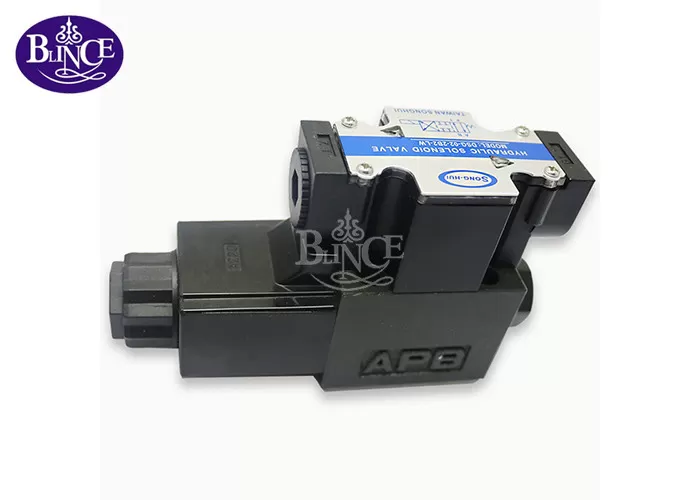
Hydraulic solenoid valves are electrically actuated directional valves. They use an electromagnetic coil to shift a spool (or poppet) and open or close fluid paths. This allows remote or automated control of hydraulic circuits. Solenoid valves are available in two-position or three-position designs (e.g., 4/2-way or 4/3-way valves), with single-solenoid (spring-offset) or double-solenoid (bi-stable) configurations. They can be normally closed or normally open, defining the default fluid path when de-energized.
High performance: Hydraulic solenoid valves are built for high pressures (often up to 350 bar) and typical flow rates of 60–80 L/min. They offer fast switching and high reliability, with long service life and minimal maintenance. Many models include a manual override for emergency operation.
Configurations: Common types include 4/2-way valves (four ports, two spool positions) and 4/3-way valves (four ports, three positions). In a 4/2-way solenoid valve, the spool has two stable positions that direct flow to extend or retract a cylinder. In Position 1, the pressure port P connects to outlet port A (flowing to one side of an actuator) and outlet B connects to tank T; in Position 2 the connections swap (P→B, A→T), reversing actuator movement. Modern valves use standardized port sizes (e.g. NG6/D03) and coil voltages (e.g. 12/24 VDC or 110/220 VAC).
Applications: Solenoid valves are ubiquitous in automation. They are used in industrial machinery (presses, machine tools, injection molders), mobile equipment (construction vehicles, agricultural machinery, forklifts), and process systems (oil/gas, chemical processing). Because they provide fast, precise control, solenoid valves also appear in power systems (hydraulic pumps, turbines) and fluid power controls (automotive brakes, steering hydraulics). Many hydraulic systems rely on solenoid valves for on/off or proportional flow control.
Directional Control Valves
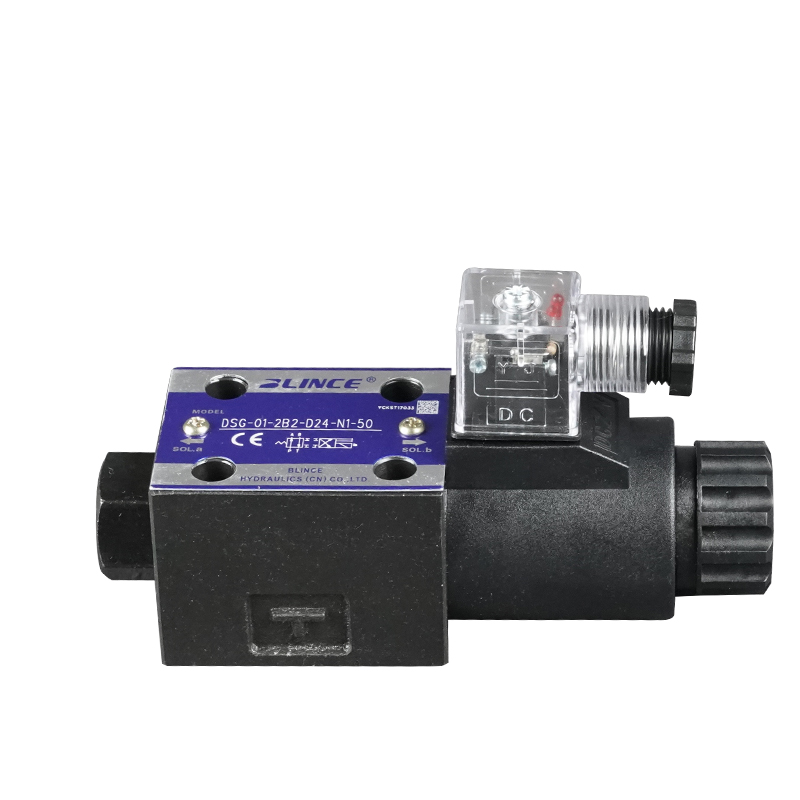
Directional control valves determine the path of hydraulic fluid and thus the direction of actuator movement. The most common type is the spool valve, which slides inside a bore to connect or block ports. Directional valves can have various port configurations: 2/2-way (two ports, on/off), 3/2-way (three ports, two positions), 4/2-way, 4/3-way, 5/2-way, 5/3-way, etc. (e.g. a “5/3” valve has five ports and three spool positions). Actuation methods include manual levers, pedals, pneumatic pilots, hydraulic pilots, or electrical solenoids
Spool valves: A sliding spool has grooves and lands that route fluid between ports. In a 2-position, 4/3-way valve, the center (neutral) position can be closed (all ports blocked), open (pump to tank), or cushioned/throttled, depending on design. For example, closed-center valves lock actuators in place when neutral, whereas open-center valves allow the pump flow to return to tank, reducing pressure spikes. According to industry guides, 4/3-way valves are ideal when a neutral hold or float position is needed, while 4/2-way valves are suited for simple on/off control of a single cylinder (extend/retract).
Port patterns: Common port labels are P (pressure inlet), T (tank or return), and A/B (work ports to actuator). The number of ports equals the first digit (e.g. 4 ports for a 4/3 valve, typically P, T, A, B). Solenoid directional valves often come in standard spool variations such as 4/2 or 4/3. For example, a 4/3 valve may have all ports closed at center (holding pressure) or open at center (floating actuator).
Variants: Besides spool valves, rotary valves, poppet valves, and check valves also control flow direction. Integrated multi-section (modular) directional valves stack multiple sections on a common manifold, combining spool valves with built-in relief and check valves for complex functions. Directional valves may have electro-hydraulic actuation (proportional or servo valves) for smooth, variable control.
Pressure Control Valves
Pressure control valves regulate system pressure or maintain pressure relationships. They protect equipment and coordinate multi-stage operations. All pressure valves use a spring-biased spool or poppet: when fluid pressure force exceeds the spring setting, the valve shifts. Common pressure-control valves include:
Relief Valves: Protect the system by opening to tank at a preset maximum pressure. When downstream pressure exceeds the spring setting, the relief valve opens and bypasses fluid back to the reservoir, limiting pressure.
Sequence Valves: Act like relief valves but control the order of operations. A sequence valve holds pressure (or actuator motion) until a first function reaches a set pressure, then it allows flow to a second circuit. For example, it can ensure that one cylinder fully extends before another cylinder is pressurized.
Unloading Valves: Bypass pump flow to tank at low pressure when a certain condition is met (e.g. when a downstream pressure is reached). This is often used to unload a pump in multi-circuit systems, improving efficiency.
Pressure-Reducing Valves: Maintain a constant, lower pressure in a secondary circuit. They are spring-balanced valves that throttle or bypass flow to hold a branch at a set pressure lower than the main line. Useful for pilot circuits or pressure-sensitive tools.
Counterbalance (Back Pressure) Valves: Hold a load in position by resisting motion until a pilot pressure is applied. A counterbalance valve prevents an actuator from moving (e.g. dropping a load) until control pressure overcomes the setpoint. It is essentially a relief valve in reverse (pilot-to-open).
Brake Valves (Check Valves): Prevent cylinder drift or runaway by locking flow in one direction unless a pressure is applied. They can be built into cylinders or valves to provide additional safety.
Each of these valves operates on the same principle: a spring force balances hydraulic pressure force, and when fluid force exceeds the spring, the valve opens. For instance, a pressure-relief valve might hold closed at 210 bar; if system pressure rises to that point, the valve spool shifts to let excess fluid flow to the tank, protecting hoses and actuators.
Flow Control Valves
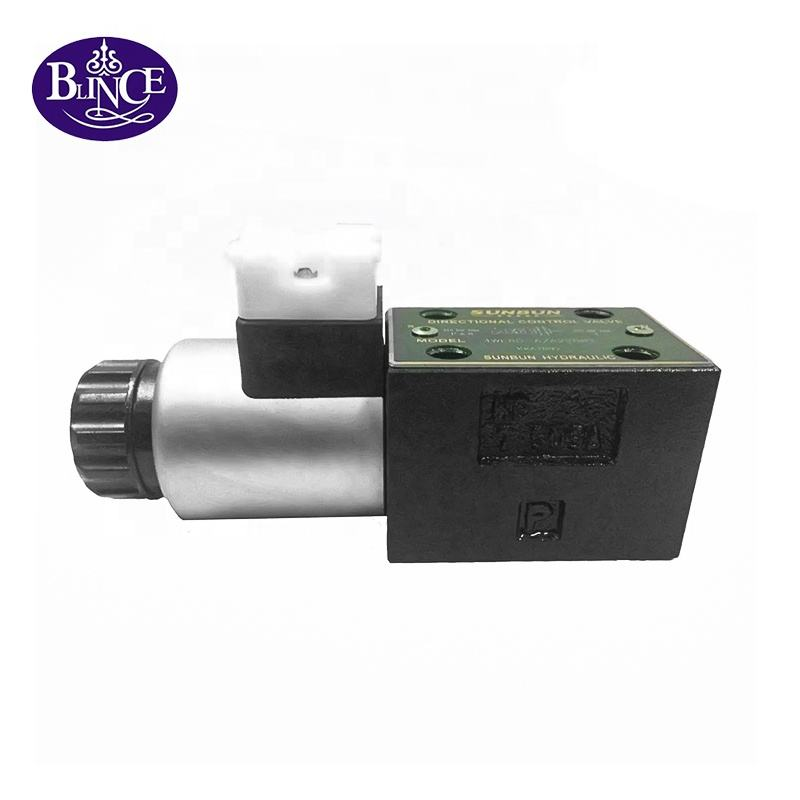
Flow control valves regulate the flow rate of hydraulic fluid, controlling the speed of actuators. By introducing a variable restriction (or orifice), they adjust how much fluid passes through per unit time. Flow control valves can be simple or sophisticated:
Throttle/Needle Valves: These basic valves use an adjustable orifice (often a needle that screws in/out) to restrict flow. Turning the adjustment changes the orifice area and thus the flow rate. A one-way orifice with a check valve is common: it throttles flow in one direction (to control speed) and allows free flow in the opposite direction (e.g. for cylinder return).
Ball/Plug Valves: These valves have a spherical or conical element. Some designs allow fine adjustment of flow by partially opening the ball/plug. They are simple but can be used for flow control if finely machined.
Pressure-Compensated Flow Controls: These valves maintain a constant flow rate despite variations in load pressure. Internally, they combine a flow restrictor with a pressure-reducing regulator: if load pressure rises, the regulator adjusts to keep the orifice drop constant. This is useful when multiple circuits share a pump, and each needs a stable flow.
Flow Dividers: Split a single input flow into two or more fixed proportions (e.g. 50/50) for tandem cylinders or dual circuits.
Priority/Deceleration Valves: Built with orifices and relief settings to favor one circuit (priority) or to slow down an actuator near the end of its stroke (decay valve).
Proportional Flow Valves: Electrically controlled valves (solenoid or servo) that vary flow continuously in response to an electrical signal. They often include pressure compensation for accurate control.
In practice, hydraulic flow control options range from simple to advanced. Fixed orifices and needle valves offer basic throttling. Pressure-compensated and demand-compensated controls provide steady performance under changing pressures. Advanced systems may use proportional or servo valves for electronic flow control. As one review notes, flow-control components include “orifices, flow regulators, bypass regulators, pressure-compensated variable valves, priority valves, deceleration valves, flow dividers, and proportional flow-control valves”. By carefully adjusting flow, these valves allow precise control over hydraulic actuator speeds and system energy transfer.
Common Applications of Hydraulic Valves
Hydraulic valves are used widely across industries wherever controlled power transmission is needed. Typical applications include:
Construction and Heavy Machinery: Excavators, loaders, cranes, concrete pumps, and mining equipment rely on hydraulic control valves to direct powerful actuators.
Agriculture and Forestry: Tractors, harvesters, sprayers, and wood chippers use solenoid and directional valves for attachments and implements.
Industrial Manufacturing: Injection molding machines, presses, metal forming machines, and machine tools use valves for precise motion control. Valve manifolds control coolant valves, clamps and ejectors.
Automotive and Material Handling: Forklifts, lifts, trucks with hydraulic systems (e.g. dump trucks), and automated guided vehicles use valves for steering, braking, and lifting.
Energy and Utilities: Turbine governors, hydraulic power units, oil and gas drilling rigs, and renewable energy systems (hydro turbines, wind turbine pitch control) employ pressure and flow valves to maintain safety and efficiency.
Marine and Aerospace: Ship steering gear, stabilizers, landing gear, and flight controls use robust hydraulic valves. Off-shore equipment (ramps, winches) also relies on valves that meet marine specs.
Fluid Power Research and Test Stands: Laboratories and test benches use precise servo-valves and flow controllers to conduct experiments under high pressures.
In Belt and Road countries (Asia, Eastern Europe, Middle East) and Latin American markets, hydraulic systems are essential in infrastructure projects, mining, and agriculture. Manufacturers often provide valve literature in multiple languages (e.g. válvula solenoide, válvula de control direccional) to serve global procurement teams. Compliance with international standards (ISO, SAE, EN, CE) is important to ensure valves can be used in multinational projects.
Selection Tips for Hydraulic Valves
Choosing the right hydraulic valve requires matching the valve specifications to system requirements:
Pressure and Flow Ratings: Select a valve whose maximum operating pressure exceeds the system’s highest pressure. Consider peak spikes. Ensure the valve’s flow capacity (e.g. 80 L/min) meets or exceeds the circuit’s peak flow demand. Undersizing can cause pressure drop and overheating.
Valve Size and Port Connections: Valves come in standard nominal sizes (e.g. NG6/D03, NG10/D05). The port thread or flange must match the plumbing. For multi-valve systems, use standardized subplates (ISO 4401 pattern) or cartridge housings. Valves with ISO sandwich connections bolt onto a common manifold so you do not need to cut hydraulic lines when servicing. This modular approach greatly simplifies maintenance.
Fluid Compatibility and Temperature: Check materials and seals against the hydraulic fluid (mineral oil, water-glycol, fire-resistant fluids). Also ensure suitable temperature range (ambient and fluid). Some valves use special seals (Viton, HNBR) for high temperatures or abrasive fluids.
Response Time and Control Requirements: For fast or proportional control, choose valves with low actuation time or electro-hydraulic control. Proportional valves or servo valves offer smooth, variable control but at higher cost and complexity. For simple on/off control, standard solenoid valves suffice.
Environment and Certification: In dusty or wet environments, look for IP65-rated coils and corrosion-resistant materials. Explosion-proof or intrinsically safe solenoids may be needed in hazardous locations. Also consider certifications (CE, UL, RoHS) as required.
Features and Options: Some valves include manual overrides, visual position indicators, or adjustable cushions. Pressure valves have adjustable setpoints. Valves often allow interchangeable spools or cartridge inserts for customization. Evaluate these according to system flexibility needs.
By reviewing data sheets and using valve-sizing calculators, engineers can ensure they select valves that handle the system’s pressure, flow, and control needs. Working with experienced hydraulics suppliers or OEMs is also recommended to confirm the best valve type and setting.
Integrating Hydraulic Valves into Systems
Effective integration of valves ensures system reliability and maintainability:
Manifold and Mounting: Wherever possible, use standardized manifold blocks. A common design is the ISO 4401 subplate: valves bolt directly to a flat ported block, eliminating individual plumbing. This modular assembly reduces leak points and saves space. For large machine designs, integrated valve blocks (cast or machined manifolds) can house multiple valves in one component. Integrated blocks further reduce external tubing and pressure losses, improving system response.
Cartridge Valves: For compact or custom designs, cartridge-style valves screw directly into a hydraulic manifold block. This minimizes package size and offers high flow in a small footprint. However, cartridge systems require precise machining of the block.
Hydraulic Circuit Design: Always include filters upstream of valves to prevent contamination damage. Pressure-control valves usually go upstream (near pump) to protect the entire circuit, whereas flow-control valves are placed near the actuator they control. Sequence and unloading valves should be piped according to their function (see manufacturer schematics).
Electrical Integration (for Solenoids and Proportional Valves): Provide correct coil voltage and wiring. DC coils often require diodes or varistors for spike suppression. Use recommended cable and connectors (DIN plugs, Mil connectors, etc.). Ensure solenoid coils have proper dwell time and duty cycle. For proportional/servo valves, use the appropriate amplifier and feedback loops.
Maintenance Access: Install valves with enough clearance for removing coils or spools. Use subplate designs so a single valve can be removed without disturbing others. Some systems include isolation valves to de-pressurize a section before servicing.
System Commissioning: When first operating, check pressure settings on all relief/sequence valves and adjust as needed. Bleed air from lines and verify flow directions. Conduct leak tests on all connections. Using manifold-mounted pressure gauges can help monitor system health.
By following these guidelines, hydraulic valves can be seamlessly incorporated into machinery. Modern digital controls may also allow remote valve diagnostics or configuration via software, but the underlying hydraulic principles remain the same.
Frequently Asked Questions
Q: What is a hydraulic solenoid valve and what does it do?
A: A hydraulic solenoid valve is an electrically actuated directional valve that opens or closes hydraulic fluid paths when a coil is energized. It uses an electromagnet to move a spool or poppet. Solenoid valves are commonly used to start, stop, or change the direction of flow in hydraulic systems. For example, energizing a coil can shift a 4/2-way solenoid valve from a neutral position to direct oil from port P to port A, causing an actuator to move. These valves combine the functions of directional control with electrical control for automation.
Q: How do directional control valves work?
A: Directional control valves route hydraulic fluid to different circuits. They are usually spool valves with multiple ports. By shifting the spool position (manually, electrically, or by pilot pressure), they connect the pump port (P) to one actuator port (A or B) and connect the other actuator port to the tank (T). For example, in one spool position P→A and B→T, and in the opposite position P→B and A→T. Some 3-position valves even have a middle (neutral) position that can hold pressure, float the actuator, or vent to tank, depending on the design. In essence, directional valves determine which way the hydraulic fluid flows in the circuit
Q: When should I use a pressure control valve?
A: Pressure control valves are used whenever you need to limit or regulate pressure for safety or sequence control. The most common is the pressure-relief valve, which protects the system by opening at a set maximum pressure and dumping excess fluid to tank. Other pressure-control valves are used to manage different circuit requirements: e.g. a sequence valve keeps one cylinder from moving until another one finishes (it “sequences” operations), and a reducing valve maintains a lower constant pressure for a secondary circuit. Whenever a hydraulic actuator must stop at a certain force or sequence of events is required, a pressure control valve is typically part of the solution. In short, use a pressure-relief or sequence valve to protect components and ensure the correct order of operations in a hydraulic system.
Q: What is a flow control valve used for?
A: A flow control valve regulates the flow rate of hydraulic fluid, which in turn controls the speed of cylinders or motors. By adjusting the size of an internal orifice (via a needle, ball, spool, etc.), the valve throttles flow to the desired rate. For example, a flow control valve might slow down a cylinder extend cycle so that it rises at a controlled speed under heavy load. Some flow controls are simple manual needles; others are advanced pressure-compensated valves that keep the flow constant even if pressures change. Flow control valves are essential for fine-tuning motion, balancing multiple actuators, and improving system efficiency.
Q: How do I choose the right hydraulic valve for my application?
A: Selection depends on several factors: the maximum pressure and required flow of your system, the number of ports/positions needed, and how the valve will be actuated (manual, solenoid, pilot, proportional, etc.). First, ensure the valve’s pressure rating exceeds your system’s peak pressure. Next, match the valve’s flow capacity to your pump or actuator requirements. Consider special needs: e.g. if you need remote electrical control, choose a solenoid-operated valve; if you need precise proportional control, use a servo or proportional valve. Also account for fluid type, temperature range, and environmental conditions. For mounting, use standardized patterns (such as ISO 4401 subplates) for easy integration. It’s often helpful to consult manufacturer catalogs or engineers with your specific requirements; often they provide sizing tools or can recommend a valve series optimized for your industry (for example, heavy-duty valves for construction equipment or miniature valves for compact machinery).


