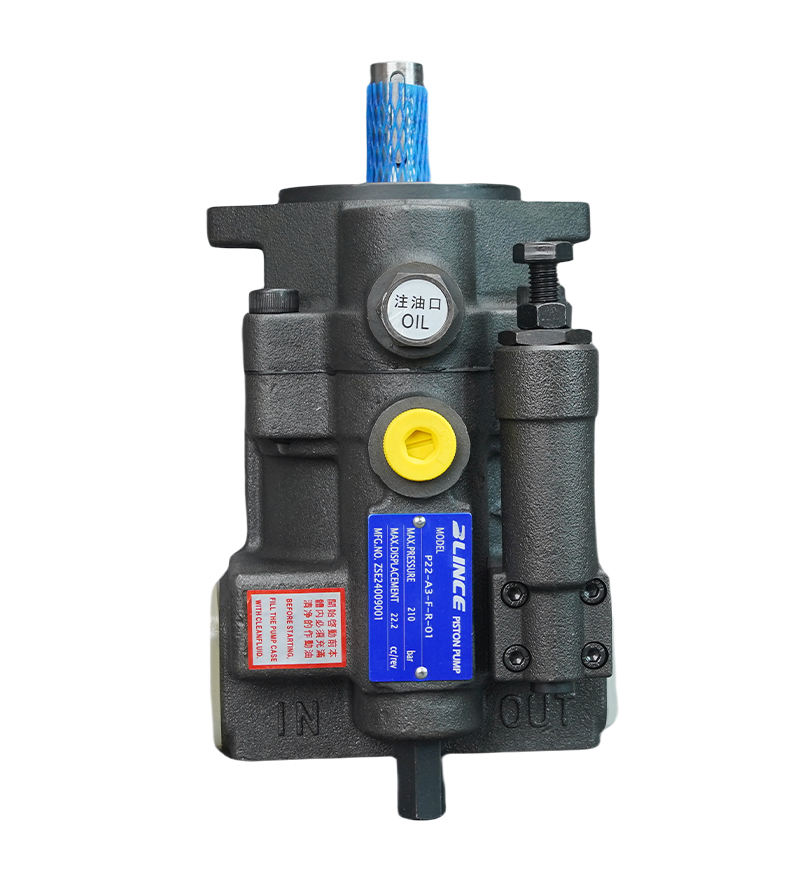
Are gear pumps making too much noise in your workshop? A hydraulic vane pump runs smoother and quieter. In this guide, you will learn how vane pumps work, their key types, and where to use them. We will also explore Blince’s reliable pump series.
What Is a Hydraulic Vane Pump and How Does It Work?
The Basic Definition of a Hydraulic Vane Pump
A hydraulic vane pump is a positive-displacement pump. It uses sliding vanes inside a rotor to trap and move fluid. You won't find meshing gears here like a gear pump. Instead, a vane pump pushes vanes outward against a cam ring (the stator). That action creates expanding and shrinking chambers. The result? Smooth, quiet, and efficient flow. It is ideal for medium-pressure systems—think up to 21 MPa. Blince builds their pumps on this exact principle. They focus on low noise and long life. You get reliability without breaking the bank.
Let us walk through the core parts of a typical hydraulic vane pump:
Component
What It Does
Rotor
Spins inside the stator; holds the vanes in radial slots.
Vanes
Slide in and out; seal against the stator wall to trap fluid.
Stator (Cam Ring)
Uses a shaped inner surface (circular or elliptical) to control vane movement.
Port Plate
Houses the inlet (suction) and outlet (discharge) ports.
Drive Shaft
Connects to your motor or engine; transfers rotational energy to the rotor.
We call it “positive-displacement” because each rotation moves a fixed fluid volume. It does not rely on speed or centrifugal force. That gives you predictable flow, even when pressure changes. Machine tools love this predictability. Plastic injection molding machines also prefer vane pumps for steady output. Blince’s PV2R series uses this exact component layout. You can pick displacements from 6 to 153 cc/rev. All share the same reliable rotor-and-vane design. No surprises, just performance you can count on.
The Operating Principle Explained Step by Step
Want to know how a hydraulic vane pump actually works? It is simpler than you think. Just follow these three phases:
Suction phase – The rotor spins. Centrifugal force pushes vanes outward against the stator wall. On the inlet side, the space between two vanes expands. That creates a low-pressure area. Fluid rushes into the pump through the inlet port. Easy, right?
Transport phase – Now the fluid is trapped. It sits snugly between the vanes, the rotor, and the stator. The rotor keeps turning, carrying that fluid pocket toward the outlet side. No squeezing yet—just smooth movement.
Discharge phase – The stator’s inner contour changes shape. It forces the vanes back inward. The chamber volume shrinks. Fluid gets pushed out through the discharge port under pressure. That is where the work happens.
This cycle repeats many times per revolution. A typical hydraulic vane pump running at 1800 RPM goes through thousands of cycles every minute. That delivers a continuous, low-pulsation flow. Low pulsation means less vibration in your hydraulic system. It also means quieter operation. Blince's SQP series achieves sound levels as low as 62 dB(A). That is quieter than most gear pumps. You can install it in noise-sensitive environments without extra enclosures. We have seen them work beautifully in die-casting shops and even theater stages.
You might wonder: do the vanes rely only on centrifugal force? Not exactly. Once the pump starts running, hydraulic pressure behind each vane pushes it outward too. That ensures a good seal even at low speeds. It also helps maintain efficiency as internal parts wear. So regular maintenance—like replacing worn vanes—keeps your hydraulic vane pump running for years. Blince provides full maintenance guides with every pump. They cover oil viscosity, alignment checks, and temperature limits. Follow those, and your pump will reward you with quiet, trouble-free service.
Main Types of Hydraulic Vane Pumps
Single-Acting (Variable Displacement) Vane Pumps
A single-acting hydraulic vane pump has an eccentric rotor inside a circular stator. The rotor sits off-center. That offset means each chamber completes just one suction and one discharge cycle per revolution. Here is the cool part: this design lets you vary the displacement. You simply adjust the eccentricity (the offset amount). Change the flow without changing pump speed. Easy, right? Single-acting vane pumps are simpler and more cost-effective. They cost less upfront. But there is a trade-off. Unbalanced pressure forces put radial loads on the bearings. Those loads limit pressure capability. You typically see these pumps running up to 6–7 MPa.
So where would you actually use a single-acting vane pump? We see them in:
Smaller hydraulic power units where space and cost matter most
Light-duty machine tools like small presses or drill stands
Applications needing adjustable flow without a variable-speed drive
Systems running intermittent duty, not continuous high pressure
Blince doesn't focus heavily on single-acting designs because most customers want higher pressure and smoother flow. But they still understand the technology. If you need a variable displacement vane pump for a modest system, you can find options on the market. Just remember: unbalanced forces mean larger bearings and shorter life under continuous high pressure. Keep that in mind when designing your circuit.
Here is a quick comparison of single-acting vs. double-acting vane pumps:
Feature
Single-Acting (Variable)
Double-Acting (Fixed)
Rotor position
Eccentric (off-center)
Coaxial (centered)
Cycles per revolution
One suction + one discharge
Two suction + two discharge
Flow output
Variable (adjust eccentricity)
Fixed
Pressure capability
Up to 6–7 MPa
Up to 21 MPa or more
Bearing load
Unbalanced (radial loads)
Balanced (no net radial load)
Typical applications
Small power units, machine tools
Industrial machinery, injection molding, mobile equipment
This table helps you see the trade-offs at a glance. We recommend double-acting for most modern machines. But single-acting still has its place.
Double-Acting (Fixed Displacement) Vane Pumps
Now let us talk about the workhorse of the industry: the double-acting hydraulic vane pump. It features a coaxial rotor and an elliptical stator. The rotor sits right in the center. During one revolution, each chamber does two suction cycles and two discharge cycles. That means smoother flow with much lower pulsation. But the real magic is pressure balance. Look inside—suction and discharge ports sit opposite each other. Radial forces cancel out. No net load on the bearings. That is why double-acting vane pumps can handle higher pressures (up to 21 MPa or more). They are almost always fixed-displacement designs. You cannot adjust flow without changing speed, but you gain durability and smoothness.
Why do so many engineers choose double-acting vane pumps for demanding jobs? Here are the key benefits:
Balanced pressure means longer bearing life and higher reliability
Lower pulsation reduces vibration in your hydraulic lines and valves
Quieter operation – Blince's SQP series runs as low as 62 dB(A)
Higher pressure capability – up to 21 MPa, perfect for industrial machinery
Fixed displacement gives you predictable flow for consistent cycle times
We see double-acting vane pumps everywhere. Plastic injection molding machines rely on them. Die-casting equipment uses them. Even mobile machinery like forklifts and small excavators depend on their quiet, steady flow. Blince builds several series around this double-acting principle. Their PV2R series is a perfect example. It handles up to 21 MPa and comes in displacements from 6 to 153 cc/rev. The SQP series also uses the double-acting design. It delivers 172 bar (around 2500 psi) with cast iron construction for extra strength. You can run these pumps for years with basic maintenance. They tolerate some contamination better than piston pumps. And they run quieter than gear pumps. It is no surprise so many engineers choose double-acting vane pumps as their go-to solution for medium-pressure systems.
Key Advantages and Common Applications of Hydraulic Vane Pumps
Why Choose a Hydraulic Vane Pump Over Other Pump Types
You have options: gear pumps, piston pumps, and hydraulic vane pumps. So why pick a vane pump for your system? Let us break down the real-world advantages. They are not just theory – these benefits save you money and headaches.
Advantage
What It Means for You
Typical Performance
Quiet operation
Less noise means happier workers and no expensive enclosures.
As low as 62 dB(A) for Blince's SQP series
Smooth fluid delivery
Low pulsation protects your valves, hoses, and downstream components.
Vibration is significantly lower than gear pumps
High volumetric efficiency
More output per unit of energy. Lower electricity bills.
Often exceeds 90% in double-acting designs
Good contamination tolerance
You can get away with slightly dirtier oil compared to piston pumps.
Won't seize instantly from minor debris
Cost-effectiveness
Lower upfront price than piston pumps. Less need for noise suppression gear.
Typical payback period is very short
Let us expand each point so you see the full picture.
Quiet operation – nobody likes a screaming machine shop. A hydraulic vane pump runs much quieter than a gear pump of similar size. Blince designs their SQP series to hit 62 dB(A). That is conversational level. You can stand next to it without yelling.
Smooth fluid delivery – low pulsation means your hydraulic lines don't vibrate. Less vibration means fewer leaks. Fewer leaks mean lower maintenance costs. We have seen plastic injection molding machines run twice as long between service intervals just by switching to vane pumps.
High volumetric efficiency – above 90% is standard for double-acting designs. That means you get more work from the same motor. Energy savings add up fast.
Good contamination tolerance – piston pumps are fussy. They want clean oil or they fail. Vane pumps are more forgiving. They handle minor dirt without catastrophic failure. Clean oil is still best, but you have a safety margin.
Cost-effectiveness – you pay less upfront than a piston pump. You also skip expensive noise suppression boxes. Your total cost of ownership stays low.
Blince puts all these advantages into their PV2R and SQP series. They engineer each hydraulic vane pump for real factories, not just lab conditions. So when you compare pump types, remember: gear pumps are cheap but noisy. Piston pumps are powerful but expensive and sensitive. Vane pumps sit right in the sweet spot – quiet, smooth, efficient, and affordable.
Typical Industries and Machines Using Hydraulic Vane Pumps
Where do you actually find hydraulic vane pumps at work? Almost everywhere. Walk through any medium-sized factory or construction site. You will spot them inside these common machines:
Machine tools – Lathes, milling machines, and press brakes all use vane pumps for steady lubrication and clamping.
Plastic injection molding machines – They need quiet, pulsation-free flow to open and close molds smoothly. Blince's PV2R series is a popular fit here.
Die-casting machinery – High pressure and continuous cycles demand reliability. Double-acting vane pumps deliver.
Agricultural machinery – Tractors and harvesters use them for steering and implement control. They tolerate outdoor conditions well.
Construction equipment – Small to medium excavators, cranes, and backhoes. Not the giant mining trucks, but everything else.
Material handling systems – Forklifts and conveyors rely on vane pumps for lifting and moving.
Automotive power steering – Your car's power steering pump is often a small vane pump. It is quiet and responsive.
Marine and fishing vessels – Hydraulic nets, winches, and steering gear. Saltwater environment? Vane pumps handle it.
Entertainment industry – Theatrical stages that lift scenery, amusement park rides, and moving platforms. They need quiet, safe hydraulics. Vane pumps excel there.
Let us put some numbers around these applications. Which pressure range do they need? Compare them side by side:
Industry
Typical Pressure (MPa)
Why a Vane Pump Fits
Machine tools
7–14
Smooth feed and low noise in close quarters
Plastic injection molding
14–21
Quiet operation near operators; balanced forces
Die-casting
16–21
Continuous duty with good contamination tolerance
Agriculture
10–18
Reliable in dusty environments; easy maintenance
Material handling
8–15
Cost-effective for forklift lift circuits
Entertainment
5–12
Very quiet; low pulsation for smooth motion
We have seen Blince hydraulic vane pumps power all these machines. Their V/VQ series handles engineering machinery. Their SQP series excels in plastic and die-casting shops. Their PV2R series covers general industrial needs. So when someone asks "what is a hydraulic vane pump used for?" – you can point to almost any factory or worksite. Medium pressure, steady flow, low noise. That is the formula. And Blince delivers it with ISO-certified quality and global shipping from their Dongguan factory.
What to Look for in a Quality Hydraulic Vane Pump – Blince Product Overview
Blince PV2R Series – High-Pressure, Low-Noise Vane Pumps
Blince’s PV2R series is a complete family of hydraulic vane pumps. They are built for high performance and low noise. You get a rational structure, small pulsation, and strong reliability. We have tested these pumps in real factories. They hold up beautifully. The series covers three standalone sizes plus double pump combinations. PV2R1 offers displacements from 6 to 31 cc/rev. PV2R2 goes from 26 to 75 cc/rev. PV2R3 reaches 52 to 153 cc/rev. All three handle a maximum pressure of 21 MPa. That is plenty for most industrial machines.
Need two separate oil circuits from one drive shaft? Look at the double vane pumps: PV2R12, PV2R13, and PV2R23. They pack two pumps in one housing. You save space and simplify your mounting. No need for two motors or complex couplings. Blince designed these hydraulic vane pumps to meet international mounting dimensions. So swapping out an old unit is straightforward. You do not have to redesign your bracket or piping. Machine tools, forging machinery, and transport equipment all use this series. Here is a quick snapshot of what you get:
Series
Displacement Range (cc/rev)
Max Pressure (MPa)
Best For
PV2R1
6 – 31
21
Small machine tools, light-duty systems
PV2R2
26 – 75
21
General industrial machinery
PV2R3
52 – 153
21
Heavy equipment, high-flow needs
PV2R12/13/23 (Double)
Combinations of above
21
Two independent circuits from one shaft
These pumps run quietly too. You will notice the difference immediately. They produce less than 75 dB(A) under normal loads. That saves you from buying noise enclosures.
Blince V/VQ Series – High-Performance Composition Vane Pumps
Now let us talk about tougher applications. Engineering machinery and walking machines need extra muscle. That is where the V/VQ series comes in. Blince offers models like 20VQ, 25VQ, 2520VQ, 3520VQ, 3225VQ, 4520VQ, 4525VQ, and 4535VQ. These hydraulic vane pumps handle higher shock loads. They also work with petroleum-based fluids and water-in-oil emulsions. Very flexible.
What mounting options do you need? Flange or foot mounting – both available. Shaft extension choices? Straight keyed shaft or spline shaft. You pick what fits your motor. We like how Blince builds these pumps for reliability. Non-negotiable reliability, as they say. They are ideal for mobile machinery. Think small excavators, cranes, and agricultural equipment. Construction sites are dusty and rough. These pumps survive. The composition vane design means better sealing and longer life. You will replace vanes less often. That cuts downtime.
Here are the key features of the V/VQ line:
Heavy-duty cast iron housing resists cracking under shock loads
Multiple displacement options let you fine-tune flow for your circuit
Works with standard hydraulic oils and some specialty fluids
Easy to service – vanes and cartridges are replaceable without pulling the whole pump
Available in clockwise or counter-clockwise rotation
Blince ships these hydraulic vane pumps with CE and RoHS certifications. They meet global standards. So whether you are in North America, Europe, or Asia, you can install them with confidence.
Blince SQP Series – Durable Double Vane Pumps for Demanding Use
The SQP series is Blince's line of double hydraulic vane pumps. They are engineered for long life and quiet operation. Construction materials matter here: strong cast iron, alloy steel, and copper alloy parts. Everything is built to last. Maximum operating pressure is 172 bar (about 2500 psi). That is slightly lower than the PV2R series, but still very capable. Certifications include ISO9001:2015, CE, and RoHS. Blince backs them with a one-year warranty.
Which models are available? You have SQP21, SQP31, SQP32, SQP41, SQP42, and SQP43. Each number indicates the shell size and displacement code. These pumps are especially popular in three industries: plastic machinery, die-casting equipment, and machine tools. Why? Because they run very quietly. Blince quotes sound levels as low as 62 dB(A). That is quieter than a normal conversation. Your operators will thank you.
Another smart feature: interchangeable core parts. The pump core uses V-series components. So if you already have V-series pumps in your facility, you share spare parts. That lowers your inventory costs. The thicker casing reduces vibration. Less vibration means fewer leaks and longer seal life. We have seen SQP pumps run for over 10,000 hours with basic maintenance. Not bad at all.
Installation and Maintenance Tips for Hydraulic Vane Pumps
Buying a quality pump is only half the battle. You need to install and maintain it correctly. Here is practical advice we have gathered from field experience. Follow these steps and your hydraulic vane pump will last for years.
Keep the fluid clean – Vane pumps tolerate some contamination better than piston pumps. But do not push your luck. Use a proper filtration system. Aim for 25 µm or finer. Change filters on schedule. Dirty oil is the number one killer of vane pumps.
Check alignment carefully – Misalignment between the pump shaft and drive motor causes premature wear. Use a dial indicator. Get within 0.05 mm (0.002 inches). Flexible couplings help, but they are not a cure-all.
Use the correct viscosity – Blince recommends ISO VG 32, 46, or 68 depending on your ambient temperature. Cold climates need thinner oil. Hot environments need thicker oil. Check the manual before filling.
Monitor temperature – Keep fluid temperature below 60°C (140°F). Higher temperatures thin out the oil. Thin oil means less lubrication. Vanes can stick or scuff. Install a temperature gauge if your system runs continuous duty.
Replace worn vanes – Vanes are wear items. They slowly get shorter. Inspect them every 2,000 to 3,000 hours. Also check the cam ring for scoring. Replacing vanes is cheap. Replacing the whole pump is expensive. Blince sells replacement kits with vanes, springs, and seals.
Blince provides detailed installation and maintenance documentation with every hydraulic vane pump. Read it. Keep it near the machine. Their support team can answer questions too. And remember: a well-maintained vane pump pays for itself many times over through reduced downtime and lower energy bills.
Conclusion
A hydraulic vane pump delivers smooth, quiet, and reliable flow for medium-pressure systems. You get balanced forces in double-acting designs and variable flow in single-acting types. Blinceoffers durable PV2R, V/VQ, and SQP series pumps with low noise and long service life.
FAQ
Q: What is a hydraulic vane pump used for?
A: It powers machine tools, plastic injection molders, forklifts, and agricultural equipment where quiet, steady flow matters most.
Q: How does a double-acting hydraulic vane pump differ from a single-acting one?
A: Double-acting pumps have balanced pressure and higher capacity (up to 21 MPa). Single-acting pumps offer variable flow but lower pressure.
Q: Why choose a hydraulic vane pump over a gear pump?
A: Vane pumps run much quieter with less pulsation. They also provide better volumetric efficiency, often above 90 percent.
Q: What pressure range can Blince hydraulic vane pumps handle?
A: Blince PV2R and V/VQ series reach 21 MPa. The SQP series operates up to 172 bar, perfect for demanding industrial jobs.
Q: How do I maintain my hydraulic vane pump?
A: Keep fluid clean with 25 µm filtration. Check alignment, use correct oil viscosity, and replace worn vanes regularly.