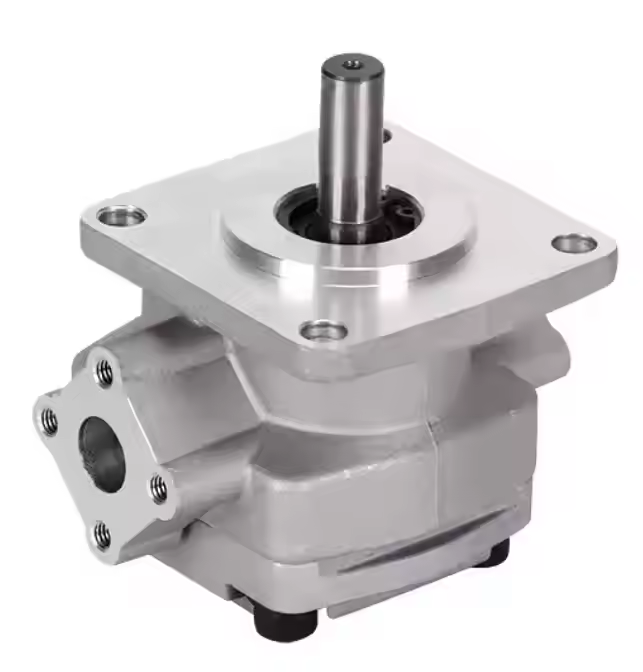
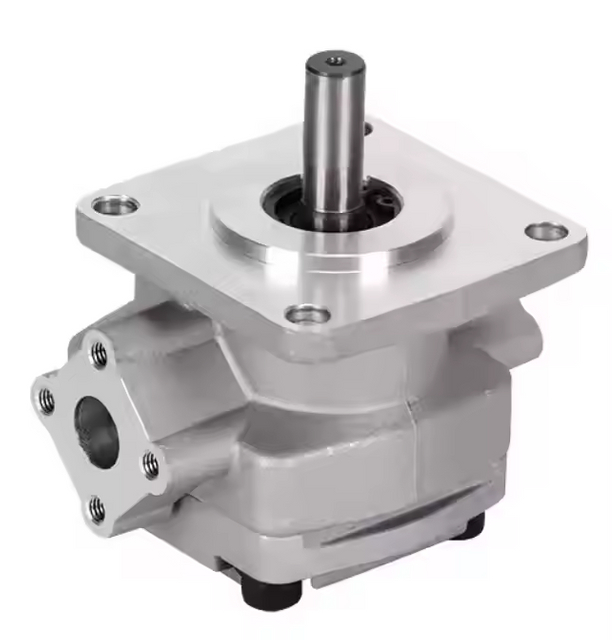
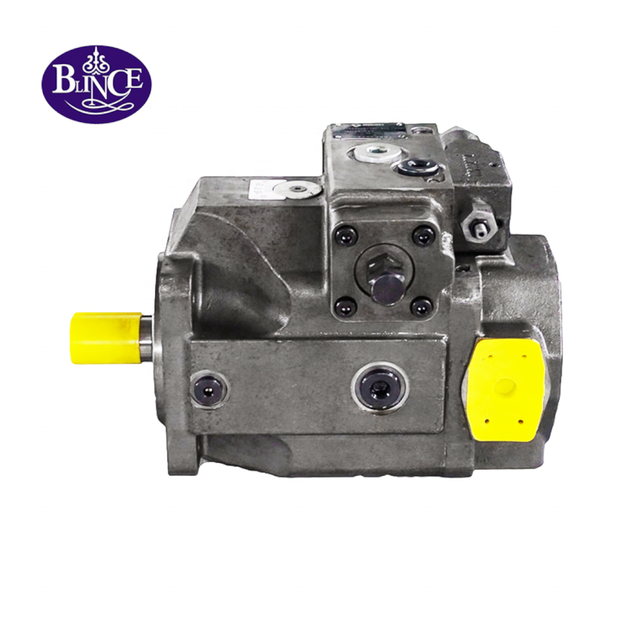
Consider a replacement inquiry with two photographs: a pump marked 20VQ and an oil stain below its shaft. The buyer has circled the seal on a parts diagram. A seal kit looks like a straightforward purchase, yet the photographs cannot show whether the shaft surface, bearing support or operating conditions will damage the replacement seal. The drawing identifies a location; the repair decision still needs evidence.
Short answer: Read a 20VQ pump parts diagram by separating the pumping cartridge from the shaft, bearing, housing, seals and cover. Match the complete manufacturer model and design revision before selecting a parts list. A seal kit, cartridge kit and complete pump address different defects, and none confirms that the original failure cause has been removed.
Start with the drawing's identity
An exploded drawing can be accurate and still describe the wrong pump. Begin with its title block, covered models, revision and bill of materials, then compare those fields with the actual nameplate. The general hydraulic pump parts guide helps establish component vocabulary, while the 20VQ product page identifies the BLINCE family discussed here. Neither substitutes for the installed unit's approved parts drawing. Keep the complete nameplate photograph beside the drawing while reviewing the inquiry. If a supplier has received only a cropped image showing “20VQ,” the first useful response is a request for the remaining characters, manufacturer identity and assembly photographs.
A previous repair can leave the nameplate and the installed cartridge telling different stories. An old housing may contain a later cartridge, or the identification plate may describe the original assembly rather than every component now fitted. Record visible markings without deciding in advance that they must agree. The vane-pump category shows the relevant product family; the tandem-pump identification guide distinguishes pump sections from double-acting vane construction. When the nameplate, cartridge markings and circuit disagree, retain all three in the inquiry. Ordering from whichever label is easiest to read can preserve an undocumented mismatch.
What is confirmed: BLINCE lists a 20VQ product family and displacement-dependent specifications. Vickers by Danfoss publishes VQ construction and model-code information. Their documents are separate manufacturer references; they do not establish BLINCE-to-Danfoss parts interchangeability. Numbers below are identified as published data or calculated examples. A BLINCE-approved exploded drawing, exact spare-part numbers, seal compounds and kit contents require confirmation for the requested assembly.
A simplified 20VQ parts map
Use this original functional map to orient a discussion. It groups components by their job; it is not an exploded assembly sequence, dimensional drawing or numbered replacement-parts list. For the manufacturer reference, see the VQ construction discussion on printed pages 11–12 of the Vickers by Danfoss design guide.
flowchart LR D[Drive and coupling] --> S[Shaft] S --> R[Rotor] subgraph C[Pumping cartridge: functional grouping] R --- V[Vanes and inserts] V --- G[Cam ring] R --- P[Side plates and support plates] end B[Housing and bearing support] --- S E[Shaft seal and static seals] --- B I[Inlet passages] --> C C --> O[Outlet passages and cover configuration]
The cartridge group is the useful starting point when someone asks for a “pump core.” A vane pump's pumping mechanism depends on the rotor, moving vanes and cam profile working together; the vane noise and flow-loss guide explains why poor filling and internal damage can produce overlapping symptoms. In the published Danfoss VQ design, the cartridge includes a cam ring, rotor, ten vanes and side/support plates, with inserts forming part of the intra-vane arrangement. Treat that as identification context. Before comparing quotations, ask each supplier to list what its proposed cartridge assembly actually contains and which surrounding parts remain in service.
Put the shaft and bearing findings beside the cartridge assessment. A cartridge quotation does not automatically include a shaft, bearing, seal-running surface or replacement housing. The pump vibration diagnostic is relevant when coupling or mounting evidence accompanies a damaged pump; the contamination-control guide addresses another route by which replacement parts can face the original problem again. Request the repairer's findings on the retained components, including the method used and the applicable acceptance criteria. “Looks usable” does not tell a purchasing team whether someone actually checked the area that carries the load or contacts the seal.
Group on the map
What to identify
What the drawing alone cannot settle
Rotor, vanes, inserts and cam ring
Complete cartridge designation and matched component set
Whether the installed set is worn or the replacement is approved
Side plates, support plates and cartridge seals
Correct design and supplied kit contents
Reusable condition, material compatibility or assembly tolerances
Shaft, bearing and housing
Shaft option, support arrangement and external interfaces
Alignment, running-surface damage and retained-part condition
Shaft seal and static seals
Seal locations and exact kit specification
Why leakage began or whether the fluid is compatible
Cover and passages
Plain or control-cover configuration and port identity
Actual valve behavior or a correct circuit connection
Read the full model before choosing a cartridge
The number 20 in 20VQ is a frame designation, not an instruction to order a 20 mL/rev pump. On the BLINCE single VQ page, published 20VQ displacement code 5 corresponds to 18 mL/rev, code 8 to 27 mL/rev and code 11 to 36 mL/rev. The pump-flow calculation guide explains why displacement belongs in a calculation separately from shaft speed. Write both the code and its confirmed physical displacement in the inquiry. This avoids a common handoff error: one person sends a catalog capacity label while another enters the same number into a calculation as cubic centimetres per revolution.
Reading direction also needs a reference point. Describe the viewing end when recording shaft rotation or port clocking, and use the convention in the exact manufacturer's code sheet. A tandem-pump selection guide adds another distinction: a cartridge can occupy a particular section within a larger assembly. The double VQ product family therefore belongs to a different identification task from a single 20VQ pump, even when a familiar size appears in its designation. Include an overall photograph showing the mounting end, intermediate sections and rear cover. A close-up of one cartridge cannot establish the layout of the complete unit that the machine needs.
In the Danfoss reference, 20VQF and 20VQP designate integral flow-control/relief and priority/relief options. These covers change how delivered oil is routed. Identify that option before interpreting a downstream flow reading; a controlled outlet is a different measurement point from total pump delivery. A pressure measurement at the correct location, considered alongside the vane-pump operating explanation, keeps the inquiry tied to the actual circuit. Do not assume the BLINCE listing includes every manufacturer option, or that a plain cover can replace a control cover because it attaches to a similar body. Ask for the proposed unit's hydraulic function as well as its external dimensions.
The model-code field order, available options and design suffix belong to the manufacturer and revision being read. A letter that identifies one feature in one field can mean something different elsewhere. Copy the complete string without silently dropping a prefix, hyphen or suffix that seems unimportant. Where stamping is damaged, label the uncertain characters and send an angled photograph. Guessing a character makes an inquiry look complete while removing the very uncertainty the supplier needs to resolve.
Establish what failed before deciding what to buy
Suppose the only reported symptom is slow motion after the machine warms up. The parts diagram offers several plausible wear locations but does not rank them. Use the vane pump's hot-flow diagnostic with the oil-viscosity guide to define comparable test conditions: oil identity and temperature, shaft speed, pressure and measurement location. Ask whether the slow function receives the full pump flow or only a controlled branch. A complete test record should say what the machine was doing when each reading was taken. Without that context, a low reading can be assigned to the cartridge even though the test includes a valve or bypass path.
Pressure needs the same care. A pump that reaches a pressure setting during one part of the cycle has not thereby demonstrated adequate delivery throughout the cycle. Compare the pressure-gauge placement guidance with the flow-rate calculation method before treating a stationary gauge reading as a pump condition report. Ask for flow and pressure together, with the speed and temperature that accompanied them. A maintenance buyer does not need to prescribe the test arrangement, but should require the qualified tester to identify it. The distinction becomes commercially useful when deciding whether a cartridge quotation rests on an observed pump deficit or merely on an actuator complaint.
Leakage at the shaft needs a different evidence package from low delivery. Record the leak location, when it appears and whether it followed pump installation, coupling work or a fluid change. Review vibration and mounting evidence and fluid cleanliness history alongside the seal request. Parker's manufacturer troubleshooting guide connects alignment and lubrication problems with several forms of component damage; it does not make a photograph a conclusive diagnosis. Ask the repairer to identify what supports a seal-only repair and what was checked outside the seal itself. If the retained shaft or support has not been assessed, the proposed scope remains provisional.
Damage photographs are most useful when they preserve relationships. Request a wide image showing the complete component and a close image with scale, then identify which side or surface is shown. Keep debris observations and filter findings with the same job record. Do not turn a wear photograph into a universal acceptance rule: permitted clearances, surface condition, replacement criteria and assembly practices belong to the exact service documentation. Parker's Vane Troubleshooting Guide is a source for interpreting possible failure mechanisms, not a set of BLINCE repair tolerances.
Calculate what a different cartridge would change
An apparent opportunity often appears during a parts inquiry: the same family offers a larger displacement, so the buyer considers increasing output while repairing the pump. Establish the original duty first. The published BLINCE 20VQ rows supply the displacement inputs, and the pump-flow guide supplies the unit relationship. The following example tests the consequences of a proposed change; it does not authorize fitting either cartridge into a particular housing. It also does not establish compatibility with an existing shaft, drive, inlet, valve, cooler or actuator. Those checks remain part of the decision after the arithmetic is complete.
Example inputs: 18 mL/rev original nominal displacement, 27 mL/rev proposed nominal displacement, 1,500 rev/min shaft speed and 100 bar pressure difference. Displacements are published BLINCE values; speed and pressure are illustrative assumptions. Since 1 mL equals 1 cm³, either displacement unit works in the equation.
These are ideal operating-point calculations, excluding leakage and mechanical loss. They are not electric motor selection figures. If volumetric efficiency were an assumed 0.90 at both points, calculated delivered flows would be 24.3 and 36.45 L/min. Neither efficiency nor delivered flow has been measured on a machine.
The proposed change increases demand: at the same speed, the proposed displacement moves 50% more theoretical volume per minute and requires 50% more ideal power at the same pressure difference. Before seeking a larger cartridge, establish where that additional oil would go. The tandem circuit discussion is useful when another section shares the drive; the component identification guide helps mark which pumping group is actually included in the proposed replacement. On a circuit that can use only the original flow, extra pump output may become a routing and heat problem. The purchase request should state the useful actuator requirement, not simply “more flow.”
A flow reading can also be used as a question rather than a verdict. For an illustrative measured delivery of 22 L/min with the 18 mL/rev unit at 1,500 rev/min, the delivery ratio is 22 ÷ 27 = 0.815, or approximately 81.5%. Compare the measurement-location guidance and temperature-dependent viscosity discussion before calling that a pump volumetric efficiency. If the meter sees a branch after a bypass or control cover, it measures the branch's delivery ratio instead. Even a valid pump-outlet measurement needs a matched manufacturer performance reference and instrument uncertainty before a repairer can assign an acceptance limit. No universal rejection percentage is implied here.
A larger code can have a lower pressure ceiling
The product table creates a second reason to pause an upgrade. BLINCE publishes 20VQ code 12 as 40 mL/rev with a maximum pressure of 16 MPa, and code 14 as 45 mL/rev with a maximum of 14 MPa. That is why the single VQ specification page should be read by row rather than reduced to a family-wide pressure claim; the vane-pump category is a navigation aid, not a duty approval. “Larger” describes displacement here. It does not establish higher pressure capability, identical continuous duty or an approved conversion of an existing unit. Maximum values also require their associated operating conditions before selection.
Now apply those published limits to a simple example purchasing requirement: the machine needs 15 MPa at the pump under a defined working condition. A candidate whose published maximum is 14 MPa does not meet that requirement. The 16 MPa row clears that one numerical comparison, but still does not prove adequate continuous service, transient allowance or compatibility. For multiple sections, the double VQ family and tandem duty guide illustrate why each section's pressure and simultaneous loading must be recorded. The practical result is a more precise inquiry: retain the required pressure and ask which confirmed assembly can provide the necessary flow at that duty.
Choose the repair scope from the evidence
Use the following table after identification and inspection. It compares purchasing routes rather than giving teardown instructions. Price and availability are quotation inputs; no route is assumed to be cheaper, faster or more durable on every job.
Evidence available
Candidate route
Benefit
Cost or limitation
Confirmation before ordering
Leak isolated; shaft/support and operating cause assessed
Correct seal kit
Retains serviceable components
Leaves other wear in place; wrong material or fit can repeat the problem
Complete model, seal arrangement, fluid and inspected surfaces
Pumping group requires replacement; retained body and drive parts acceptable
Matched cartridge assembly
Replaces the identified pumping group together
Does not renew every external or supporting component
Cartridge compatibility, contents, rotation and retained-part report
Shaft, bearing, body or multiple groups require work
Complete pump or documented rebuild
Allows a broader replacement scope
More interfaces and duty details to verify
Full model, installation drawing, operating envelope and test record
Flow complaint lacks a valid pump-outlet test
Further diagnosis
Avoids buying from an ambiguous symptom
Requires measurement time and suitable equipment
Meter location, temperature, speed, pressure and circuit state
Debris or inlet/drive problem remains unresolved
Correct the system cause before recommissioning
Reduces exposure of replacement parts to the same cause
Additional cleaning, inspection or circuit work
Documented corrective action and approved return-to-service procedure
A smaller repair scope depends on evidence that the retained assembly can return to service. A cartridge can be a sensible proposal when its surrounding parts have been assessed; a complete pump can be sensible when that assessment identifies wider damage or cannot support reuse. The general parts map helps a buyer mark what each quote replaces, while the vibration guide keeps drive-related findings in view. Compare quotations by included components, excluded work and acceptance evidence. Two prices labeled “20VQ repair” may cover different jobs. Ask for that difference in writing before evaluating the commercial terms.
Cleanup and verification can remain necessary even when the buyer orders a complete pump. Replacing a larger assembly does not by itself establish that the circuit feeding it is ready. Use the contamination-control guidance together with the vane noise diagnostic to keep the original symptom and debris history attached to the work order. Where an inlet, fluid or drive problem has been identified, include its corrective action in the scope comparison. A quotation that supplies only hardware may be complete as a supply offer and incomplete as a machine repair plan. Distinguishing those responsibilities helps the equipment owner decide what must happen before the replacement is commissioned.
Equipment checks that change the order
For a single pump on an industrial power unit, capture the duty at the part of the cycle that prompted the repair: rapid approach, working stroke, holding period or return. Confirm whether the installed unit actually has a control cover. The vane-pump principle guide and pressure test-point guide provide useful context for the circuit sketch. Mark the pump outlet, relevant valve and measuring points on that sketch. The supplier can then distinguish a component replacement from a proposed change in control behavior.
When a 20-size section sits in a multiple pump assembly, record the section location and both branches' duties. The double VQ product page identifies the family, and the tandem-pump guide explains the shared-drive decision. One functioning branch does not establish that the other cartridge is serviceable, nor does one weak branch prove the entire assembly requires replacement. Capture the moment when both sections are loaded, as well as each branch operating alone. That combined condition can change the shared-drive assessment even when the cartridge identification is correct.
For a mobile machine, note whether the complaint occurs only at cold start, after prolonged work or following an attachment change. Use the viscosity reference and vane-flow diagnostic to keep operating state attached to each observation. Preserve the attachment and temperature conditions for the post-installation comparison. A test with a different attachment or substantially different oil condition may answer a different performance question.
Ordering mistakes that are easy to prevent
Choosing from an attractive exploded image is tempting because every part appears identifiable. But the image may depict a different design, and a bill-of-materials callout may identify one piece rather than the complete service kit being offered. Cross-check the pump parts terminology against the confirmed vane product family, then require the supplier's drawing reference and itemized scope. Do not merge part numbers from several suppliers into a single assumed assembly. Keep the original manufacturer number, proposed replacement number and written compatibility statement in separate fields. That small discipline makes disagreements visible before the package arrives at the workshop.
An unresolved performance complaint can quietly turn into a specification change. “The machine is slow” can become “supply the next larger cartridge” even when no one has established the required actuator flow. Revisit the flow calculation and oil condition record before increasing displacement. Preserve the required motion and cycle in the inquiry, then let the measured circuit data show whether additional nominal delivery is useful. If a repair proposal also changes speed, displacement or control function, label it as a modification and request an engineering review of that change, including the resulting drive demand.
Stop the order when manufacturer identity, full model, section location or required duty remains uncertain. Also pause if a proposed part would exceed a published limit or if no qualified party has assessed a safety-critical machine function. A parts map does not authorize changing a personnel-lifting, braking, steering or suspended-load circuit. Follow the machine's isolation, service and recommissioning procedures. This article supplies identification and purchasing questions; it supplies no bolt torque, seal orientation, wear tolerance or live disassembly procedure.
A quotation brief that a supplier can evaluate
Send the following as one job package. Use “unknown” for missing information instead of filling it from a similar catalog entry.
Assembly identity: manufacturer, complete model and design suffix, readable nameplate, existing cartridge markings and single/multiple-pump configuration.
Requested scope: seal kit, cartridge, complete pump or an assessment of those alternatives; drawing reference and items believed to need replacement.
Machine requirement: function, useful flow or required motion, speed, normal and peak pressure, cycle duration and simultaneous operation of other sections.
Test evidence: flow, pressure and temperature recorded together; instrument location, circuit state and whether delivery was measured before any split or control cover.
Fluid and history: fluid designation, normal/cold operating conditions, contamination findings, recent maintenance and when the symptom first appeared.
Interfaces and retained parts: shaft, mounting, ports, rotation with viewing direction, envelope, cover function, and inspection findings for parts remaining in service.
Ask the quotation to state supplied contents, excluded components, proposed identification, applicable operating limits and any unresolved compatibility questions. Where a replacement changes the original design, request the basis for that change explicitly. A part number by itself is not an explanation of why the candidate fits this job.
FAQ
Does 20VQ mean 20 mL per revolution?
No. Treat it as the pump frame/series designation. Find the displacement code and read its physical displacement from the correct manufacturer's current document. Do not use the frame number as the displacement input in a flow calculation.
Is a cartridge kit the same as a seal kit?
No. A cartridge kit refers to a pumping assembly; a seal kit supplies specified sealing components. Actual contents vary by assembly and supplier. Request an itemized contents list and identify which shaft, bearing, body and cover components remain outside the offer.
No. A cartridge kit refers to a pumping assembly; a seal kit supplies specified sealing components. Actual contents vary by assembly and supplier. Request an itemized contents list and identify which shaft, bearing, body and cover components remain outside the offer.
It can help explain VQ architecture and the original manufacturer's model. It does not prove a BLINCE cross-reference. Provide the original drawing and full code, then obtain confirmation of the proposed assembly, interfaces, kit contents and duty before ordering.
If the pump builds pressure, is the cartridge healthy?
That observation alone is insufficient. The purchasing decision needs delivery at the relevant pressure, speed and oil condition, with the measurement path identified. A reading downstream of a flow-control feature may not represent total pump output.
Should a leaking shaft seal lead to a complete-pump order?
Not automatically. Establish the leak source and assess the components that the proposed repair would retain. A seal-only, cartridge or complete-pump route should follow the findings, including whether the cause extends into the machine's drive or fluid system.
Is there a universal 20VQ assembly torque or wear limit?
No universal value is supplied here. Use the approved service instructions for the exact manufacturer, design and fastener or surface being assessed. A similar-looking exploded drawing is insufficient authority for applying another unit's repair specification.
Bring the identification and the measurements together
Send BLINCE the full 20VQ model, drawing or marked photographs, requested repair scope and measured duty. We can review the listed product family against the inquiry, identify missing specifications and clarify which proposed components need confirmation before quotation. Include the retained-part inspection report if you are considering a cartridge or seal-only purchase.
This article is a general engineering guide. Final component selection should be based on machine drawings, measured hydraulic data, working conditions, safety requirements, and confirmation from a qualified hydraulic engineer or supplier.
Blince Hydraulic Team
Blince Hydraulic is an industry-leading company dedicated to precision-engineered fluid power manufacturing and custom hydraulic solutions. Backed by decades of deep field expertise in industrial machinery and thousands of successful global deployments, our engineering team focuses entirely on high-performance hydraulic component manufacturing, including specialized orbital motors, high-pressure travel drives motor, and robust directional control valves. Our production infrastructure utilizes state-of-the-art multi-axis CNC machining systems and is fully ISO 9001 certified to guarantee repeatable volumetric accuracy across every single manufacturing run.
We deliver fast, highly dependable, and cost-efficient hydraulic solutions to heavy industry distributors, machinery OEMs, and maintenance crews across more than 150 countries. Whether your active project calls for a small-volume batch of customized shaft profiles or a large-scale production run of severe-duty cast iron gear pump, we configure our flexible production schedules to meet your target lead times with total pricing predictability. Partnering with Blince means securing maximum system efficiency, elite material quality, and uncompromised fluid power professionalism.
To learn more about our complete product lineup, visit our official website: www.blince.com.