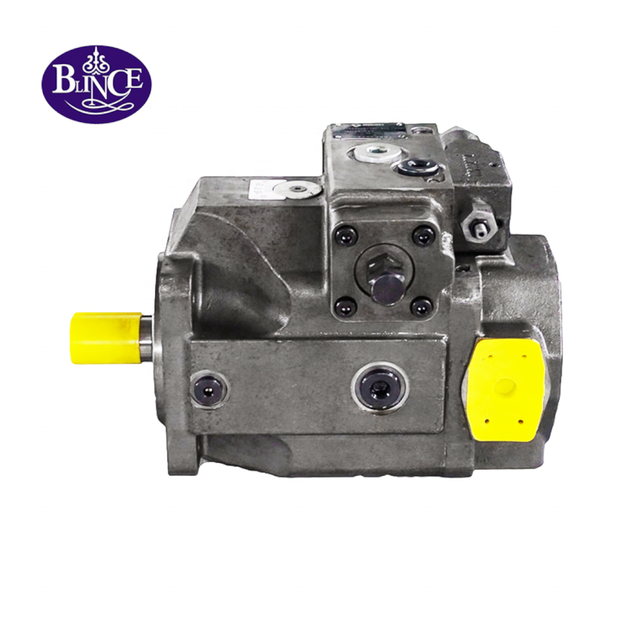
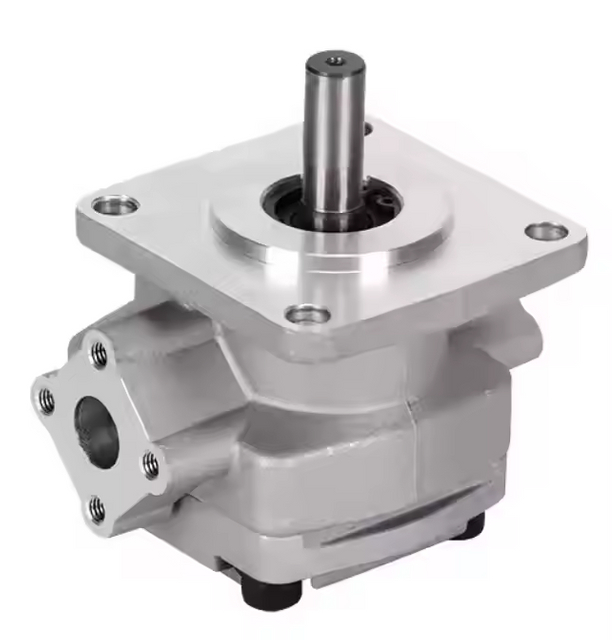
A cold, unloaded start may be quiet. Ten minutes later, after the operator raises engine speed or starts a second function, the same pump can develop a hard whine or a gravel-like rattle that travels through the hose and frame. The expensive habit is to start shopping for a pump; the useful one is to ask what changed in the circuit at the moment that sound began. Inlet starvation, a suction-side air leak, relief flow, a restrictive coupler and a worn coupling can all be loud—yet only some are fixed by replacing the pumping element.
The short answer
Do not diagnose hydraulic pump cavitation from noise alone. Record the oil temperature, reservoir level, shaft speed, function being operated, load state and pressure-test locations at the moment the noise starts. Then inspect the inlet path before condemning the pump: oil level, breather, suction hose, fittings, strainer, shutoff position, pump rotation and actual speed. If a controlled change to inlet conditions changes the sound, correct that condition and retest before ordering a pump.
This does not mean every noisy pump is safe to run. Sudden severe noise, visible leakage, fast temperature rise, metal debris, abnormal vibration or unstable load control are stop-and-assess conditions. The point is narrower: a sound is an observation, not a component diagnosis.
Start by making the complaint specific
“The pump is noisy” is not enough information to choose a repair path. Ask the operator to describe the transition, not merely the sound.
Was the system quiet at cold start and noisy once the oil warmed?
Did the noise begin after a hose, filter, adapter, coupling or drive was changed?
Does it rise with engine speed, with a certain function, or only when the relief valve is expected to open?
Is there foam in the tank, a fluctuating gauge, a hot coupling, reduced actuator speed, or a change in oil level?
Does the symptom disappear at low rpm or no load?
Those questions turn an audible complaint into a sequence of testable conditions. The answer is usually more valuable than a generic label such as “gear-pump cavitation.” For a product replacement conversation, BLINCE needs that sequence alongside the old pump nameplate and installation details—not just a video of the noise.
Why similar sounds lead to different repairs
The inlet side of a pump has to be supplied with oil fast enough to fill the pumping chambers. When local pressure falls too low, dissolved gas can come out of solution or vapor cavities can form; when those cavities reach a higher-pressure region, their collapse can contribute to noise, vibration, erosion and unstable output. Separately, air can enter through a suction-side leak or be carried into the pump from aerated reservoir oil. Both conditions can sound sharp and both can cause heat and loss of useful flow.
Danfoss describes dissolved air in hydraulic oil and identifies inlet-side leaks plus restrictions—undersized plumbing, elbows and sudden changes in flow passage—as important contributors to aeration and cavitation damage. Its guidance is useful because it shifts attention from the pump housing to the inlet system, pump speed and reservoir arrangement. Read the Danfoss design guidance as a principle document; the allowable inlet condition for a particular pump still comes from that pump’s data sheet.
Parker makes the same installation point for its PV pump family: the inlet connection must be gas-tight, the suction pipe should be short and free of sharp restrictions, and the pump must not run empty. That is not a published rating for every BLINCE model, but it is a sound diagnostic boundary. See the Parker PV installation manual before treating an inlet vacuum issue as a purely internal pump fault.
There is another possibility: the noise is not inlet-related at all. Oil bypassing a relief valve, passing a restrictive valve or coupler, or being forced through a tight return path can create a hiss or howl. A damaged coupling, misalignment, bearing damage or gear wear can add a mechanical rumble. This is why “replace the pump” and “ignore the noise” are both weak default choices.
Build a sound map before you touch the settings
Use the machine’s safe test procedure and make a simple record while the symptom is present.
What the sound follows
Probable direction
What the pattern does not prove
Next measurement or inspection
Cold oil, then quieter warm oil
High inlet loss, cold viscosity or a restricted strainer
It does not prove the pump has no internal wear
Oil temperature, grade, inlet line, strainer and breather
Increasing shaft speed
Inlet demand exceeds what the supply path can deliver
It does not prove a larger pump is needed
Actual rpm, displacement, hose ID, bends, lift and model speed limit
Recent hose or fitting work
Air ingress, collapsed hose, wrong rotation, blocked line or poor priming
It does not prove the new part is defective
Fittings, clamps, O-rings, hose construction, rotation and bleed method
One function at end of stroke or against load
Relief, pressure-control or valve-flow noise
It does not prove the pump is cavitating
Pressure on both sides of the suspected restriction
Persistent noise plus lower flow, heat or debris
Mechanical wear, damaged drive or pump damage
It does not identify the damaged part
Flow test, drive inspection, oil/filter debris and model-specific service data
The table is intended to change the next question. If the sound increases only with speed, do not begin by raising a relief setting. If it appears only when one tool is coupled, do not begin by opening the pump. If it follows an inlet-hose repair, do not assume the oil leak you cannot see is irrelevant; a suction joint can admit air without leaving obvious external oil.
The calculation that explains a high-rpm whine
A fixed-displacement pump makes the inlet problem easier to see because its theoretical flow demand rises directly with shaft speed:
Calculated example: the same pump, a different inlet demand
Assume a 32 cm³/rev external gear pump. This is an Example, not a BLINCE model recommendation or an efficiency claim.
At 1,200 rpm:
32 × 1,200 ÷ 1,000 = 38.4 L/min
At 1,800 rpm:
32 × 1,800 ÷ 1,000 = 57.6 L/min
The second condition asks the inlet path to provide 19.2 L/min more oil. That is a 50% increase in theoretical volume demand. A hose, adapter, elbow or strainer that caused no obvious complaint at 38.4 L/min may become the restriction at 57.6 L/min, particularly with cold oil or a long suction lift.
The calculation does not tell you the real delivered flow or an allowable speed. Internal leakage, fluid viscosity, pressure, wear and model construction change actual performance. It does tell you why the next action is to verify real shaft speed and the exact pump’s inlet/speed limit. An apparent “cavitation sound” after a pulley-ratio or motor-speed change is a system-capacity question before it is a new-pump question.
When a pump is driven by a PTO, apply the same discipline to the full drive. The PTO hydraulic pump sizing guide shows why a familiar PTO label, without actual shaft speed, displacement, efficiency and torque, does not establish a compatible pump duty.
Four branches in the diagnosis
Branch one: the pump is not being filled reliably
Start at the reservoir and move toward the pump. Check fluid level at the correct machine position, the breather, a shutoff valve that may not be fully open, soft hose that can collapse under vacuum, a kink, a low-quality adapter, suction lift, and the condition of any required strainer. A temporary hose layout is especially worth questioning if the noise began after a repair.
Do not remove an inlet strainer merely because it seems restrictive. First find out whether the selected pump and machine require it, whether contamination is present, and where that contamination came from. Removing a needed protective element can make the sound disappear while creating a much faster wear problem.
The existing no-suction troubleshooting guide is the better reference when the pump has lost prime completely. The present decision is different: the machine still produces some output, but the sound and measurements need to tell you whether it is being filled consistently.
Branch two: air is entering the oil
Foam in the reservoir, cloudy return oil, erratic sound or a symptom that begins just after a connection was disturbed are useful clues. Inspect hose clamps, O-rings, pipe flares, threaded fittings, the pump shaft seal and any joint that sees inlet vacuum. Unlike a pressure-side leak, a suction-side leak may pull air in without spraying oil out.
Repair the leak, prime and bleed only by the method permitted by the machine and pump manufacturer, then retest under the same speed and temperature condition. The tradeoff is simple: a careful reseal and retest costs a controlled stop; skipping it can turn a new pump into the next damaged part.
Branch three: the sound belongs to the control circuit
Pressure has to be measured where it changes the decision. A gauge at the pump outlet can show that the source is building pressure, but it cannot prove that an actuator receives the same usable pressure difference. A directional valve, flow control, partially connected quick coupler, cooler, return restriction or relief path can consume pressure and make heat without the pump being the root cause.
The pressure-gauge placement guide gives a useful starting framework. When the sound appears only as a function reaches its load or end condition, compare pressure at the pump outlet with pressure after the suspected component. The quick-coupler pressure-drop guide is especially relevant for attachment circuits that became noisy after a connection change.
This branch has a different tradeoff. Adding a second test point takes more time and appropriate safe test equipment, but it can prevent a pump replacement that leaves a restrictive coupler or valve in place.
Branch four: the drive or pumping group is damaged
When the inlet path and control conditions have been checked, persistent noise with a declining flow, hot housing, oil contamination, abnormal shaft movement or coupling heat makes an internal or mechanical inspection more credible. Check the coupling, key, bell housing, shaft alignment, mounting support and pipe loads as well as the pump. A compatible flange and shaft do not prove good alignment or adequate coupling engagement.
This is the moment for model-specific service data—not a generic assumption about how every gear, vane or piston pump fails. The BLINCE pump-motor matching guide is useful background because it keeps pump, motor, valve, line, heat and duty questions in the same review.
Decide whether a replacement is justified
A replacement investigation is stronger when it follows a correction-and-retest loop:
Record the failed condition: temperature, rpm, load, function, pressures, sound and visible oil condition.
Correct the observable inlet or connection fault without changing several variables at once.
Repeat the same operating condition and record whether the sound, flow, temperature and pressure behavior changed.
If the problem persists, compare delivered flow and mechanical condition with the exact pump specification and service guidance.
If a replacement is needed, match displacement, permitted pressure and speed, rotation, shaft, flange, ports, inlet requirements, fluid, temperature, duty cycle and the surrounding circuit.
A useful retest repeats the original complaint as closely as safety permits. Run at the same oil-temperature band, shaft rpm, machine function and load condition; then compare the sound, visible foam, actuator behavior, temperature trend and named pressure readings with the pre-correction record. A quieter pump at idle is not a confirmed repair if the original noise appeared only after the second function came on or after oil temperature rose. This comparison is what converts a plausible repair into evidence for, or against, a replacement decision.
The fifth step is where a product-category page becomes useful. The BLINCE Hydraulic Gear Pump range provides commercial starting points, while individual HGP and AZPW pages help begin a configuration conversation. Do not transfer one series’ published limit to another pump family, and do not treat the category as evidence that a model fits the existing inlet or drive.
If the application itself needs a pump-type review, the vane pump versus gear pump guide can frame the architecture question. It cannot solve a suction restriction, incorrect rotation or damaged coupling by itself.
Three familiar mistakes—and the better next move
“The relief is set low, so I will turn it up.”
This can increase heat and loading without supplying oil to a starved inlet. First establish the actual pressure difference across the component doing the work and verify the component limits. Pressure is not a substitute for inlet filling.
“The new pump is louder, so the new pump is wrong.”
It may be wrong, but a new pump can reveal an old inlet or alignment problem because clearances and flow behavior differ. Before assigning blame, verify rotation, drive speed, suction plumbing, priming procedure, line supports and pressure-test locations.
“The mounting and ports match; it will be a direct replacement.”
Physical fit is necessary but incomplete. Displacement, speed, pressure, inlet condition, shaft load, oil, temperature, duty and control behavior still decide whether the unit works on the actual machine. That is why a replacement quote without operating data is usually an approximation.
Who should not keep troubleshooting in operation
Pause the order and stop the machine under its approved safety procedure if there is rapid temperature rise, a sudden hard noise, major vibration, external leakage, metal debris, loss of a load-control function, or any risk that stored hydraulic energy could move equipment unexpectedly. This article is an engineering diagnostic guide, not a procedure for bypassing guards, working near rotating couplings or testing live circuits without the required training and equipment.
It is also not suitable for deciding a high-risk system from audio alone. Machines with suspended loads, high stored energy, brake circuits, closed-loop transmissions or safety-critical motion may need manufacturer-specific test points and controls before normal troubleshooting begins.
Send this data before asking for a pump match
The most useful request contains:
Old pump model, complete nameplate, clear installation and port photos.
Machine function, load condition and a description of exactly when the sound begins.
Pump shaft rpm, drive type, rotation viewed from the defined shaft end, coupling and mounting details.
Oil type, cold/normal/hot temperature, reservoir level, foam or debris condition and maintenance history.
Inlet hose inside diameter and length, vertical lift, fittings, bends, shutoff, strainer and breather arrangement.
Loaded and unloaded pressure at named test points, flow if available, return/cooler/filter route and duty cycle.
Shaft, flange, port, envelope and any required replacement dimensions.
BLINCE can use this record to screen a candidate product category, identify missing compatibility data and flag whether the first corrective action belongs in the inlet, control, cooling, installation or the pump itself. A credible answer may be a replacement model. It may also be a recommendation not to order one until a restriction or measurement gap is resolved.
FAQ
Does a hydraulic pump cavitation sound always get worse at high rpm?
Not always, but a fixed-displacement pump’s theoretical inlet demand rises with rpm, so higher speed can expose a marginal inlet path. High rpm can also expose drive misalignment or bearing noise. Confirm the pattern with rpm, oil temperature, inlet inspection and correctly located pressure readings.
Can a suction-side leak exist without an external oil leak?
Yes. A joint under inlet vacuum can admit air rather than push oil outward. Foam, intermittent noise and a symptom that changes after fittings are resealed are useful clues, but the test method must follow the machine’s safety and service guidance.
Is a clogged suction strainer proof of cavitation?
No. It is a plausible inlet restriction that deserves inspection, especially with cold oil or high rpm. It does not prove the pump is undamaged, and it should not be removed without understanding the machine and pump requirements.
Why is one pump-outlet pressure gauge not enough?
It can show source pressure but not the loss across a valve, coupler, filter, cooler or return line. The relevant value may be the pressure difference across the component that must do the work.
Can a gear pump be replaced by a vane pump to make the noise disappear?
Only after the machine’s pressure, flow, speed, inlet, fluid, mounting and duty requirements support that change. A different pump architecture does not correct air ingress, inadequate inlet plumbing or an overloaded drive.
This article is a general engineering guide. Final component selection should be based on machine drawings, measured hydraulic data, working conditions, safety requirements, and confirmation from a qualified hydraulic engineer or supplier.
Blince Hydraulic Team
Blince Hydraulic is an industry-leading company dedicated to precision-engineered fluid power manufacturing and custom hydraulic solutions. Backed by decades of deep field expertise in industrial machinery and thousands of successful global deployments, our engineering team focuses entirely on high-performance hydraulic component manufacturing, including specialized orbital motors, high-pressure travel drives motor, and robust directional control valves. Our production infrastructure utilizes state-of-the-art multi-axis CNC machining systems and is fully ISO 9001 certified to guarantee repeatable volumetric accuracy across every single manufacturing run.
We deliver fast, highly dependable, and cost-efficient hydraulic solutions to heavy industry distributors, machinery OEMs, and maintenance crews across more than 150 countries. Whether your active project calls for a small-volume batch of customized shaft profiles or a large-scale production run of severe-duty cast iron gear pump, we configure our flexible production schedules to meet your target lead times with total pricing predictability. Partnering with Blince means securing maximum system efficiency, elite material quality, and uncompromised fluid power professionalism.
To learn more about our complete product lineup, visit our official website: www.blince.com.