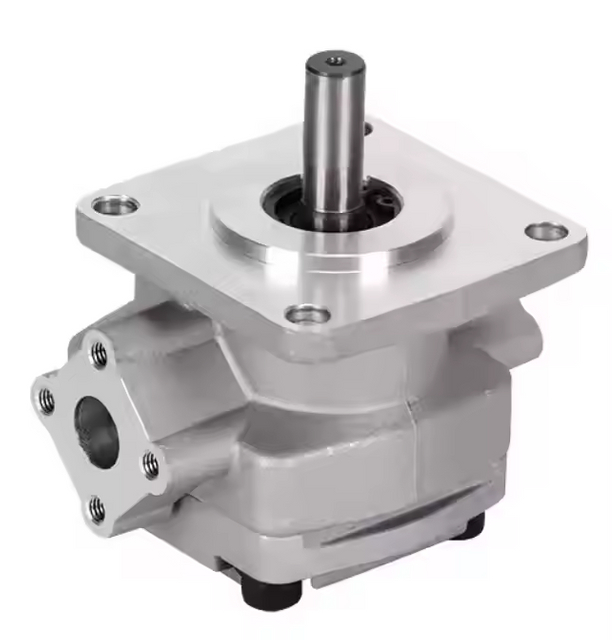
Internal and external gear pumps (Spanish: bomba de engranajes interna/externa; Russian: шестеренный насос внутреннего/внешнего зацепления) are two fundamental types of hydraulic gear pumps. Both use interlocking gears to move fluid, but their designs and performance characteristics differ in key ways. This comprehensive guide explains how each pump works, compares their performance on flow stability, noise, efficiency, pressure, and fluid compatibility, and highlights typical use cases. We’ll also showcase the advantages of Blince IGP internal gear pumps and Blince OGP external gear pumps as examples, helping you choose the right solution for your needs.
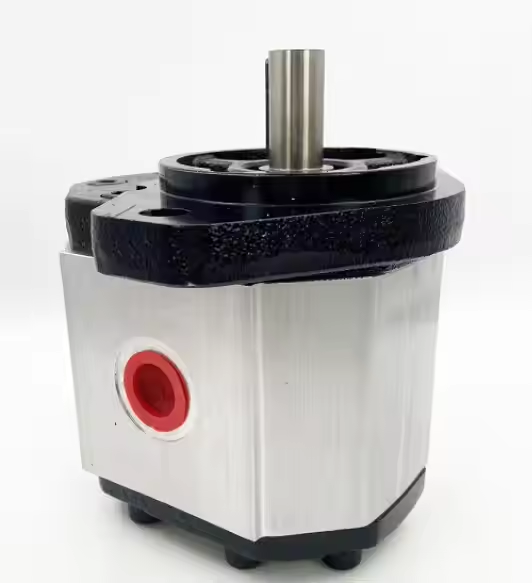
Understanding Gear Pump Basics
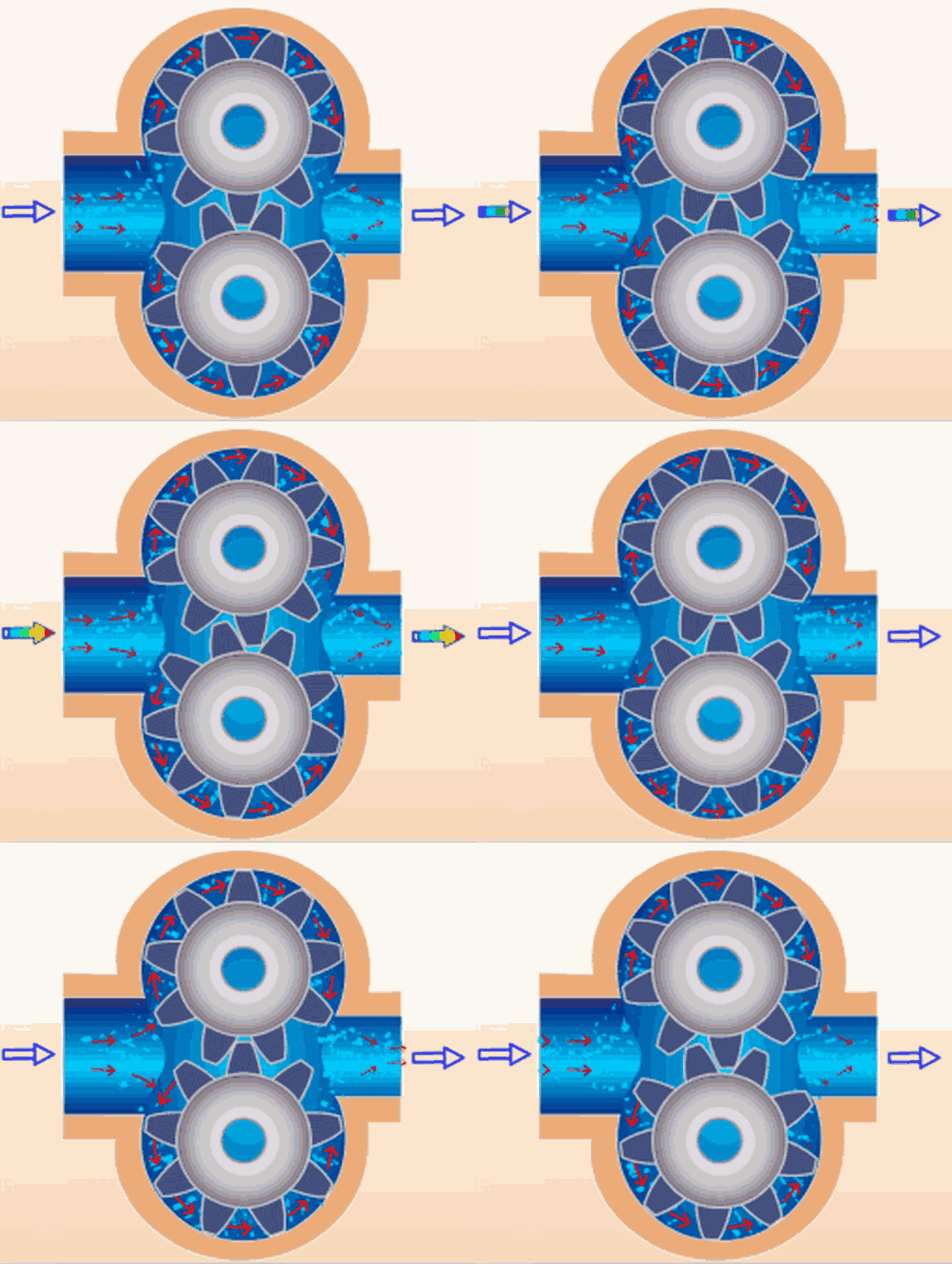
Gear pumps are positive displacement pumps that transfer fluid by trapping it between rotating gears and the pump housing. As the gears rotate, fluid is drawn into the inlet, carried around the casing, and then forced out the outlet under pressure. This mechanism provides a steady, pulse-free flow proportional to speed. The simplicity and reliability of gear pumps make them common in industrial hydraulics and mobile machinery.
There are two main gear pump designs:
External Gear Pumps: Use two identical gears meshing externally (side by side). One gear drives the other, and fluid is moved around the outside of the gears.
Internal Gear Pumps: Use two gears of different sizes where a smaller internal gear meshes within a larger ring gear. A crescent-shaped separator often divides the suction and discharge sides.
Both types perform the same pumping cycle of filling, transfer, and discharge but differ in construction and operation details. Let’s dive into each design.
ow Internal Gear Pumps Work (Gear-Within-Gear Design)
An internal gear pump consists of a large outer gear (rotor) with internal teeth and a smaller inner gear (idler) with external teeth, positioned off-center inside the rotor. As these gears rotate in the same direction, they create expanding and contracting cavities that move fluid. Key steps in the operation include:
Filling: As the gears disengage on the inlet side, an expanding cavity forms. This vacuum draws fluid into the pump.
Transfer: The fluid is trapped between the rotor and idler teeth and carried around the crescent partition toward the outlet.
Discharge: On the outlet side, the gears re-mesh, the cavity shrinks, and fluid is pushed out under pressure.
A tight clearance between gears and casing ensures strong suction and minimizes backflow (internal leakage). This design is bi-directional – it can pump in reverse by reversing rotation, which is useful for loading/unloading operations (a single pump can fill or empty a tank). Internal gear pumps are also self-priming, able to evacuate air and lift fluid on startup, especially when wetted.
Structural features: Many internal gear pumps include a stationary crescent-shaped divider that fills the gap where the gears don’t mesh, separating the suction and discharge chambers. The inner gear typically mounts on a fixed pin, while the outer gear is driven by the motor shaft. Only one bearing (or a few) supports the gears in the fluid, which reduces the number of wetted bearings compared to external designs. This can make internal gear pumps slightly more tolerant of certain fluids (e.g. less risk of bearing wear with mild abrasives) and contributes to their robust service life.
The classic “gear-within-a-gear” configuration was pioneered by Viking Pump in 1911 and remains popular for its gentle handling of fluids. The design provides smooth, laminar flow with minimal pulsation because the gears are in nearly constant contact, reducing flow ripple. Overall, internal gear pumps operate with a compact, low-noise profile and are capable of handling a wide range of viscosities.
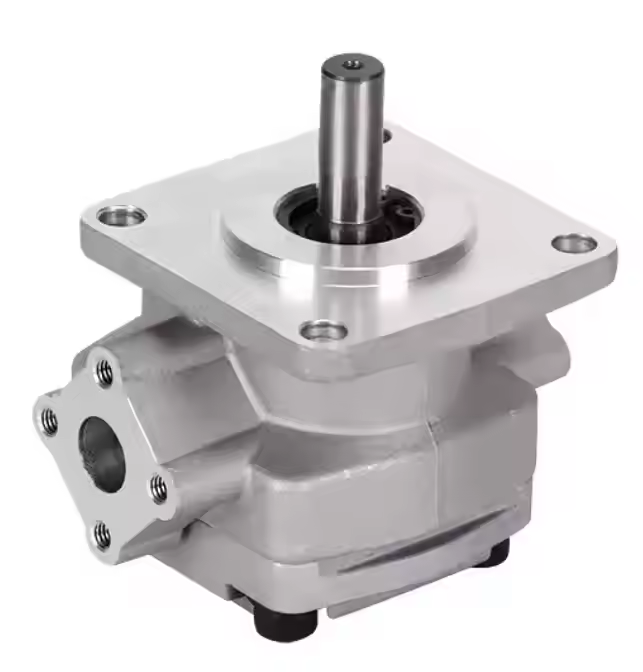
How External Gear Pumps Work (Twin Gear Design)
An external gear pump is built with two identical gears (often spur gears) that mesh externally inside a housing. One gear is connected to the drive shaft (powered gear) and the other is an idler. Operation proceeds as follows:
Inlet Fill: As the gear teeth unmesh on the inlet side, they create a vacuum. Fluid rushes into the cavities between the teeth and the casing.
Transfer: The rotating gears carry these pockets of fluid around the periphery from inlet to outlet, sealed between the gear teeth and pump body.
Outlet Discharge: When the gears mesh again on the outlet side, the volume between teeth decreases and fluid is expelled under pressure.
Close tolerances between the gear teeth and casing prevent significant backflow, ensuring that most fluid is pushed forward. External gear pumps typically have each gear supported by bearings on both sides of the casing (two shafts), which provides strength and alignment for high-speed rotation.
Gear types: External pumps may use straight spur gears or more advanced tooth forms:
Spur gears are common, easy to manufacture, and allow high speeds, but can be noisy.
Helical gears and herringbone (double helical) gears engage gradually, reducing vibration and noise. Herringbone gears also balance axial forces for smoother, more durable operation.
Many modern external pumps use helical or herringbone gears to achieve quieter operation, addressing one traditional drawback of spur gear noise.
Bi-directional operation: Some external gear pumps (especially with spur gears) can also run in reverse flow direction, though not all are designed for symmetrical performance. This can be useful in certain circuits (for example, using a gear pump as a hydraulic motor by back-driving it with fluid).
In summary, external gear pumps have a simple, rugged structure with few moving parts. They reliably generate flow across various fluids and are known for their steady output and reliability in tough conditions.
Comparing Performance Metrics of Internal vs External Gear Pumps
Choosing between an internal and external gear pump comes down to matching their strengths to your application’s needs. Below we compare key performance aspects:
Flow Stability and Noise
Internal gear pumps deliver a remarkably smooth, steady flow with very low pulsation. Their gear-within-gear mechanism means there is always some tooth engagement, which evens out the fluid delivery. Flow pulsation in internal designs can be half that of an equivalent external gear pump. This translates to lower noise and vibration as well, since pressure fluctuations are minimal. In fact, internal gear pumps are known for quiet operation, often preferred in noise-sensitive environments. Many engineers consider them “low noise” hydraulic pumps, ideal when sound levels must be kept low.
External gear pumps provide a consistent flow too, but due to the nature of two separate gears meshing, a slight ripple can occur each time teeth interlock. Flow pulsation is higher in external pumps (especially with straight-cut spur gears) which can cause more noise and vibration. However, using helical or herringbone gears significantly reduces this issue by making the meshing continuous and smooth. Noise output for external pumps is generally higher than for internals, typically requiring additional noise reduction measures in sound-sensitive installations. For example, Casappa’s “Elika” external gear pumps use a special gear profile to cut noise by ~15 dB compared to standard spur gear pumps. In short, internal gear pumps usually run quieter than external ones, though advanced external designs have narrowed the gap.
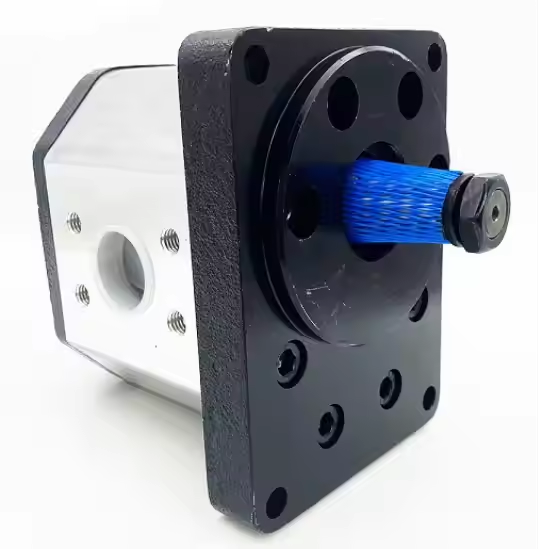
Efficiency and Pressure Capability
Both pump types can achieve high efficiency in the right conditions. Volumetric efficiency – a measure of leakage losses – is very good for gear pumps, often exceeding 90%. Internal gear pumps maintain strong efficiency even at low speeds and with viscous fluids, because their tight sealing and often a sealing gap compensation mechanism minimize internal leakage. They also perform well across a range of pressures, providing near-constant flow regardless of outlet pressure until reaching their design limit. One advantage of internals is that they tend to lose less efficiency pumping high-viscosity fluids; the thick fluid actually helps seal clearances, and the pump’s inherent design suits slow, high-torque pumping.
External gear pumps excel in efficiency for lower viscosity fluids and at higher speeds/pressures. Their tight clearances and robust support allow handling thin fluids with minimal slip, and they can sustain high RPM operation, making them very efficient in high-flow applications. At very high viscosities, external pumps may become less efficient or harder to operate (more energy needed to shear the fluid), whereas an internal pump would handle it more easily. In terms of mechanical efficiency (how much input power is lost to friction), both designs are comparable – both have low internal friction if properly lubricated by the fluid.
When it comes to pressure range, external gear pumps generally have the edge for highest pressure capability. Thanks to bearings on both sides of each gear and a straightforward force path, many external pumps are rated for very high pressures – often 250~300 bar in standard models, with some heavy-duty designs up to about 500 bar (7250 psi). They are widely used in high-pressure hydraulic systems on machinery. Internal gear pumps typically handle medium to high pressure, commonly in the 150–300 bar range depending on the model. Modern internal gear pumps (like servo-drive pumps) are built to reach up to ~315 bar continuous (about 31.5 MPa), which covers most industrial needs. In general, if your system requires extreme pressure levels above 300 bar, external pumps are more readily available in those ratings. Both types should always be used with an appropriate relief valve for safety, as gear pumps are positive displacement and will continue building pressure if output is blocked.
Summary of Efficiency & Pressure: In proper applications, both pump styles can exceed 90% volumetric efficiency. Use internal gear pumps for thick fluids or low-speed high-torque needs, and external gear pumps for high-pressure, high-speed needs. Each design is energy-efficient when used within its optimal envelope, so matching the pump to your fluid and pressure requirements is key.
Fluid Compatibility and Viscosity Range
One major differentiator is how well each pump handles fluid viscosity and special fluid types:
Internal Gear Pumps: Extremely versatile in viscosity range. They can pump thick, viscous fluids (like molasses, asphalt, resins, syrups) that would be difficult for other pumps. The gentle meshing action also imparts low shear, which protects shear-sensitive liquids (e.g. paints, polymers, food products) from degradation. At the same time, a well-designed internal gear pump can also handle low-viscosity fluids like solvents or fuel oils – the Viking internal pumps, for instance, can cover fluids from <1 cP up to 1,000,000 cP (very thick) with appropriate clearances and speed adjustments. They have excellent self-priming ability even with heavier fluids, often being able to pull a strong suction lift where needed. Internals are also a top choice for hygienic and food-grade applications, since their easy-to-disassemble design allows thorough cleaning, and the smooth flow is ideal for dosing and mixing.
Special fluids: Internal gear pumps can be constructed from stainless steel or other alloys for corrosive chemicals and can even be fitted with heating jackets for fluids that solidify when cold (e.g. bitumen). They are not suited for fluids with large solid particles or very abrasive slurries, as tight tolerances can wear quickly with abrasives. Overall, think of internal gear pumps for heavy, sticky, or delicate fluids – they handle these with ease.
External Gear Pumps: Handle a wide variety of fluids, particularly moderate to low viscosity liquids such as water, solvents, light oils, gasoline, etc.. They are commonly used for fuel transfer, lubrication oils, hydraulic oils, and coolants. External pumps can also be built from chemically resistant materials (cast iron, stainless steel, PTFE-coated) to pump aggressive chemicals like acids, alkalies, and solvents. In fact, modern external gear pumps can be designed to handle aggressive media like sulfuric acid, sodium hypochlorite, or caustics when proper materials and clearances are used. They also perform well with clean fluids of low or medium viscosity even at high pressures.
However, external pumps are less efficient with extremely thick fluids – very viscous liquids may cause flow losses or even pump damage if the pump cannot ingest the fluid quickly enough. They also have limited self-priming ability on very thin fluids (like low-viscosity solvents) because the tight clearances that allow high pressure can make it harder to draw in thin fluids initially. As with internal pumps, external gear pumps are not designed for large solids or abrasives – contamination should be filtered to prevent scoring of the gears and casing. For fluids with some entrained solids or higher abrasiveness, other pump types (like lobe or progressive cavity pumps) might be better, although internal gear pumps have a slight edge in handling abrasives due to fewer bearings in the fluid path.
Chemical and Temperature Compatibility: Both internal and external gear pumps can be equipped with appropriate seals, gaskets, and materials to handle a range of chemicals and temperatures. Internal pumps often can be fitted with jackets for heating to pump waxes or heavy oils at elevated temperatures. External pumps, with their simpler geometry, can sometimes handle higher temperature ranges inherently, but both types are used for hot fluids (consult manufacturer specs for limits). For example, internal gear pumps are known to handle heat transfer oils up to high temperatures (with proper clearances) since they can even include expansions to accommodate thermal growth.
In summary, internal gear pumps cover a broader viscosity spectrum (from thin solvents to molasses-like liquids) and provide gentle handling, while external gear pumps are ideal for a wide array of standard fluids, especially in the low-to-medium viscosity range and for chemical compatibility when built in special materials.
Maintenance, Cost, and Lifespan
Both pump types are relatively simple and robust. External gear pumps have a slight edge in simplicity – two gears and two shafts in a housing – which often translates to a lower initial cost and easier maintenance. They have more bearing points (typically four bushings/bearings) but those are straightforward to replace. Internal gear pumps, having more complex geometry (idler pin, crescent, etc.), generally cost a bit more upfront and may require a bit more skill to repair (alignment of the crescent and gears is critical). However, internal pumps have only one or two bearings in the fluid, potentially reducing wear points in certain services.
With proper use (clean fluid, not running dry, within specs), both pump types can last for many years. External gear pumps in high-pressure or high-speed service will experience wear on gear teeth and bearings over time, which can increase internal leakage. Internal gear pumps may experience wear if used with unfiltered fluids or run at extremes, which eventually lowers efficiency. Implementing good filtration and using appropriate lubricant fluids will extend the life of either pump. Also, pressure relief valves are a must-have in any gear pump circuit to prevent overpressure damage.
In general, maintenance involves periodically checking for increased leakage or decreased performance (a sign of wear), inspecting/replacing bearings and seals, and ensuring the gears and housing haven’t scored. External pumps might need more frequent attention in very high pressure use (due to higher load on bearings), whereas internal pumps might need checks if used with varying temperatures (thermal expansion could affect clearances). Still, both are considered low-maintenance compared to more complex pumps.
Typical Applications and Industry Use Cases
Both internal and external gear pumps are used across industries – sometimes even within the same system for different purposes. Here’s how they typically split:
Internal Gear Pump Applications: Favored in applications requiring quiet, precise, or high-viscosity fluid handling. For example, internal gear pumps are common in chemical processing (metering additives, polymers, resins), food and beverage production (syrups, chocolate, oils, flavorings) where low shear and sanitary designs are needed, and pharmaceutical dosing systems. They are also used for lubrication systems (pumping viscous lube oil in large machinery), fuel oil burners (moving heavy fuel oils), and hydraulic systems in industrial machinery that prioritize low noise (e.g. plastic injection molding machines, machine tools with hydraulic power units). In the oil & gas sector, internal gear pumps excel at moving crude oil, bitumen, and other viscous media without clogging. They can even serve in mobile equipment if a quiet power source is needed (some construction machines with hybrid hydraulic systems use internal gear pumps for low-noise operation). In summary, internal pumps shine in viscous, shear-sensitive, or precision metering roles, and in industries like food, chemicals, cosmetics, and heavy oil where those attributes are critical.
External Gear Pump Applications: Ubiquitous in mobile hydraulic machinery and general industrial hydraulics. You’ll find external gear pumps powering the hydraulics in tractors, excavators, forklifts, loaders and other construction or agricultural equipment – they provide the high pressure needed for actuators in a compact form. They are widely used in automotive systems too: for instance, many vehicles use external gear pumps for engine oil pumps, transmission pumps, and power steering systems, due to their reliability and high-speed capability. External gear pumps also handle fuel transfer (diesel or gasoline pumps on fuel skids), marine applications (pumping oil or fuel on ships), and cooling/lubricating circuits (circulating coolant or lube oil in machinery). In manufacturing, they appear in metering and blending systems for chemicals or paints where a constant flow is desired. Because they can be made to withstand corrosive fluids, external gear pumps are found in some chemical dosing systems (acid or solvent handling) where high pressure is needed. Their ruggedness, high RPM capability, and cost-effectiveness make them a go-to for general-purpose pumping in industrial plants and fluid power systems. Essentially, external gear pumps are the workhorses for high-pressure and high-speed duties in agriculture, construction, oil & gas, and manufacturing.
It’s worth noting that there is some overlap – e.g. both types can be used in hydraulic power units (HPUs) for machinery. Often the decision comes down to specific requirements: if the system demands low noise and precise control, an internal gear pump might be selected; if it needs maximum pressure or a cost-effective standard solution, an external gear pump is likely.
Advantages of Blince IGP vs OGP Series Gear Pumps
To illustrate these differences with real products, let’s consider the Blince IGP series (internal gear pumps) and Blince OGP series (external gear pumps):
Blince IGP Series – Internal Gear Pumps: The IGP series exemplifies the qualities of internal gear pumps by offering low operating noise and minimal flow pulsation. This means quieter, smoother performance in hydraulic systems – a key factor for factories or equipment where noise reduction is valued. Blince IGP pumps also maintain high efficiency even at low speeds and with low-viscosity fluids, thanks to optimized sealing gap compensation. In practical terms, you can use an IGP pump over a broad range of speeds and fluid viscosities without significant loss of performance. These pumps have excellent self-priming and can even work with less lubricating fluids (for example, certain models support HFC fluids – water-glycol hydraulic fluids – which indicates robust design and seal compatibility). Typical applications of Blince’s IGP internal pumps include plastics machinery, machine tools, presses, and other equipment where a stable, quiet hydraulic power source is needed. They can handle up to ~31.5 MPa continuous (around 315 bar) pressure, covering most high-pressure requirements in industrial hydraulics. In summary, Blince IGP series pumps deliver precision and low noise, making them ideal for engineers who need reliable hydraulic power with minimal disturbance.
Blince OGP Series – External Gear Pumps: The OGP series represents Blince’s line of external gear pumps, built for rugged performance and versatility. These pumps are designed to provide stable performance, high reliability, and adaptable use in industrial and mobile machinery. For example, a typical Blince external gear pump from the OGP family might have a displacement around 16 cc/rev and a rated pressure of 25 MPa (250 bar), delivering consistent hydraulic power for heavy-duty operations. The OGP series pumps take advantage of the external gear design’s strengths – they can operate at high speeds (up to ~3000+ rpm) and handle high pressures needed in lifting equipment, hydraulic presses, or vehicle-mounted systems. They are built with robust materials to ensure durability (many are interchangeable with Parker, Danfoss, or other brands, indicating proven designs). While external pumps inherently have slightly higher noise than internals, Blince’s use of quality engineering (possibly helical gear designs or tight manufacturing tolerances) helps ensure the pumps run as quietly and smoothly as possible for their class. These pumps are straightforward to install and maintain, valued for their cost-effectiveness and reliability in general-purpose hydraulics. If you need a powerful hydraulic gear pump for tasks like driving cylinders on a truck, powering a tractor’s implements, or circulating oil in a lubrication system, Blince OGP series pumps are a strong fit. They exemplify why external gear pumps remain very popular – delivering high pressure and flow in a compact, economical package.
By leveraging the strengths of each design, Blince’s IGP and OGP series cover a wide spectrum of hydraulic pump needs. Whether a project calls for the precision of an internal gear pump or the brute force of an external gear pump, there’s a solution available. Often, the decision will hinge on the factors discussed above: noise sensitivity, pressure required, fluid type, and budget.
Frequently Asked Questions (FAQ)
Q: What is the main difference between an internal gear pump and an external gear pump?
A: The main difference is in their gear arrangement and operation. An internal gear pump has one gear inside another (gear-within-a-gear design with a crescent separator), which provides smooth, low-pulsation flow. An external gear pump uses two side-by-side meshing gears, offering a simpler, high-pressure-capable design. Internal pumps excel at handling viscous fluids quietly, while external pumps excel at high pressure and high speed operation.
Q: Which type of gear pump is better for high-viscosity fluids or thick oils?
A: Internal gear pumps are generally better for very high-viscosity fluids. Their design can easily move thick, sticky liquids like syrups, molasses, resins, or heavy oils without losing prime. They also cause less shear, protecting sensitive fluids. External gear pumps can handle moderately viscous fluids, but at extreme viscosities they may struggle to suction fluid and lose efficiency.
Q: Are internal gear pumps quieter than external gear pumps?
A: Yes. Internal gear pumps typically run quieter and with less flow pulsation than external gear pumps. The internal meshing of gears provides a continuous fluid transfer that minimizes pressure ripple, resulting in lower noise. External gear pumps (especially with spur gears) tend to be louder due to minute flow pulses each tooth engagement. However, modern external pumps with helical or herringbone gears have improved noise levels and can be fairly quiet, though still not as silent as internal pumps in most cases.
Q: What are Blince IGP and OGP series pumps?
A: The Blince IGP series refers to Blince’s Internal Gear Pumps, and Blince OGP series refers to their External Gear Pumps. Blince IGP pumps are designed for low noise, smooth flow, and efficiency – ideal for precision hydraulic applications. Blince OGP pumps are designed for high performance and reliability in general hydraulic use – ideal for equipment requiring robust power output. Essentially, IGP = internal gear type (gear inside gear design) and OGP = external gear type (outside meshing gears), each optimized by Blince for different needs.
Q: Which pump type can handle higher pressures in a hydraulic system?
A: External gear pumps are typically used for higher pressure requirements. Standard external gear pumps often handle up to ~250–300 bar, and some heavy-duty models even reach 500 bar. Internal gear pumps usually operate in the low to mid hundreds of bar (e.g. 150–315 bar range for many models) and are chosen more for smooth flow than extreme pressure. Always check the specific pump’s rating, but if ultra-high pressure is needed, external gear pumps have more options in that realm.
Q: Are gear pumps suitable for corrosive or abrasive fluids?
A: Corrosive fluids: Yes, gear pumps (both internal and external) can be made with corrosion-resistant materials (like stainless steel, Hastelloy, or with special coatings) to handle corrosive chemicals. External gear pumps are commonly used for chemicals like acids and solvents when properly configured. Abrasive fluids or solids: Neither internal nor external gear pumps are well-suited for fluids with abrasive particles or heavy solids content. The tight clearances would wear rapidly. If slight abrasives are present, an internal gear pump may handle it marginally better (fewer bearings in fluid), but generally a different pump type (like a slurry pump) is recommended. Always ensure proper filtration upstream of a gear pump to remove particulates.
Q: Can an internal gear pump run dry or handle entrained air?
A: Internal gear pumps are self-priming and can evacuate air from suction lines, so they handle a bit of air entrainment well. However, like all hydraulic pumps, running them dry (no fluid) for more than a very short time can cause wear or damage. They rely on the pumped fluid for lubrication. It’s recommended to avoid extended dry running for both internal and external gear pumps to prevent scoring of gears and loss of clearances. If occasional air bubbles come through (like when a tank runs low), an internal gear pump will generally prime itself and continue pumping once fluid is restored, as long as it hasn’t overheated. Always follow manufacturer guidelines on priming and avoid dry start-ups if possible (fill the pump with fluid before first use).