Does your hydraulic machine feel weak or run too hot? The pump might be the culprit. Two common types are piston pumps and gear pumps. They look similar but work very differently. In this guide, you will learn how each pump operates, where a gear pump fits best, and which one saves you money long term. Let’s dive in.
How Do Piston Pumps and Gear Pumps Work?
What Is a Hydraulic Gear Pump and How Does It Operate?
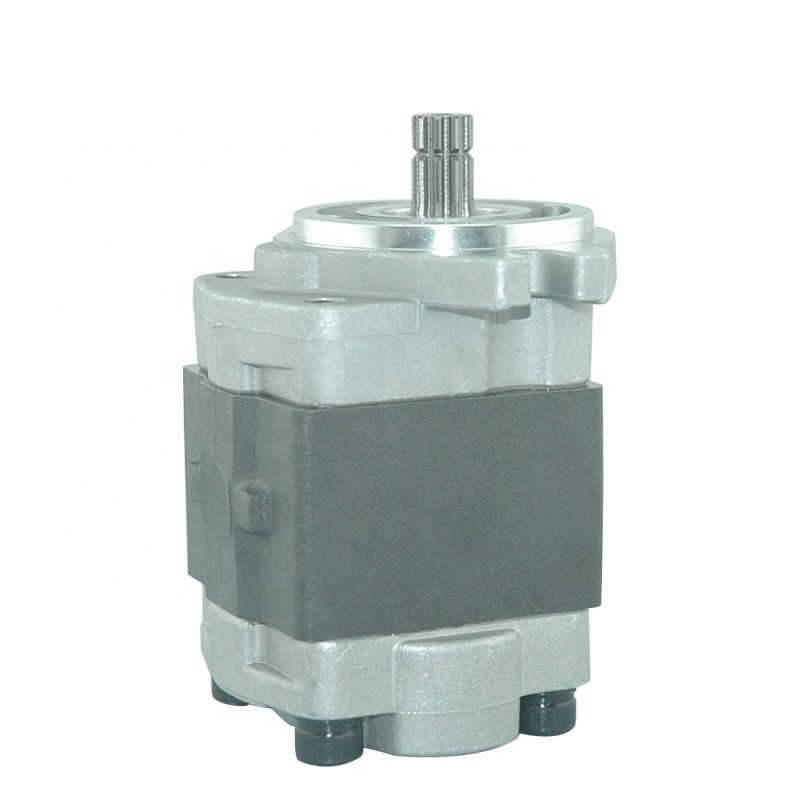
You’ve probably seen a gear pump before without even realizing it. It’s one of the simplest designs in hydraulics. Inside the housing, two gears mesh together—think of them like cogs in a clock. As they spin, fluid gets trapped between the gear teeth and the pump’s casing. Then it’s carried right from the inlet around to the outlet. Pretty neat, right?
Here’s what makes a gear pump tick:
Fixed displacement only – Every full rotation moves the exact same amount of oil. No surprises, no adjustments. That makes flow predictable.
Common subtypes you’ll find – Hydraulic gear pump (for main systems), pilot gear pump (for control circuits), and transmission charging pump (keeps hydrostatic drives fed).
What it’s good at – Simple construction, bulletproof reliability, and super easy to replace when it wears out. You don’t need a PhD to swap one.
Let’s look at a quick example. Suppose your gear pump runs at 1,800 RPM with 10 cc/rev displacement. That gives you roughly 18 liters per minute, minus a little internal leakage. No electronics, no complex valves – just gears doing their job.
What Is a Hydraulic Piston Pump and How Does It Operate?
Now flip the script. A piston pump works completely differently. Instead of gears, it uses a row of small pistons inside a rotating cylinder block. Imagine a revolver chamber, but each cylinder has a piston that moves in and out. As the block spins, a tilted plate (called a swashplate) pushes each piston inward, then lets it spring back. That pumping action moves fluid.
Here are the key facts you need to know:
Can be fixed or variable displacement – Variable models let you change the swashplate angle on the fly. More angle = more flow. Less angle = less flow. That saves fuel and cuts heat.
Much tighter internal clearances – Pistons fit inside cylinders with almost no gap. It’s precise, but it hates dirty oil.
More complex parts – You get valve plates, piston shoes, a swashplate, and lots of seals. More parts mean more potential failure points, but also much better performance under pressure.
Why does anyone use piston pumps if they’re more complex? Simple: pressure and efficiency. A piston pump can easily handle 350 bar and up. It stays efficient even when the load changes constantly. For heavy excavators, presses, or hydrostatic drives, nothing else comes close.
Here’s a quick comparison of the two pump types side by side:
Aspect
Gear Pump
Piston Pump
Displacement type
Fixed only
Fixed or variable
Pressure range (typical)
Up to 250 bar
350 to over 700 bar
Efficiency at high load
Drops noticeably
Stays high
Oil cleanliness need
Moderate
Very strict
Replacement cost
Lower
Higher
Field repairability
Easy – swap gears and seals
Complex – needs special tools
So which one should you pick? It depends on your machine’s job. If you run steady, moderate-pressure circuits, a gear pump is your friend. If you need raw power, variable flow, and high efficiency under heavy loads, go with a piston pump. Many modern machines actually use both – a piston pump for the main implements and a small gear pump for pilot control or charge functions. That gives you the best of both worlds.
Key Performance Differences Between Piston Pump and Gear Pump
Pressure Capability – Which Pump Handles Higher Pressure?
Pressure is where these two really separate. A gear pump typically maxes out around 250–300 bar (3,600–4,350 PSI). Push it beyond that, and internal leakage climbs fast. You lose flow, you lose power, and heat builds up. Not good. On the other hand, a piston pump starts where gear pumps stop. Most handle 350 bar easily. Heavy-duty models go past 700 bar (10,000 PSI). Some even exceed 14,500 PSI.
Why does this matter to you? Simple. If your machine runs continuous high pressure – think excavators digging, presses stamping, lifts raising – you need a piston pump. It’s not optional. For moderate pressure jobs like steering circuits, pilot controls, or cooling fans, a gear pump works fine. It’s also cheaper. Let’s break it down:
Pump Type
Typical Max Pressure
Best For
Gear pump
250–300 bar (3,600–4,350 PSI)
Steering, pilot lines, fans, light machinery
Piston pump
350–700+ bar (5,000–10,000+ PSI)
Excavators, presses, heavy lifts, hydrostatics
We see this every day in the field. A gear pump on a small loader’s steering circuit lasts for years. Put that same pump on a main implement circuit, and it’ll struggle. It won’t fail immediately, but you’ll notice slower cycle times and hotter oil. So match pressure rating to your real load – not the spec sheet dream number.
Efficiency and Heat Generation – What to Expect Under Load
Here’s a truth nobody likes to talk about. Efficiency drops when things get hot. A gear pump at rated pressure delivers about 90–93% volumetric efficiency. That’s decent. But crank it near its limit, and efficiency falls off a cliff. Where does the lost energy go? Heat. Excess flow bypasses through valves, oil temperature climbs, and your whole system suffers.
Piston pumps handle this much better. They hold 95% or higher efficiency across a much wider pressure range. Even better, variable displacement piston pumps automatically reduce flow when you don’t need it. Less wasted oil means less heat and lower fuel consumption. You feel the difference in the cab – smoother operation, cooler running, no sudden “softness” after lunch.
Real-world example you can relate to:
Gear pump system – Cold morning, machine feels snappy. After two hours of heavy work, the boom moves slower. The bucket curls weaker. That’s efficiency loss turning into heat.
Piston pump system – Same job, same hours. Performance stays consistent. Oil temperature holds steady. You keep working instead of waiting for things to cool down.
We aren’t saying gear pumps are bad. They’re great for steady, moderate loads. But if your duty cycle includes long stretches at high pressure, a piston pump pays for itself in fuel savings and reduced downtime.
Contamination Sensitivity and Maintenance Requirements
Let’s talk about dirt – because it kills pumps. A gear pump is more forgiving. Its internal clearances are looser. Small particles can pass through without instantly ruining the pump. You still need clean oil, but a gear pump won’t die from one missed filter change. Field repair is also easier. Replace the gears, swap the seals, and you’re back running. Parts cost less, too.
A piston pump? It’s the opposite. Tight tolerances everywhere – pistons to cylinders, valve plates to cylinder blocks. One speck of dirt can score a piston or jam a valve. Failure comes fast and expensive. You might need a full rebuild or replacement. Oil cleanliness becomes critical. You’ll need finer filters and regular oil sampling.
Quick maintenance checklist for both pump types:
For a gear pump – Change oil and filters on schedule. Watch for abnormal noise (whining often means cavitation or wear). Check inlet strainers – restricted suction kills gear pumps fast.
For a piston pump – Follow stricter cleanliness standards (ISO 18/15/13 or better). Sample oil regularly. Replace filters more often. Never mix different oil types. Inspect case drain filters for metal debris – that’s your early warning.
We recommend using a gear pump when your work environment is rough and maintenance access is limited. It tolerates real-world conditions better. But if you run high-value equipment and can maintain strict oil hygiene, a piston pump rewards you with long life and top performance.
Noise, Vibration, and Operating Smoothness
Ever stood next to a loud hydraulic pump and felt your teeth rattle? That’s often a gear pump. Its meshing gears create noise, especially at high speeds or when wear sets in. Older gear pumps can whine, chatter, or vibrate. Newer designs – like those using helical gears – run much quieter. But noise is still a factor you’ll notice.
Piston pumps are generally smoother and quieter. Their reciprocating motion is naturally balanced. You don’t get the same gear-meshing racket. Variable displacement models can introduce some pressure ripple, but it’s usually mild. For cab-mounted equipment or noise-sensitive sites (think near hospitals or residential areas), piston pumps feel more refined.
We’ve seen customers switch from a worn gear pump to a new one and cut cab noise by half. But if you want the quietest operation possible, a piston pump is your answer. That said, don’t overthink it for open-air machinery. A quality gear pump from a trusted supplier – one designed with low-noise features – works perfectly fine for most jobs. Just match the pump to your real comfort needs.
Where Should You Use a Gear Pump vs. a Piston Pump?
Typical Applications for a Hydraulic Gear Pump
Let’s be honest – not every machine needs a Formula One engine. Sometimes you just need a reliable, affordable pump that starts every day and doesn’t complain. That’s your gear pump. Here’s where it truly belongs:
Pilot control circuits – These run joysticks and pilot valves. They need low flow and steady pressure, not crazy power. A gear pump fits perfectly.
Transmission charge pumps – Hydrostatic transmissions need a constant top-up of oil. A small gear pump does that job quietly and cheaply.
Steering & fan drives – Think forklifts or loaders. Turn the wheel, the pump responds. No drama. No electronics.
Auxiliary functions – Lift gates, small cylinders, conveyor drives. Intermittent use, moderate load. Perfect for a gear pump.
Industrial fluid transfer – Low-pressure lubrication, fuel transfer, even high-viscosity fluids like glue or heavy oil. Gear pumps handle thick liquids without choking.
So when do you choose a gear pump? We pick it when pressure stays under 250 bar and flow can be fixed. You want durability, low cost, and easy replacement. That’s the gear pump sweet spot.
Typical Applications for a Hydraulic Piston Pump
Now switch gears. Some jobs demand raw power, variable flow, and efficiency under pressure. You know what we’re talking about. Here’s where a piston pump is the only real answer:
Main implement circuits – Excavators digging, wheel loaders filling buckets, bulldozers pushing. Continuous high pressure (350 bar+). A gear pump would overheat fast.
Heavy industrial machines – Presses stamping car panels, injection molders shooting plastic, steel mills rolling hot slabs. Long cycles, high load. Only piston pumps survive here.
Hydrostatic drives – Combine harvesters, skid steers, tracked carriers. You need smooth speed control from zero to full. Variable displacement piston pumps deliver that.
Load‑sensing systems – The pump “feels” how much flow each function needs and delivers exactly that. No wasted oil, less heat, better fuel economy. A gear pump can’t do this.
When do we choose a piston pump? Three situations: pressure above 300 bar, rapid cycling, or variable flow needed. Yes, it costs more upfront. But it saves fuel, runs cooler, and keeps production moving.
Factors to Consider Before Buying – Gear Pump or Piston Pump?
Cost Comparison: Initial Price vs. Long-Term Operating Cost
Money talks, right? We all want to spend less today. But sometimes saving upfront costs you more tomorrow. Let’s break it down for both pump types.
Gear pump – Lower sticker price. Parts cost less. Labor is simpler – anyone with basic tools can swap one. But here’s the catch. If you run it hard near its pressure limit, efficiency drops. That lost energy turns into heat. Heat means wasted fuel and shorter oil life. Over time, those costs add up.
Piston pump – Yes, it costs more upfront. Rebuilds aren’t cheap either. However, in heavy-duty use, it pays you back. Fuel savings alone can cover the price difference within a year. Plus, fewer heat-related failures mean less downtime.
Here’s our rule of thumb. Does your machine run more than 2,000 hours per year at high load? If yes, buy the piston pump. It’s the smarter long-term investment. For lighter duty or intermittent work, a gear pump saves you money where it matters – right now.
Cost Factor
Gear Pump
Piston Pump
Initial price
Low to moderate
High
Replacement parts
Inexpensive
Expensive
Labor for repair
Simple, fast
Complex, slower
Fuel/heat cost at high load
Higher
Lower
Best for annual hours
Under 2,000 heavy hours
Over 2,000 heavy hours
Installation and Compatibility – What to Check Before Ordering
Nothing’s worse than waiting for a pump that doesn’t fit. Save yourself the headache. Check these six things before you click “buy.” We’ve seen too many people skip this step and regret it.
Mounting flange and shaft type – SAE two-bolt? Four-bolt? ISO? Get it wrong, and the pump won’t bolt up. Measure twice.
Port sizes and orientation – Inlet and outlet locations matter. Hoses don’t bend around wrong ports. Check your old pump’s port positions.
Rotation direction – Stand at the shaft end. Does it turn clockwise or counterclockwise? A gear pump running backward moves oil, but not to the right place. It’ll starve your system.
Displacement (cc/rev) – This determines flow at your operating RPM. Too small? Slow cycles. Too big? Overheated oil from bypassing excess flow.
Maximum continuous pressure rating – Must exceed your system’s relief valve setting. Otherwise, pump failure comes fast.
For tandem pumps – Confirm section sizes and order. Primary stage first? Secondary? Swap them and nothing works.
Key note we always share: Most gear pump failures aren’t from wear. They’re from mismatched rotation or incorrect port alignment. Double-check. Then check again.
Variable Displacement vs. Fixed Displacement – Does Your System Need It?
Here’s a question we hear all the time: “Do I really need variable displacement?” Let’s make it simple.
Fixed displacement – This applies to most gear pump models and some piston pumps. Flow stays tied to engine RPM. Engine spins faster, more flow. Slower, less flow. To control an actuator (like a cylinder moving slowly), you must use a valve to bypass the extra oil. That bypassed oil turns into heat – sometimes a lot of heat. Fine for steady jobs. Not great for feathering or partial loads.
Variable displacement – Most piston pumps offer this. The pump automatically changes its output to match what the system needs. No wasted flow. Less heat. Better fuel economy. Plus, control feels smoother – like driving a car with a smooth accelerator instead of an on/off switch.
Ask yourself these three questions:
Does your machine spend a lot of time at partial load or feathering functions? (Think backhoe slowly closing a ditch.)
Do you care about fuel savings and lower oil temperatures?
Is your system designed for load sensing or pressure compensation?
If you answered yes to any of these, a variable displacement piston pump is your friend. If your job is constant speed, constant load – like a conveyor running all day – a fixed displacement gear pump is perfectly adequate. No shame in that. It’s the right tool for the right job.
Conclusion
Choosing between a piston pump and a gear pump comes down to your machine’s pressure needs, duty cycle, and budget. A gear pump offers simplicity and lower upfront cost for moderate-pressure jobs. A piston pump delivers higher efficiency and variable flow for tough, continuous work. Blince provides reliable hydraulic gear pumps built for real-world conditions. Their products help you reduce downtime and keep equipment moving smoothly.
FAQ
Q: What is the main difference between a piston pump and a gear pump?
A: A piston pump uses reciprocating pistons for high pressure and variable flow. A gear pump uses meshing gears for fixed flow at moderate pressure.
Q: When should I choose a gear pump over a piston pump?
A: Pick a gear pump for steady, low-to-medium pressure jobs like steering, pilot circuits, or auxiliary functions where cost and simplicity matter.
Q: Can a gear pump handle high pressure like a piston pump?
A: No. A gear pump typically maxes out at 250–300 bar, while a piston pump handles 350 bar or more for heavy-duty applications.
Q: Which pump is more efficient under continuous heavy load?
A: A piston pump is more efficient at high load because it maintains volumetric efficiency above 95% and reduces heat generation.
Q: Does Blince offer gear pumps for replacement or new installations?
A: Yes. Blince supplies durable gear pumps with easy installation, low noise, and high volumetric efficiency for various hydraulic systems.