In many hydraulic systems, one valve is not enough. A machine may need to lift, rotate, clamp, steer, travel, lock, unload, and protect pressure at the same time. Sooner or later, a designer, repair technician, or equipment manufacturer will ask the same question: can multiple hydraulic valves be used in series?
The short answer is: yes, but only when the circuit is designed for it. Connecting valves in series is not simply a matter of adding one valve after another. In a hydraulic system, every valve creates pressure loss, changes flow priority, affects response time, and may influence the next valve downstream.
If the series circuit is poorly designed, the machine may still move, but it may move slowly, heat the oil, lose force, or behave differently when two functions are operated together. This is why series-connected hydraulic valves must be checked from the viewpoint of flow, pressure, back pressure, control logic, and maintenance access.
What Is a Multi-Way Hydraulic Valve?
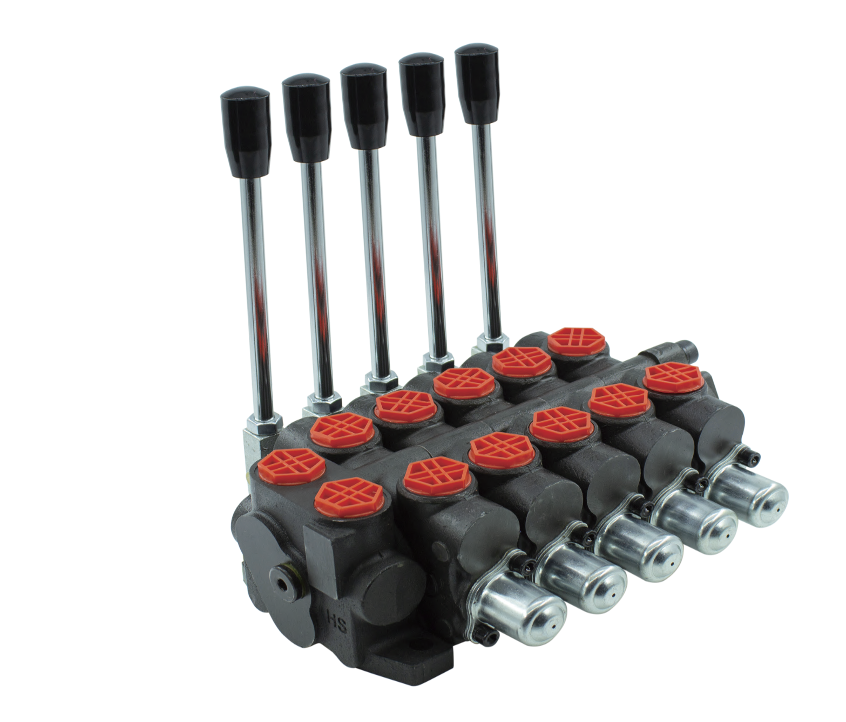
A multi-way hydraulic valve is a control valve assembly used to distribute hydraulic oil from the pump to different actuators, such as hydraulic cylinders and hydraulic motors. Depending on the design, it may include directional spools, relief valves, check valves, load-holding valves, anti-shock valves, anti-cavitation valves, proportional control sections, or other auxiliary functions.
In simple terms, the multi-way valve acts like the traffic controller of a hydraulic system. It decides which actuator gets oil, where the return oil goes, and how different actions are coordinated.
Application
Typical Controlled Functions
Excavators
Boom, arm, bucket, swing, travel
Loaders
Lift, tilt, steering auxiliary functions
Agricultural machinery
Lifting, folding, steering, harvesting tools
Forestry machinery
Clamping, rotating, feeding, cutting
Industrial equipment
Pressing, clamping, pushing, indexing
Special vehicles
Outriggers, cranes, compactors, lifting systems
Multi-way valves are widely used because they reduce piping complexity and allow several control functions to be integrated into one valve body. For OEMs and repair companies, this can save installation space and simplify system layout. However, the more functions a valve group controls, the more carefully the circuit must be designed.
What Does “Valves in Series” Mean?
When people say “valves in series,” they may mean different things. This is one reason the topic often causes confusion.
In a hydraulic circuit, valves may be considered “in series” when oil leaving one valve or valve section passes into another valve before returning to the tank or reaching the actuator. In mobile hydraulics, this may happen in several ways.
Series Type
Meaning
Common Example
Main valve sections connected by internal galleries
Several spool sections share one inlet and return path
Sectional multi-way valve
Power-beyond connection
Oil from the first valve feeds the next downstream valve
Tractor auxiliary valve feeding rear implements
Pressure control valves in series
One pressure valve works before another
Relief, reducing, sequence, or counterbalance valve combinations
Directional control valve works with lock valve, brake valve, or counterbalance valve
Boom cylinder, winch motor, travel motor circuit
The key question is not only whether the valves can be connected. The better question is: what must the upstream valve leave available for the downstream valve?
That includes flow, pressure, return path capacity, pilot oil, drainage path, and control priority.
Can Multiple Hydraulic Valves Be Used in Series?
Yes, multiple hydraulic valves can be used in series, but the design must match the hydraulic function. Some series connections are common and safe. Others create unstable control because two valves may try to control the same variable at the same time.
A series valve circuit is usually reasonable when each valve has a different job. For example, one valve may control direction, another valve may hold the load, and another valve may protect the circuit from overpressure. In this case, the valves are not fighting each other. They are performing separate tasks inside the same hydraulic system.
A series circuit is usually reasonable when:
Each valve has a different function.
The downstream valve still receives enough pressure and flow.
The upstream valve has a proper power-beyond or carry-over path.
Return oil does not create excessive back pressure.
Relief and safety settings are arranged in the correct order.
The pump capacity is sufficient for the required combined functions.
Maintenance access and fault diagnosis are considered.
It is usually risky when:
Two valves are both trying to meter the same flow.
The first valve blocks or throttles the oil needed by the second valve.
The valve outlet is used incorrectly as a pressure feed.
Tank ports are exposed to pressure beyond their rating.
The return line is too small and creates high back pressure.
The machine requires simultaneous movements but the circuit is not designed for flow sharing.
Relief settings conflict with one another.
The Biggest Problem: Pressure Drop
Every hydraulic valve has internal resistance. Oil must pass through ports, spool lands, grooves, check valves, compensators, fittings, and galleries. Even when a valve is fully open, pressure is still lost across the valve.
One valve may create an acceptable pressure drop. Three valves in series may not.
Pressure drop matters because it becomes heat and reduces useful pressure at the actuator. If the pump produces 180 bar, but the oil loses 20 bar through valve restrictions before reaching the motor, the motor does not receive the full useful pressure. In a high-torque hydraulic motor circuit, that loss can be the difference between smooth operation and weak movement under load.
For hydraulic machinery, excessive pressure drop often appears as slower cylinders, weak motors, hotter oil, and higher fuel or energy consumption.
Downstream function works only when upstream valve is neutral
Incorrect series or power-beyond arrangement
Relief valve opens frequently
Downstream demand exceeds available pressure
Flow Priority: Who Gets the Oil First?
In a series circuit, the upstream valve normally has priority because oil reaches it first. If the upstream section is fully operated, the downstream section may receive less flow or no flow, depending on valve design.
This is acceptable in some machines. For example, a simple agricultural implement may not require two actions at the same time. But in equipment that needs coordinated movement, poor flow priority becomes a serious problem.
Consider an excavator-style machine. If the boom, arm, bucket, swing, and travel functions all need smooth coordination, a simple series valve layout may not provide the required control. The system may need load-sensing valves, flow-sharing valves, priority valves, or proportional control.
For low-cost equipment, a basic sectional valve may be enough. For machines that require precise multi-function control, valve architecture is more important than simply adding more valve sections.
Pressure Settings Must Not Fight Each Other
Hydraulic valves often include pressure control functions. Relief valves, sequence valves, reducing valves, counterbalance valves, brake valves, and unloading valves all influence pressure.
When these valves are connected in series, their pressure settings must be arranged carefully.
Valve Combination
Design Risk
Two relief valves in series
The lower setting opens first, making the higher setting ineffective
Reducing valve before directional valve
Downstream actuator may never receive enough pressure
Counterbalance valve after restrictive directional valve
Back pressure may increase and affect lowering or motor return
Sequence valve before multi-way valve
Downstream functions may not start until pressure reaches the sequence setting
Brake valve plus high return pressure
Motor brake release may become unstable
This is why series valve design should not rely only on nominal pressure ratings. Engineers must check actual working pressure, return pressure, pilot pressure, and pressure drop under load.
Control Methods: Manual, Electric, Hydraulic, and Proportional
Series circuits become more complicated when different control methods are mixed.
A manual valve can be operated by hand. An electrically controlled valve depends on voltage, current, solenoid force, and signal logic. A hydraulically piloted valve depends on pilot pressure. A proportional valve depends on control signal accuracy and oil cleanliness.
If these valves are placed in one circuit without clear logic, the operator may feel delayed response, uneven speed, or unstable movement.
In real machinery, the issue is often not the valve body itself. It is the timing.
For example, a solenoid valve may shift quickly, but a downstream hydraulically piloted valve may not open until pilot pressure builds. A counterbalance valve may hold a load correctly, but if return back pressure rises because another valve is working, the load may lower unevenly. A proportional valve may meter flow smoothly in the workshop, but on the machine it may become unstable if the upstream valve starves it of flow.
When Series Valve Circuits Make Sense
Series-connected hydraulic valves are useful when each valve has a clear role. Below are common situations where series design may be reasonable.
1. Directional Valve Plus Load-Holding Valve
A directional control valve may control cylinder movement, while a pilot-operated check valve or counterbalance valve holds the load. This is common in lifting equipment, outriggers, cranes, and vertical cylinders.
2. Directional Valve Plus Brake Valve
Hydraulic motors used in winches, travel drives, or slewing systems often require brake control. The directional valve controls oil direction, while the brake valve or balance valve manages load control and prevents runaway movement.
3. Multi-Way Valve With Power-Beyond Outlet
A power-beyond sleeve or carry-over port allows pressurized oil to feed another valve downstream. This is common in tractors, loaders, and mobile hydraulic systems. However, the tank port must not be used as a pressure outlet unless the valve is designed for it.
4. Pressure and Flow Control Combination
Some test benches or industrial machines need both pressure control and flow control. In that case, two valves may be used together, but their control purpose must be separated. One valve may set maximum pressure, while another meters flow.
5. Auxiliary Functions on Simple Machinery
For simple equipment that does not require simultaneous operation, a series connection may reduce cost and simplify layout.
When You Should Avoid Valves in Series
Series circuits are not always the best choice. In some cases, parallel circuits, manifold blocks, load-sensing systems, or customized valve groups are better.
Machine Requirement
Better Option
Several actuators must move smoothly at the same time
Flow-sharing or load-sensing valve
Downstream functions need full pressure at all times
Parallel supply or priority circuit
Return back pressure must stay very low
Larger return line or separate tank return
System uses sensitive proportional valves
Stable pressure-compensated circuit
Safety-critical load holding is required
Dedicated load-control valve near the actuator
Troubleshooting must be simple
Integrated manifold with test ports
High flow and high duty cycle are required
Low-pressure-drop valve design
The main point is simple: a valve layout should follow machine function, not just piping convenience.
Selection Checklist for Series-Connected Hydraulic Valves
Before using multiple hydraulic valves in series, check the following points.
Item
What to Check
Why It Matters
Rated flow
Each valve must handle actual pump flow
Prevents overheating and speed loss
Rated pressure
Inlet, outlet, tank, and work ports must be rated correctly
Prevents leakage or valve damage
Pressure drop
Check pressure loss at working flow
Avoids heat and weak actuator output
Power-beyond function
Confirm the upstream valve supports carry-over flow
Prevents tank port overpressure
Relief setting
Set main and secondary relief valves in proper order
Avoids conflicting pressure control
Return line capacity
Check return flow and back pressure
Protects seals and improves response
Control method
Manual, electric, hydraulic, or proportional
Avoids control delay or signal conflict
Oil cleanliness
Especially important for proportional valves
Reduces spool sticking and wear
Installation space
Allow room for piping and maintenance
Makes inspection easier
Test ports
Add pressure test points where possible
Speeds up troubleshooting
What Type of Hydraulic Valve Should Buyers Choose?
For equipment manufacturers and repair companies, the best valve choice depends on the machine’s control requirement.
Directional valve with pilot check or counterbalance valve
Mobile machinery with many functions
Sectional valve with power-beyond or load-sensing option
OEM repeated production
Customized valve block or integrated manifold
Harsh working environment
Valve with strong sealing, dust protection, and serviceable structure
If you are selecting a valve for construction machinery, agricultural machinery, special vehicles, or industrial equipment, you may also review our hydraulic directional control valve solutions for more product options.
Common Mistakes in Series Hydraulic Valve Design
Mistake 1: Using the Tank Port as a Pressure Outlet
This is one of the most dangerous mistakes. Many valves have tank ports designed only for return oil. If the tank port is pressurized to feed another valve, the valve body or seals may be damaged. Use a proper power-beyond port if downstream pressure feed is required.
Mistake 2: Ignoring Return Back Pressure
Return pressure can affect motor case drain pressure, cylinder movement, counterbalance valve behavior, and seal life. In some systems, the problem is not the pressure line but the return line.
Mistake 3: Setting All Relief Valves Randomly
If several valves have relief functions, the lowest setting will usually open first. This may make another relief valve meaningless. Relief settings should be planned, not guessed.
Mistake 4: Oversizing or Undersizing the Valve
A valve that is too small creates pressure loss and heat. A valve that is too large may reduce control sensitivity, especially at low flow. Valve size should match working flow, not only port thread size.
Mistake 5: Forgetting Simultaneous Operation
A circuit may work well when one function is tested alone. But when two or three functions operate together, the flow may not be enough. Always test the machine under real working conditions.
A Practical Example
Imagine a small agricultural machine using one gear pump to drive three functions: lifting, auxiliary steering movement, and a hydraulic motor.
If the first valve section controls lifting and uses most of the pump flow, the motor downstream may slow down or stop when lifting is operated. If the motor return line passes through another restrictive valve, back pressure may rise. If the relief setting on the upstream valve is lower than the pressure needed by the motor, the motor will never reach full torque.
The machine owner may think the hydraulic motor is weak. In reality, the motor may be fine. The real problem is that the valve circuit does not leave enough pressure and flow for the downstream function.
This is why hydraulic troubleshooting should always measure pressure and flow at different points in the circuit, not only replace components.
Maintenance Tips for Series Valve Systems
Series valve systems need more careful maintenance because one valve problem may influence the whole circuit.
Check oil cleanliness regularly.
Replace filters before blockage causes flow starvation.
Inspect valve spools for sticking or delayed return.
Check relief valve settings after repairs.
Measure pressure before and after suspected restriction points.
A clean and well-labeled hydraulic system is much easier to diagnose than a system where every hose and valve looks the same.
Conclusion
Multiple hydraulic valves can be used in series, but the circuit must be designed with a clear purpose. A series connection can save space, reduce piping, and allow several control functions to work together. But it can also create pressure drop, heat, unstable control, back pressure, and difficult troubleshooting.
For simple machines, series-connected valves may be practical and cost-effective. For machines requiring smooth combined movements, heavy load control, or high efficiency, engineers should consider power-beyond valves, load-sensing systems, flow-sharing valves, or customized manifold solutions.
Before choosing a valve layout, do not only ask whether the valves can be connected. Ask whether the downstream actuator still receives the pressure, flow, and control stability it needs.
For OEM buyers, distributors, and equipment repair teams, Blince Hydraulic can help select suitable hydraulic directional control valves, multi-way valves, hydraulic motors, pumps, and related hydraulic components based on working pressure, flow demand, actuator type, and machine application.
FAQ
1. Can hydraulic directional control valves be connected in series?
Yes. Hydraulic directional control valves can be connected in series if the upstream valve has the correct outlet design, such as a power-beyond port, and the downstream valve receives enough pressure and flow.
2. Is a power-beyond port necessary?
In many mobile hydraulic systems, yes. A power-beyond port allows pressurized oil to feed another valve safely. A normal tank port should not be used as a pressure feed unless the valve manufacturer clearly allows it.
3. What happens if too many valves are connected in series?
The system may suffer from pressure drop, slow response, oil heating, weak actuator output, and difficult troubleshooting. The pump may also work harder than necessary.
4. Can two relief valves be used in series?
They can, but their settings must be arranged carefully. Usually, the lower setting opens first, so random relief valve settings can make the system behave incorrectly.
5. Why does the downstream valve have no power?
Possible reasons include insufficient pump flow, excessive pressure drop, upstream valve restriction, wrong power-beyond connection, low relief setting, or high return back pressure.
6. Are series hydraulic valves suitable for excavators?
Basic series control is usually not enough for modern excavators because they require smooth combined movements. Excavators often need more advanced flow-sharing, load-sensing, or specially designed multi-way valve systems.
7. Can manual and electric valves be used together?
Yes. However, the control logic must be clear. Mixing manual, electric, hydraulic pilot, and proportional valves may cause delayed response or unstable operation if the circuit is not designed properly.
8. How do I reduce pressure drop in a valve circuit?
Choose a valve with suitable rated flow, use correct hose and fitting sizes, avoid unnecessary restrictions, keep oil clean, and check pressure loss under actual working flow.
9. Is a series valve circuit cheaper?
It may reduce piping and component cost in simple systems. However, if the circuit causes heat, weak movement, or frequent maintenance, the long-term cost may be higher.
10. How should I choose a multi-way valve for my machine?
Start with pump flow, working pressure, actuator type, number of functions, simultaneous operation needs, control method, installation space, and safety requirements. Then select the valve structure, spool type, relief setting, and auxiliary functions accordingly.
The contents of this page are for informational purposes only. Blince Hydraulic makes no representations or warranties, express or implied, as to the accuracy, completeness, or validity of the information. It should not be inferred that a third-party supplier or manufacturer will provide performance parameters, geometric tolerances, specific design characteristics, material quality, type, or workmanship through the Blince Hydraulic network. It is the buyer’s responsibility to identify specific requirements for these sections. Please contact us for more information.
With years of production and export experience, we serve customers in many countries and regions. Our products are manufactured under strict quality control systems and are widely recognized for their reliability, efficiency, and long service life.
Whether it is standard products or custom hydraulic solutions, we can respond quickly and support your projects from selection to delivery.