A hydraulic station, also known as a hydraulic power unit, is the main power source for many industrial machines. It supplies hydraulic oil flow and pressure to cylinders, motors, valves, clamps, lifting systems and positioning devices. When hydraulic station low pressure occurs, equipment may move slowly, lose force, overheat or stop working under load.
This type of hydraulic power unit pressure failure is common in machine tools, construction machinery, metallurgical equipment, mining machines, shipbuilding, wind power systems and agricultural machinery. A CNC machine may lose clamping accuracy, an excavator may fail to lift, a rolling mill may become unstable, or a ship deck crane may respond slowly. In all these cases, the pressure loss must be diagnosed quickly and safely.
This professional hydraulic system troubleshooting guide explains the main causes of low hydraulic pressure and provides a practical 5-step inspection process. It is written for maintenance engineers, equipment technicians, hydraulic service teams and procurement decision-makers who need a clear method to identify leakage, valve faults, pump wear and seal failure.
1. What Causes Hydraulic Station Low Pressure?
The root cause of hydraulic station low pressure is that the system cannot build or maintain effective working pressure. This usually happens because oil is leaking, the pump cannot supply enough flow, the relief valve opens too early, or internal leakage reduces actuator force.
Most hydraulic power unit pressure failure cases can be divided into two categories:
External causes: damaged hydraulic hoses, loose fittings, low tank oil level, incorrect oil viscosity, blocked suction filter, unstable motor voltage or reduced motor speed.
Internal causes:hydraulic pump internal leakage, relief valve malfunction, hydraulic cylinder seal failure, worn valve spools, blocked pilot orifices or coupling slippage between the electric motor and pump.
Before replacing expensive components, technicians should always inspect the system from simple to complex. A worn hydraulic pump can cause serious pressure loss, but many low-pressure faults are caused by basic problems such as oil shortage, clogged filters or loose pipe connections.
2. Safety Precautions Before Troubleshooting
Hydraulic systems can operate at high pressure, commonly from 100 bar to 350 bar, or approximately 1,450 psi to 5,075 psi. Residual pressure may remain in the system even after the machine is stopped. Before opening any hydraulic line, valve block, pump housing or cylinder port, follow proper safety procedures.
Shut down the power source and lock out the equipment when required.
Release hydraulic pressure before removing any component.
Wear safety glasses, gloves and protective clothing.
Never use bare hands to check oil leakage. High-pressure oil injection can cause serious injury.
Keep the work area clean to prevent contamination from entering the hydraulic system.
Oil temperature should also be monitored during hydraulic system troubleshooting. Many industrial hydraulic systems operate best below 60°C to 70°C, or about 140°F to 158°F. If the oil temperature rises quickly during pressure loss, internal leakage or excessive throttling should be suspected.
3. Step 1: Basic Inspections for Common Hydraulic Pressure Problems
Problem: External Leakage Reduces Effective System Pressure
The first inspection point is visible leakage. Check hydraulic hoses, pipe joints, valve block surfaces, pump ports, cylinder rod seals and fitting connections. Outdoor machines such as excavators, loaders, mining equipment and agricultural machinery are more likely to suffer from hose damage because of vibration, impact, dust, mud and corrosion.
If oil is found around pipe joints or hose ends, tighten the connection according to the recommended torque. If the hose is cracked, swollen, worn or leaking at the crimped end, replace it immediately. For reliable hydraulic hose leakage repair, use compatible hydraulic hoses and fittings with the correct pressure rating, thread type, inner diameter and temperature range.
Problem: Low Oil Level Causes Pump Starvation
Check the oil level in the tank. If the oil level is below the normal mark, the pump may draw air into the suction line. This can cause noise, foam, unstable pressure and weak actuator movement. Refill the tank with the same hydraulic oil grade recommended by the equipment manufacturer. Do not mix different oil types without technical confirmation.
Also inspect the oil condition. Cloudy oil, excessive foam, dark color, sludge or metal particles may indicate contamination, aeration or oil degradation. In metallurgy, mining and construction environments, contaminated oil is one of the most common reasons for hydraulic station low pressure.
Problem: A Blocked Suction Filter Limits Oil Supply
A clogged suction filter restricts the flow of oil into the pump. Typical symptoms include increased pump noise, slow actuator movement, vibration and unstable pressure. Remove the suction filter and check whether it is blocked by dirt, fibers, sludge or metal particles.
In normal industrial conditions, suction filters can be checked every three months. In harsh environments such as mining, steel mills, foundries and cement plants, monthly inspection is more suitable. If the filter is heavily contaminated, clean the oil tank and check whether the system requires a full oil replacement.
4. Step 2: Check the Relief Valve for Pressure Control Failure
The relief valve is the main pressure control component in many hydraulic stations. A relief valve malfunction can prevent the system from reaching its required working pressure, or it may cause large pressure fluctuations. This is especially important in machine tools, wind power equipment and marine hydraulic systems, where stable pressure is required for accuracy and safety.
After releasing pressure, remove the relief valve and inspect the main spool. Check whether the spool is stuck by metal chips, oil sludge or varnish. Clean the valve body, spool and spring chamber with suitable cleaning fluid. If the spool is scratched, worn or seized, replace the damaged parts or the complete valve.
For industrial hydraulic station pressure adjustment, rotate the adjustment screw slowly while watching the pressure gauge. Turning clockwise usually increases pressure, while turning counterclockwise reduces pressure. Never adjust the valve beyond the rated system pressure. Excessive pressure may damage hoses, cylinders, pumps and valve blocks.
If the system uses a pilot-operated hydraulic valve, check the pilot orifice and damping hole. A blocked pilot passage can cause pressure instability or failure to build pressure. A practical hydraulic valve stuck solution is to clean the pilot passage, verify spool movement, inspect the spring and replace damaged seals.
5. Step 3: Inspect Seals to Prevent Internal and External Leakage
Problem: Valve Block Seals Allow Pressure Loss
Seal aging and seal damage are frequent causes of hydraulic power unit pressure failure. Check O-rings, sealing strips and gaskets between valve blocks, cover plates, manifolds and pipe connections. If a seal is cracked, hardened, flattened or displaced, replace it with the correct size and material.
Before installing new seals, clean the sealing surface carefully. Dust or metal particles trapped under the seal can create a leakage path and cause repeated failure. In construction machinery and agricultural equipment, seals may wear faster because the system works with frequent shock loads and vibration.
Problem: Hydraulic Cylinder Seal Failure Reduces Output Force
A hydraulic cylinder seal failure may be external or internal. External leakage is usually visible around the rod seal. Internal leakage is more difficult to see because oil bypasses the piston seal inside the cylinder. When this happens, the cylinder may drift, extend slowly, retract weakly or fail to hold load.
To diagnose internal leakage, isolate the cylinder if the circuit design allows it, apply pressure and observe whether the rod moves or pressure drops. If the cylinder cannot maintain force, inspect the piston seal, rod seal, wear ring and cylinder bore. Heavy-duty applications such as mining lifts, steel mill equipment and offshore machinery require a robust hydraulic cylinder with wear-resistant sealing materials.
For heavy-load applications, HOB series hydraulic cylinders are often used where strong structure, stable motion and reliable sealing performance are required. Proper alignment is also important because side load can quickly damage seals and shorten cylinder service life.
6. Step 4: Check the Electric Motor and Coupling
Problem: Motor Speed or Voltage Is Unstable
The electric motor provides power to the hydraulic pump. If the motor speed is too low, the pump output flow will decrease, and the hydraulic station may fail to build pressure. Use a multimeter to check the input voltage. For a common three-phase system, the voltage should generally remain within the permitted tolerance range, such as 380 V ±10%, depending on local standards and equipment design.
Check whether the motor speed matches the rated value. Many industrial pumps operate with electric motors around 1,450 rpm or 2,900 rpm. If the speed is abnormal, inspect the motor winding, bearing condition, power supply and control circuit.
Problem: Coupling Slippage Reduces Pump Output
The coupling transfers torque from the electric motor to the pump shaft. If the coupling slips, the pump may rotate slower than expected even though the motor appears to run normally. Inspect the elastic element, bolts, keyway and shaft alignment.
For many industrial hydraulic power units, coupling misalignment should be kept within a small tolerance. A common reference is within 0.2 mm, while precision machine tools may require 0.1 mm or better. Poor alignment causes vibration, noise, bearing wear and unstable pump output.
If the hydraulic station drives a hydraulic motor, reduced pump flow or coupling slippage may appear as low torque, slow rotation or a hydraulic motor not enough power problem. In this situation, the motor may not be the root cause. The pump output and drive system should be verified first.
Problem: Worn Pump Parts Reduce Volumetric Efficiency
If oil level, filters, relief valve, seals, electric motor and coupling are all normal, the next key suspect is hydraulic pump internal leakage. Internal leakage means the pump is losing flow through internal clearances. The outlet may still show some pressure, but the system cannot generate enough force under load.
Measure pump flow and volumetric efficiency if test equipment is available. A healthy pump should maintain stable output under rated working pressure. If volumetric efficiency drops significantly, internal leakage is likely. Typical symptoms include low pressure under load, weak actuator force, fast oil heating and increased pump noise.
Disassemble the pump only in a clean environment. For piston pumps, inspect the piston shoes, cylinder block, swash plate and valve plate. For gear pumps, inspect gear teeth, side plates, bushings and housing clearance. Severe wear, scoring or seizure usually means repair or replacement is required.
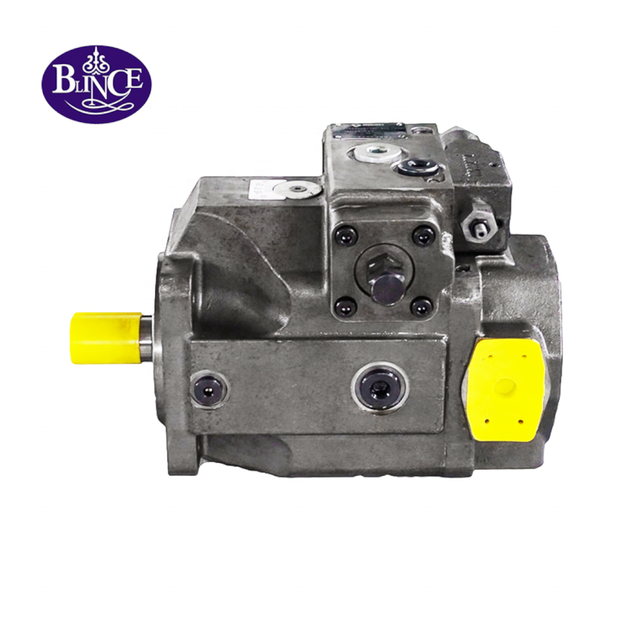
When selecting a replacement hydraulic pump, match the pressure, flow, rotation direction, shaft type, mounting flange and port configuration. For high-pressure applications, A4V axial piston pumps can support working pressures up to 350 bar, or approximately 5,075 psi, depending on configuration. For mobile machinery, shock resistance and contamination tolerance should also be considered.
8. Application-Specific Hydraulic System Maintenance Guide
North America: Construction and Agricultural Machinery
Hydraulic station repair in North America is often related to excavators, skid steers, loaders, tractors, harvesters and forestry machines. These machines work outdoors and are exposed to vibration, mud, temperature changes and hose damage. For how to fix low hydraulic pressure in excavator applications, start with oil level, hose leakage, suction filter condition and relief valve setting.
For agricultural machinery, seasonal storage is also important. Before the working season, replace aged hoses, inspect the oil condition and test hydraulic pressure under load. OMH series orbital motors are suitable for many low-speed, high-torque functions where a compact hydraulic motor is required.
Europe: Precision Machine Tools and Wind Power Equipment
Hydraulic pump replacement in Europe often focuses on efficiency, low leakage, low noise and stable performance. Many European applications involve precision machine tools, automated production lines and wind power systems. In these machines, even a small pressure drop may affect clamping force, positioning accuracy or pitch control reliability.
For precision equipment, oil cleanliness is critical. Regular oil testing, valve cleaning and seal inspection help reduce relief valve malfunction, spool sticking and internal leakage. High-quality hydraulic valve selection is also important for stable pressure control and repeatable machine movement.
Southeast Asia: Construction Machinery and Marine Equipment
Industrial hydraulic services in Southeast Asia often focus on construction machinery, port equipment, shipyard systems and marine deck machinery. High humidity, heat and corrosion can shorten the life of hoses, fittings, valves and exposed cylinder rods.
For shipboard hydraulic systems, choose corrosion-resistant components and inspect sealing surfaces regularly. Marine environments require careful maintenance of hydraulic hoses and fittings, especially around saltwater exposure, vibration points and moving joints.
Australia: Mining and Heavy-Duty Equipment
Mining hydraulic equipment maintenance in Australia usually involves severe dust, heavy load, high temperature and long working hours. In this environment, contamination control is critical. Filters should be checked frequently, oil tanks should be cleaned regularly, and cylinder rods should be protected from impact and scratches.
For heavy-duty cylinders used in mining, metallurgy and lifting systems, select a strong hydraulic cylinder with wear-resistant sealing materials. If a cylinder seal fails under heavy load, the machine may lose lifting capacity or drift dangerously.
9. Daily Maintenance to Prevent Hydraulic Station Low Pressure
A practical hydraulic system maintenance guide should focus on prevention, not only emergency repair. Most pressure failures can be reduced by controlling oil cleanliness, checking leakage early and replacing worn consumable parts on schedule.
Check oil level before operation. Low oil level can cause air suction, cavitation and pressure fluctuation.
Use the correct hydraulic oil. Select viscosity according to temperature, pressure and equipment requirements.
Replace filters regularly. A blocked suction filter can cause pump starvation, noise and low output flow.
Inspect hoses and fittings. Replace cracked hoses and damaged connectors before leakage becomes serious.
Monitor oil temperature. Fast temperature rise may indicate internal leakage, overload or valve throttling.
Keep valves clean. Contaminants can cause spool sticking, delayed response and pressure instability.
Record pressure readings. Compare current pressure with normal operating data to detect early changes.
When replacing components, choose parts that match the real working conditions. A properly selected hydraulic pump, correctly sized control valve and reliable sealing system can help reduce repeated failures. For international maintenance projects, global shipping and local authorized distributors can also shorten downtime and improve service efficiency.
10. FAQ: Hydraulic Station Low Pressure Troubleshooting
What is the most common cause of hydraulic station low pressure?
The most common causes are external leakage, low oil level, blocked suction filters, relief valve malfunction and hydraulic pump internal leakage. Start with visible leakage and oil level before inspecting internal components.
How do I fix low hydraulic pressure in an excavator?
To fix low hydraulic pressure in an excavator, first check the oil level, hoses, fittings and suction filter. Then inspect the relief valve setting and test the pump under load. If the excavator still lacks lifting force, check for cylinder leakage and pump wear.
Can I increase the relief valve pressure as a quick solution?
No. Blindly increasing the relief valve pressure is unsafe. Excessive pressure can damage hoses, valves, cylinders and pumps. Always identify leakage, blockage, seal failure or pump wear before making an industrial hydraulic station pressure adjustment.
Why does hydraulic pressure drop when the oil gets hot?
Hot oil has lower viscosity, which can increase internal leakage in worn pumps, valves and cylinders. If pressure drops as oil temperature rises above normal levels, inspect for pump wear, valve leakage and hydraulic cylinder seal failure.
How can I tell if the hydraulic pump has internal leakage?
Signs of hydraulic pump internal leakage include low pressure under load, weak actuator movement, fast oil heating and reduced flow. A flow meter or volumetric efficiency test is the best way to confirm the problem.
What should I check if a hydraulic motor does not have enough power?
If a hydraulic motor does not have enough power, check pump output flow, relief valve setting, inlet pressure, case drain pressure and return line backpressure. The motor may be normal while the power unit is failing to deliver enough pressure or flow.
How often should hydraulic hoses and fittings be inspected?
In normal industrial use, inspect hoses and fittings every three months. In construction, mining, marine and agricultural environments, inspect them monthly or weekly depending on vibration, impact, corrosion and operating hours.
When should I replace a hydraulic cylinder seal?
Replace cylinder seals when you see rod leakage, pressure drop, cylinder drift, weak lifting force or slow movement. For heavy-duty equipment, replace the full seal kit instead of changing only one damaged seal.
Conclusion
Hydraulic station low pressure is usually caused by leakage, insufficient oil supply, valve failure, seal damage, motor or coupling problems, or pump internal wear. The correct repair method is to inspect from simple to complex: check oil level and leakage first, then inspect filters, relief valves, seals, motor drive, coupling alignment and finally the pump.
A structured hydraulic system troubleshooting process reduces downtime, avoids unnecessary component replacement and improves equipment reliability. Whether the application is hydraulic station repair in North America, hydraulic pump replacement in Europe, industrial hydraulic services in Southeast Asia or mining hydraulic equipment maintenance in Australia, the same principle applies: identify the real cause before replacing major components.
For high-quality hydraulic components including hydraulic pumps, motors, cylinders and valves, visit Blince's official website. Our technical team provides professional troubleshooting support and customized solutions for your hydraulic systems.