When a hydraulic machine loses speed or power, the pump is often blamed first. I understand why. The pump is noisy, hot, and easy to point at. But in real service work, the pump is not always the root cause. Sometimes it is only the part that shows the problem first.
A hydraulic pump mainly moves oil. Pressure comes from resistance. That resistance may be a loaded cylinder, a hydraulic motor starting under heavy torque, a small valve passage, a blocked filter, cold oil, or a suction line that is too long and too small. If this point is ignored, even a new pump can fail soon after installation.
This is why pump selection should not be done only by model number. Displacement, pressure, speed, rotation, shaft, flange, port thread, oil viscosity, filtration, and working cycle all need to be checked together. One wrong detail is enough to create noise, heat, leakage, or slow machine response.
Start With the working condition, Not the Pump Name
Before comparing gear pumps, vane pumps, and piston pumps, I would first look at the working condition of the machine.
The first number is usually displacement. It tells how much oil the pump moves in one revolution. The unit may be cc/rev, in⊃3;/rev, L/min at a certain speed, or GPM at rated RPM. A small pump gives less flow. The actuator becomes slow. A large pump gives more flow, but that does not always mean better performance. If the circuit does not need that flow, extra oil may pass through the relief valve and turn into heat.
Pressure also needs to be read carefully. Rated pressure and peak pressure are not the same thing. Some machines reach peak pressure only for a short moment. Other machines work close to the pressure limit for long periods. For pump life, these two working conditions are completely different.
Suction condition is another point that is easy to miss. A hydraulic pump does not like fighting for oil. A narrow inlet hose, dirty suction strainer, high oil viscosity, low oil level, or air leak at the inlet can cause cavitation. Once cavitation begins, the damage inside the pump can develop very quickly.
For replacement work, the useful information includes flow demand, rated pressure, peak pressure, drive speed, rotation direction, shaft type, mounting flange, port size, port direction, oil type, oil temperature, and how many hours the machine works each day.
Gear Pumps: Simple Pumps That Still Do a Lot of Work
Gear pumps are common because they are simple. In an external gear pump, two gears rotate inside a close-fitting housing. Oil enters where the gear teeth separate, travels around the outside of the gears, and leaves where the teeth mesh again.
The parts are not complicated: gears, shafts, bushings or bearings, side plates, seals, and a housing. This simple structure makes gear pumps easy to stock, easy to replace, and easier to understand during service work.
That is why they are widely used on forklifts, agricultural machinery, dump trailers, compact construction equipment, steering systems, lubrication units, and small hydraulic power packs. These machines often need a pump that is practical, available, and tolerant of normal field conditions.
Most gear pumps are fixed displacement pumps. One revolution moves one fixed volume of oil. Flow rises or falls with pump speed. There is no swashplate, no complex servo control, and no load-sensing mechanism in a basic gear pump.
Many industrial gear pumps work around 160–250 bar. Some heavy-duty designs can take higher peak pressure, but continuous high-pressure operation needs caution. When pressure rises, bearing load, shaft seal stress, housing deflection, internal leakage, and oil temperature all become more important.
Gear pumps normally tolerate oil contamination better than vane pumps or piston pumps. This does not mean dirty oil is safe. It only means the gear pump may continue working for longer before the damage becomes obvious. Dirty oil still wears gear faces, side plates, bushings, and sealing areas.
A worn gear pump often gives very ordinary symptoms. The machine may run normally when the oil is cold. After the oil warms up, the cylinder becomes slow. The pump housing becomes hot. Flow under load drops. The shaft seal may start to leak. These symptoms usually point to internal leakage, but the relief valve and suction side should still be checked before replacing the pump.
Vane Pumps: Smooth Flow, Cleaner Oil Required
A vane pump uses a rotor with sliding vanes. As the rotor turns inside the cam ring, the spaces between the vanes increase and decrease. Oil enters when the volume opens. Oil leaves when the volume closes.
The advantage is smooth flow. Vane pumps usually run quieter than many gear pumps and have less pulsation. This makes them useful in machine tools, plastic machinery, die casting equipment, presses, and industrial hydraulic stations where noise and stable movement matter.
Some vane pumps are fixed displacement. Some are variable displacement. In a pressure-compensated vane pump, the output can reduce after the system reaches the set pressure. If the circuit is designed correctly, this helps reduce oil heating and wasted power.
Many vane pumps work around 70–175 bar. Some reinforced versions can go higher. Even so, vane pumps are usually not the first choice for dirty, dusty, high-shock mobile machines unless the filtration and maintenance habits are good.
The reason is the vane itself. A vane must slide freely in the rotor slot. A small particle can scratch the cam ring, make the vane stick, or damage the sealing surface. Once the vane tip loses proper contact, the pump loses flow.
A typical service symptom is warm-oil flow loss. The machine works when the oil is cold, then slows down after the oil temperature rises. Cold oil is thicker and hides some internal leakage. Hot oil is thinner, so the leakage becomes easier to see.
Piston Pumps: Strong Performance, Less Forgiving
Piston pumps are used when the system needs higher pressure, better efficiency, or variable flow control. They are more complex than gear pumps and vane pumps, but they can do work that simpler pumps cannot handle well.
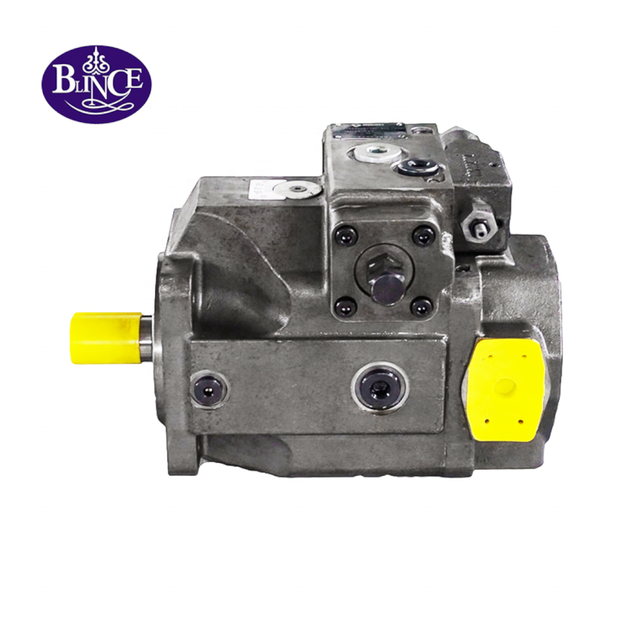
The most common mobile type is the axial piston pump. In a swashplate design, pistons move back and forth as the cylinder block rotates. The swashplate angle controls piston stroke. A larger angle gives more displacement. A smaller angle gives less flow.
In a variable displacement piston pump, the swashplate angle changes during operation. This allows pressure compensation, load sensing, constant power control, manual control, or electro-proportional control. That is why piston pumps are often used in excavators, cranes, drilling rigs, large presses, closed-loop drives, and high-performance hydraulic power units.
Radial piston pumps are different. Their pistons are arranged around a cam or eccentric ring. They are often selected for very high-pressure applications where flow is not extremely large, but pressure capability is important.
Many piston pumps work around 280–350 bar, and some special designs go higher. The advantage is high power density and better control. The cost is stricter maintenance. A piston pump needs clean oil, correct filtration, good suction condition, suitable case drain design, and careful startup.
Bad oil damages piston pumps quickly. The valve plate, cylinder block, slipper, swashplate, and control parts all depend on a stable oil film. If cavitation or contamination appears, repair cost can become high. Increased case drain flow, unstable pressure, sharp inlet noise, or metal particles in oil should not be ignored.
Machine tools, plastic machinery, die casting equipment, hydraulic stations
Piston Pump
About 280–350 bar in many systems
High pressure, high efficiency, variable flow
Clean oil, suction condition, higher repair cost
Excavators, cranes, drilling rigs, presses, load-sensing systems
This table is only a quick reference. A clean gear pump with a good inlet line may last longer than a piston pump installed badly. A vane pump may be perfect in a factory power unit and unsuitable for dusty farm equipment. A piston pump can save energy only when the circuit actually needs variable flow.
Materials and Small Details Inside the Pump
Two pumps may look similar outside, but inside they may be very different. Housing material, gear finish, shaft hardness, side clearance, seal quality, and surface treatment all affect service life.
Aluminum housings are common in compact gear pumps because they reduce weight. Cast iron housings are heavier, but they give better stiffness and vibration damping. For continuous-duty industrial systems, cast iron is often a better choice.
Gears and shafts are usually made from alloy steel. Heat treatment affects surface hardness and fatigue life. Poor surface treatment can lead to scoring, pitting, noise, and early leakage.
In a gear pump, side plates and bushings control internal leakage. In a vane pump, the cam ring and rotor slots decide whether the vanes move smoothly. In a piston pump, the valve plate, slipper, cylinder block, and swashplate are critical. These parts cannot survive long without clean oil and a stable oil film.
Seal material should also match the working condition. NBR is common for mineral hydraulic oil. FKM is used for higher temperature or special fluid compatibility. PU may be used where abrasion resistance is needed.
Manufacturing Accuracy and Pump Efficiency
Hydraulic pump performance depends on small clearances. Gear side clearance, shaft alignment, rotor slot finish, valve plate flatness, and housing precision all affect leakage and heat.
Volumetric efficiency is the difference between theoretical flow and actual delivered flow. A worn pump may still rotate at normal speed, but some oil leaks internally from the pressure side back to the suction side. The result is low flow, heat, and weak machine movement.
For gear pumps, gear tooth profile, side plate flatness, bushing fit, sealing groove accuracy, and clean deburring matter. For vane pumps, cam ring finish and rotor slot accuracy matter. For piston pumps, valve plate flatness, slipper geometry, and swashplate treatment matter.
Good pump manufacturing is not only assembly. It is material control, machining control, inspection, pressure testing, leakage testing, and repeatable process control.
Oil Cleanliness and Quality Control
Oil condition has a direct effect on pump life. ISO 4406 is commonly used to describe hydraulic fluid cleanliness. A code such as 18/16/13 refers to particle count ranges at 4 μm, 6 μm, and 14 μm.
Gear pumps can usually tolerate contamination better than vane pumps and piston pumps. Still, dirty oil shortens service life. Vane pumps may suffer cam ring scoring or vane sticking. Piston pumps need cleaner oil because their sliding surfaces and control parts have tighter clearances.
A practical maintenance plan should include clean oil filling, proper filtration, regular oil sampling, temperature control, and case drain monitoring for piston pumps. Installing a new pump into dirty oil is not a repair. It is only a delay before the next failure.
Blince follows a full-chain inspection process for hydraulic pump supply, including incoming material checks, machining inspection, assembly control, pressure testing, leakage inspection, performance verification, packaging inspection, and final delivery review. ISO 9001 Quality Management System, CE control requirements, and RoHS environmental compliance help support export documentation and reduce sourcing risk for B2B buyers.
What to Confirm Before Buying a Hydraulic Pump
For a new project or replacement order, the old model number is helpful, but it is not enough. Confirm displacement, rated pressure, peak pressure, speed, rotation direction, shaft type, flange size, port thread, port direction, oil type, temperature, duty cycle, and working environment.
For a replacement pump, a nameplate photo and installation dimensions are very useful. The failure symptom should also be described. A pump that failed because of cavitation, contamination, overload, or wrong rotation should not simply be replaced without checking the cause.
Blince can support standard supply and customized hydraulic pump solutions based on drawings, samples, operating pressure, flow rate, displacement, shaft type, flange type, port configuration, and application requirements. Custom options may include keyed shafts, spline shafts, taper shafts, SAE flanges, European flanges, BSP ports, NPT ports, metric ports, compact housings, reinforced housings, NBR seals, FKM seals, tandem gear pump structures, pressure compensation, load sensing, manual control, and electric proportional control.
Excavator, crane, drilling rig, high-pressure systems
FAQ
What are the main types of hydraulic pumps?
The main types are gear pumps, vane pumps, and piston pumps. Gear pumps are simple and economical. Vane pumps are smoother and quieter. Piston pumps are used for higher pressure and variable flow control.
Which hydraulic pump is better for dirty oil?
Gear pumps usually tolerate contamination better than vane pumps and piston pumps. However, dirty oil still causes wear, so filtration and clean filling are still necessary.
Which pump type is best for high pressure?
Piston pumps are normally used for high-pressure systems. Axial piston pumps are common in excavators, cranes, drilling rigs, presses, and load-sensing hydraulic systems.
Why does a hydraulic pump become noisy after installation?
Noise may come from wrong rotation direction, air in the suction line, high oil viscosity, suction restriction, clogged filter, low oil level, coupling misalignment, or cavitation.
Why does the machine slow down after the oil gets hot?
Hot oil has lower viscosity. If the pump has internal wear, leakage increases after the oil becomes thinner. A flow test at working temperature gives a better result than a cold test.
Engineering Support From Blince
For pump replacement or new hydraulic system design, Blince can review pump models, drawings, samples, operating pressure, required flow, port configuration, shaft type, flange dimensions, and machine applications. A correctly selected pump protects not only the pump, but also valves, motors, cylinders, hoses, seals, oil temperature, and machine uptime.
This article is a general engineering guide. Final component selection should be based on machine drawings, measured hydraulic data, working conditions, safety requirements, and confirmation from a qualified hydraulic engineer or supplier.
Blince Hydraulic Team
Blince Hydraulic is an industry-leading company dedicated to precision-engineered fluid power manufacturing and custom hydraulic solutions. Backed by decades of deep field expertise in industrial machinery and thousands of successful global deployments, our engineering team focuses entirely on high-performance hydraulic component manufacturing, including specialized orbital motors, high-pressure travel drives motor, and robust directional control valves. Our production infrastructure utilizes state-of-the-art multi-axis CNC machining systems and is fully ISO 9001 certified to guarantee repeatable volumetric accuracy across every single manufacturing run.
We deliver fast, highly dependable, and cost-efficient hydraulic solutions to heavy industry distributors, machinery OEMs, and maintenance crews across more than 150 countries. Whether your active project calls for a small-volume batch of customized shaft profiles or a large-scale production run of severe-duty cast iron gear pump, we configure our flexible production schedules to meet your target lead times with total pricing predictability. Partnering with Blince means securing maximum system efficiency, elite material quality, and uncompromised fluid power professionalism.
To learn more about our complete product lineup, visit our official website: www.blince.com.