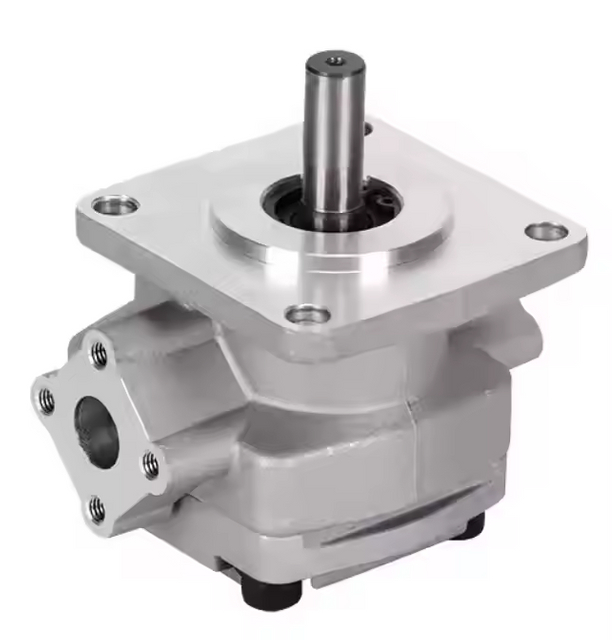
When a gear pump begins to whine, run hot, or move an actuator like it is tired, the outlet gauge is only one witness. Check the reservoir level, suction hose, rotation, drive speed, inlet air, relief path, oil temperature, and pressure loss after the pump. The pump may be worn. It may also be hungry for oil, running against bypass flow, or taking the blame for a restriction farther down the circuit.
If the last pump came apart inside, do not give the new one the same oil path and hope for a different ending. Open the reservoir, look at the suction side, change dirty filters, and check whether debris has travelled into lines, valves, coolers, or actuators. Because Blince supplies hydraulic pumps, valves, motors, hoses, fittings, gauges, coolers, and related hydraulic system parts, we usually review a gear pump complaint as a machine problem first and a part-number problem second.
Why This Guide Matters
Gear pump complaints rarely arrive as neat engineering notes. Someone says, "The pump screams." Someone else says, "The lift is slow." Another person points at the gauge and says, "Pressure is there, but the cylinder still feels wrong." The rough words are worth keeping; they often say when the fault appears, which is more useful than the pump model alone.
Ordering the same pump again is tempting, and sometimes it is the correct repair. A badly worn gear pump can leak across its clearances, lose useful flow, ruin bearings, and leave metal in the oil. But a lot of weak-flow jobs start somewhere else. The inlet is starved. Rotation is wrong. A relief valve is not closing. A coupler is only partly seated. The suction screen is full of old failure debris. The oil that behaved in the shop may be too thick before breakfast and too thin after a hard afternoon.
One gauge can make the job look more settled than it is. A hydraulic pressure gauge at the pump outlet reports one location. It does not report the pressure left after oil has passed through the valve, hose, filter, cooler, quick coupler, motor, cylinder, or return line. Many wrong pump replacements start in that gap.
The goal here is the repair decision, not a catalog exercise. By the end, a shop or buyer should have a clearer reason to replace the pump, protect it from a bad circuit, clean the oil path, or leave the pump alone while another fault is corrected.
Start With The Failure Story, Not The Pump Name
Before choosing a replacement hydraulic gear pump, write the failure down in plain workshop language. When does the pump whine? At the first start, after warm-up, or only with one function held? Does every function slow down, or just one cylinder? Does pressure rise and then fade? Did the trouble begin after a hose, valve, attachment, oil change, filter change, or reservoir cleaning?
Those notes choose the first test better than a model number does. Noise at cold start points toward thick oil, a tight suction path, air entry, or wrong rotation. Weakness after thirty minutes moves the discussion toward heat, internal leakage, and relief bypass. A failure after a hose change may trace back to one small fitting that looked harmless on the bench.
For a service note, plain is better than polished:
Fixed-displacement gear pump on a small power unit. Quiet when cold. After about twenty minutes, steering slows and the pump whines when the loader is raised. Pump outlet pressure reaches 150 bar at relief. Oil is 67°C. Suction hose was changed last week; the new hose looks smaller inside.
That short note gives a supplier timing, temperature, pressure, recent service work, and one likely inlet clue. "Same pump needed" gives almost none of that.
What A Hydraulic Gear Pump Actually Does
In a gear pump, each turn of the shaft carries trapped oil from inlet to outlet through the spaces around the gears. The design is compact and familiar, which is why it appears on agricultural machinery, small power units, dump trailers, presses, sweepers, and auxiliary circuits. The positive-displacement idea only helps, though, when oil can actually reach the gears.
The simple shape can fool people. A gear pump still needs small internal clearances, correct rotation, clean oil, enough shaft speed, a free inlet, and a relief path when the actuator reaches the end of stroke. A hydraulic gear pump replacement may match the flange and shaft and still fail if the inlet side is dirty, tight, aerated, or cold.
The pump moves oil; the load and restrictions decide how much pressure appears. Starve the inlet and the pump complains before useful work begins. Let oil leave the pump and then squeeze it through a small valve passage, hose, filter, cooler, or coupler, and the actuator may still crawl while the outlet gauge looks respectable.
So treat a gear pump change as circuit work, not a box-swap. A larger pump can deliver more oil, but it can also turn into a heat maker if the hydraulic directional control valve, hoses, fittings, return filter, or cooler cannot pass the extra flow.
The First Split: No Flow, Low Flow, Or Flow Lost After The Pump
Before pulling the pump, decide which kind of failure you are looking at. The oil may not be leaving the pump. It may be leaving with less flow than expected. Or it may be leaving the pump and getting wasted somewhere downstream.
Symptom
Likely direction
First checks
No movement and no pressure
Pump not turning, wrong rotation, empty inlet, broken coupling
Use the table as a notebook prompt, not a verdict. A gauge, a flow check, and sometimes a look inside the suction hose still matter. A liquid-filled pressure gauge can settle an argument only when it is placed at the point where the loss is suspected.
Suction Conditions: The Most Expensive Place To Guess
A gear pump cannot discharge oil that never arrived at the inlet. With a tight suction path, the same pump may sound rough, deliver uneven flow, run hotter than expected, and start wearing gear faces or bearings. The outlet gauge may not warn you, because the damage begins before oil reaches the pressure line.
On machines we see, inlet trouble is often ordinary: low reservoir level, a suction valve left half closed, a hose with too little bore, a collapsed liner, a blocked screen, too many elbows, cold high-viscosity oil, a plugged tank breather, or a fitting that pulls air inward without dripping oil. The hydraulic contamination control guide matters here because hose liner, dirt, and old pump debris often collect at the inlet before anyone opens the pump.
Do not keep tightening suction fittings just because the outside is dry. A suction leak may never drip. It can pull air inward every time inlet pressure drops. Then the oil foams, the pump note changes, and the actuator feels jumpy even though the pressure needle still moves.
Cold oil adds a trap that a warm workshop test can miss. If the oil is thick, the suction line is already marginal, or the screen is partly blocked, the first few minutes of morning work can start the wear that later appears as heat, low flow, or shaft seal leakage.
Rotation Direction And Shaft Speed
Wrong rotation can ruin a gear pump quickly. Some pumps are built clockwise, some counterclockwise, and some can be configured during assembly. Port labels, motor direction, and the machine layout should be checked before the pump sees load.
A pump turning backward may not prime. On some units, the internal lubrication path and pressure balance also depend on the correct direction. The result may be no useful flow, sudden noise, seal damage, or a pump that looks bad before it has had a fair test.
Shaft speed deserves the same attention. A pump driven too slowly cannot deliver the expected flow. A pump driven too fast can suffer inlet starvation, aeration, heat, and early wear. On electric units, check motor speed, voltage, frequency, phase condition, and coupling slip while the machine is actually working.
The rough flow calculation is not complicated: displacement times RPM gives theoretical flow. Real flow is lower because of internal leakage. If the machine needs more oil than the pump can provide at that speed, raising the relief pressure will not make the actuator faster.
Relief Valve Bypass: When Pressure Turns Into Heat
A fixed-displacement gear pump sends oil whenever it turns. If the cylinder reaches the end of stroke and the operator keeps holding the lever, the oil has to go somewhere. In most circuits, it goes across the relief valve.
Relief flow protects the circuit, but it wastes power as heat. A relief valve set too low makes the actuator feel weak. A relief valve stuck partly open makes a good pump look tired. A relief valve set too high can overload the pump, motor, hose, seal, and hydraulic cylinders.
When a gear pump complaint includes heat, watch the gauge while the function is operating. Do not check only at idle. Listen for bypass flow. Confirm that the directional valve returns fully. Look at the load, the cylinder stroke, and whether the operator is holding the function against relief longer than the circuit was designed to tolerate.
The article on hydraulic pump motor matching is a useful companion here. A pump, motor, valve, and load can look acceptable in a quote and still waste power through relief flow in the real duty cycle.
Pressure At The Pump Is Not The Same As Useful Pressure
A normal-looking pump outlet pressure is not a complete diagnosis. It only reports the pressure where the gauge is installed.
For a slow cylinder, compare the pump outlet with the cylinder work port. For a slow hydraulic motor, compare the motor inlet, motor outlet, and return pressure where possible. For a hot return side, measure before and after the filter, cooler, valve, or quick coupler that may be adding restriction.
High pump outlet pressure with low actuator inlet pressure points to the space between those two gauges. Look there before blaming the pump. A small valve passage, half-connected coupler, damaged hose liner, clogged filter, or tight return path can steal useful pressure and flow. A new pump will still fight the same bad path.
Hydraulic hoses and fittings are easy to treat as background hardware until the machine is tested under flow. A thread can match and the internal bore can still be wrong. A fitting can screw in cleanly and still create a pressure drop that matters at working flow.
Internal Wear: When The Pump Really Is Losing Flow
When a gear pump really is worn, the first sign is often internal leakage. Oil slips through enlarged clearances instead of leaving the outlet as useful flow. A short cold test may still look acceptable. Under load, with warm oil, the missing flow becomes much harder to hide.
Hot oil makes that leakage easier because viscosity drops. A pump that feels decent at start-up may become weak when the tank reaches working temperature. That does not clear the rest of the circuit, but it does put pump wear high on the inspection list.
Look for a pattern rather than one dramatic clue: slower actuator speed, pressure falling at the same load, oil temperature climbing, gear noise getting sharper, metal in the filter, shaft seal leakage, or bearing play. One sign can mislead. Several together deserve teardown or at least a proper flow test.
If the old pump failed internally, clean the oil path before fitting the next one. Metal can stay in the reservoir, suction screen, pressure line, return filter, cooler, valve body, and hoses. Put a new pump into that dirt trail and the second failure may look like a bad replacement, even though the original failure never really left the machine.
Oil Temperature And Viscosity
Oil temperature changes both leakage and pressure drop. Cold oil is harder to pull through the inlet. Hot oil leaks more easily through worn internal clearances. The same pump can therefore sound bad in the morning and lose output in the afternoon for different reasons.
When noise appears only during cold start, look first at oil viscosity, suction hose size, strainer condition, and tank breathing. When weakness appears only after warm-up, move toward internal leakage, relief bypass, cooler performance, return pressure, and duty cycle. The hydraulic oil cooler sizing guide is useful when the complaint waits until the machine has worked for a while.
Record temperature with the symptom. "Pump is weak" leaves too much guessing. "Pump is weak after oil reaches 68°C, but normal around 35°C" points toward leakage, viscosity, pressure drop, or cooling.
Outdoor machines also need ambient temperature in the story. A pump that survives a clean indoor power unit may struggle with cold starts, dusty reservoirs, long suction runs, or summer work where the operator holds functions against relief.
Coupling, Mounting, And Pipe Stress
Some gear pumps are damaged before the oil has a chance to be blamed. Misaligned couplings, loose brackets, bent mounting faces, side load, or pipe stress can load the shaft and bearings.
The signs still look hydraulic. The pump gets noisy. The shaft seal leaks. The bearing wears. Flow becomes uneven. The replacement pump does not last. The recent article on hydraulic pump coupling alignment belongs in the same repair conversation because many early pump failures begin at the drive connection.
Hydraulic ports are not mounting points. A suction pipe that must be forced into place, or a pressure hose that pulls the pump body sideways, can change the shaft load after the alignment has already been checked.
Before calling a replacement pump defective, inspect the coupling, shaft key, mounting face, bracket rigidity, suction hose support, pressure line support, and whether the pump moves when the machine starts under load.
Gear Pump, Vane Pump, And Piston Pump: Do Not Diagnose Them The Same Way
Gear pumps have a rugged reputation, and they deserve much of it. They still lose that fight against poor inlet conditions, dirty oil, wrong rotation, and relief heat. In the field, the clues are usually plain: whine, heat, low flow, shaft seal leakage, and debris.
Vane pumps have a different weak point. They usually care more about clean oil, stable inlet conditions, and vane movement. A complaint that sounds like a gear pump problem may need a different inspection if the pump is actually a vane design.
Piston pumps add more control details: case drain routing, load-sense signals, pressure compensation, swashplate movement, and pilot oil. The article on piston pump case drain pressure is relevant when the machine does not use a simple fixed gear pump.
For purchasing, the model number is only the start. Add the duty cycle, oil condition, inlet layout, pressure readings, and what failed first. A pump that bolts on neatly can still be wrong for the work it is being asked to do.
Equipment-Specific Checks
Agricultural Machinery
Farm equipment has a rough rhythm. It may sit through a season, then run long days in dust, heat, fertilizer residue, and plant material. By the time the pump complains, it may be dealing with old oil, low reservoir level, a damaged breather, aged hoses, or a field repair made quickly because the machine had to keep working.
For tractors, seeders, sprayers, harvesters, and farm attachments, the first inspection is often simple: suction screen, tank breather, hose ends, quick couplers, and filter condition. A pump that sounded normal last season can become noisy this season because the oil, air path, or suction hardware changed while the machine was idle.
Dump Trailers And Small Power Units
Small power units can make a good hydraulic pump look lazy. The gear pump may be compact, but the electric side still has to carry the load. Low voltage, weak batteries, poor grounding, overheated motors, and undersized cables can slow the whole unit before the hydraulic parts are worn out.
If a dump trailer raises slowly, do not stop at the pressure gauge. Check relief setting, oil level, suction tube position, cylinder load, battery voltage, and motor speed under load. A hydraulic power unit complaint is much clearer when it includes electrical observations as well as oil pressure.
Construction Attachments
Attachments change the job quickly. A sweeper, auger, brush cutter, trencher, or compact loader tool may ask for continuous flow from a machine that normally sees short cylinder strokes. The pump then looks weak or hot even though the real change is the duty cycle.
Check attachment flow demand, quick coupler size, return pressure, cooler capacity, and whether the circuit is crossing relief. If a hydraulic motor slows while the pump runs hot, the answer may involve pump flow, motor displacement, pressure drop, and oil temperature together.
Industrial Hydraulic Stations
Industrial hydraulic stations can hide pump problems during a quick test. A gear pump may sound fine with no load, then lose flow once the oil warms or the relief valve has been opening repeatedly through a production shift.
For those units, take the readings after the machine reaches normal working temperature: pump outlet pressure, motor current, oil temperature, suction condition, filter state, and actuator speed. A quiet cold test is useful; it is just not the same as continuous service.
Practical Checklist Before Ordering A Replacement Gear Pump
Before ordering a hydraulic gear pump replacement, work through the points below and mark what is still unknown.
Question
Why it matters
What is the pump displacement and rated pressure?
Confirms whether the replacement can supply the required flow and pressure
What is the actual drive speed?
Flow depends on displacement and RPM
What is the rotation direction?
Wrong rotation can prevent priming and damage the pump
Is the suction line large, short, and unrestricted?
Inlet starvation creates noise, heat, and wear
Is the oil grade suitable for the operating temperature?
Cold oil and hot oil create different failures
Does the relief valve open during normal work?
Relief flow turns pump power into heat
Is pump outlet pressure measured under load?
No-load pressure does not prove working performance
Is actuator pressure measured near the actuator?
Pressure drop after the pump can hide behind a normal pump reading
Was the old pump internally damaged?
Debris may remain in the reservoir, hoses, valves, or cooler
Are the coupling and mounting stress-free?
Mechanical load can damage shaft seals and bearings
If several answers are missing, selection can begin, but call it preliminary. The replacement may fit the shaft, flange, and ports while still being wrong for the machine that will drive it.
Common Mistakes
Mistake 1: Replacing The Pump Before Checking The Suction Line
Do not ask a new gear pump to cure a poor inlet. If the suction hose is small, the screen is blocked, the liner has collapsed, air is entering, or cold oil cannot reach the pump fast enough, the replacement can sound bad from the first start.
Mistake 2: Trusting Pump Outlet Pressure Only
Pump outlet pressure is only one local reading. It can look normal while oil loses useful pressure through a valve, hose, filter, cooler, quick coupler, or actuator. Put the second gauge across the suspected restriction.
Mistake 3: Turning Up The Relief Valve To Get More Speed
Relief pressure does not create flow. When the actuator is slow because of pump wear, low motor speed, or a restricted suction line, turning the setting higher only adds stress.
Mistake 4: Installing A Larger Pump Without Checking The Circuit
A larger pump sends more oil into the same circuit. If the valve, hose, filter, cooler, or return path cannot carry it, the machine may run hotter and feel less controllable.
Mistake 5: Ignoring Oil Temperature
A pump that works cold and fails hot needs temperature in the notes. Hot oil leaks more easily through worn clearances, so a cold test can hide the problem.
Mistake 6: Reusing Dirty Oil After A Pump Failure
Metal from the old pump means the system is no longer clean. Check the tank, filters, lines, valves, cooler, and actuator paths before another pump is installed.
Mistake 7: Forgetting Rotation Direction
The correct shaft and flange do not prove correct rotation. Confirm rotation before the pump is loaded.
Mistake 8: Blaming The Pump For An Electrical Drive Problem
On electric power units, low voltage, poor phase balance, weak batteries, or unstable motor speed can reduce pump output. Check the drive before the hydraulic parts take the blame.
A Quote Request That Actually Helps
Instead of writing "quote same gear pump," send a short note a technician would understand:
Small power unit, fixed-displacement gear pump. Cylinder raises slowly after warm-up. Pump outlet reaches 140 bar, but motor current is high and the pump whines during lifting. Suction hose is 1 inch, about 1.5 meters long. Strainer was cleaned last month. Oil reaches 70°C after thirty minutes. Nameplate, suction hose, relief valve, and filter photos are attached.
That message gives the supplier a trail to follow: pump type, timing, pressure, temperature, suction layout, and possible drive load. The next question can be specific instead of generic.
For replacement support, include pump nameplate photos, shaft and flange dimensions, rotation direction, port details, coupling photos, suction line photos, pressure readings, oil condition, and the failure story. Blince can compare the current gear pump with available hydraulic pump options and related hydraulic accessories before the next repair repeats the same failure.
FAQ
Why is my hydraulic gear pump noisy after start-up?
Start with the inlet side. In real service, the cause is often ordinary: cold heavy oil, low reservoir level, air pulled through the suction line, wrong rotation, a blocked suction screen, or wear inside the pump.
Can a hydraulic gear pump show pressure but still have low flow?
Yes. A pump can build pressure at its outlet while the actuator still receives poor flow. Oil may be going across relief or losing pressure through a downstream restriction.
Does increasing relief valve pressure make a slow hydraulic cylinder faster?
Usually no. Cylinder speed follows useful flow more than maximum pressure. If the real problem is pump wear, suction restriction, low RPM, or pressure drop, a higher relief setting mostly adds heat.
Why does a gear pump work cold but become weak when hot?
Hot oil is thinner, so internal leakage increases. Worn clearances become more obvious after the oil warms. Return restriction and relief heating can also appear only during longer operation.
Should I replace the gear pump if the oil has metal powder?
The pump may need repair or replacement, but the oil path still has to be cleaned. Metal can stay in the reservoir, hoses, valves, filters, and cooler, then damage the next pump.
What information should I send for a hydraulic gear pump quote?
Send the pump nameplate, shaft and flange photos, rotation direction, port size, displacement if known, pressure readings, oil temperature, suction hose layout, failure timing, and photos of the old pump, filters, and coupling.
Can a larger hydraulic gear pump solve low flow?
Only when the rest of the circuit can carry the extra oil. If valves, hoses, filters, coolers, or return lines are already restrictive, the larger pump may only make more heat.
Can wrong rotation damage a hydraulic gear pump?
Yes. Wrong rotation can prevent proper priming and may load seals or lubrication paths incorrectly. Confirm direction before running the pump under pressure.
Final Takeaway
Hydraulic gear pump troubleshooting should start with the machine in front of you. A noisy, weak, hot, or leaking pump may be worn internally, but it may also be reacting to poor inlet conditions, wrong rotation, relief bypass, pressure drop, dirty oil, hot oil, mechanical stress, or an unstable drive.
For hydraulic gear pump replacement, send Blince the pump nameplate, shaft and flange dimensions, rotation direction, port details, suction layout, pressure readings, oil temperature trend, coupling photos, filter condition, and the failure story. The pump has to match the machine. The machine also has to give the pump conditions it can survive.
This article is a general engineering guide. Final component selection should be based on machine drawings, measured hydraulic data, working conditions, safety requirements, and confirmation from a qualified hydraulic engineer or supplier.
Blince Hydraulic Team
Blince Hydraulic is an industry-leading company dedicated to precision-engineered fluid power manufacturing and custom hydraulic solutions. Backed by decades of deep field expertise in industrial machinery and thousands of successful global deployments, our engineering team focuses entirely on high-performance hydraulic component manufacturing, including specialized orbital motors, high-pressure travel drives motor, and robust directional control valves. Our production infrastructure utilizes state-of-the-art multi-axis CNC machining systems and is fully ISO 9001 certified to guarantee repeatable volumetric accuracy across every single manufacturing run.
We deliver fast, highly dependable, and cost-efficient hydraulic solutions to heavy industry distributors, machinery OEMs, and maintenance crews across more than 150 countries. Whether your active project calls for a small-volume batch of customized shaft profiles or a large-scale production run of severe-duty cast iron gear pump, we configure our flexible production schedules to meet your target lead times with total pricing predictability. Partnering with Blince means securing maximum system efficiency, elite material quality, and uncompromised fluid power professionalism.
To learn more about our complete product lineup, visit our official website: www.blince.com.