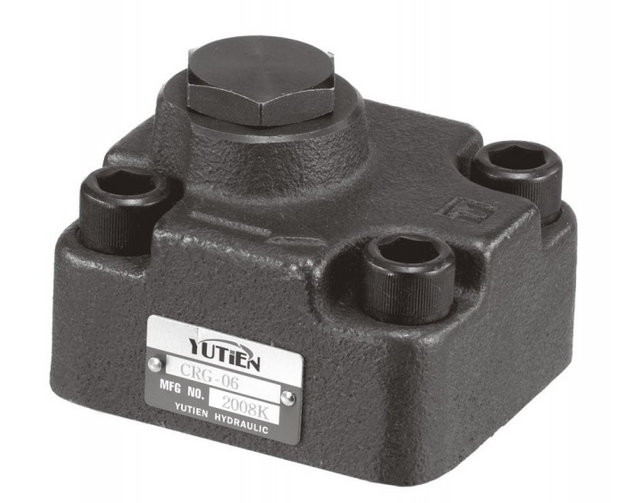
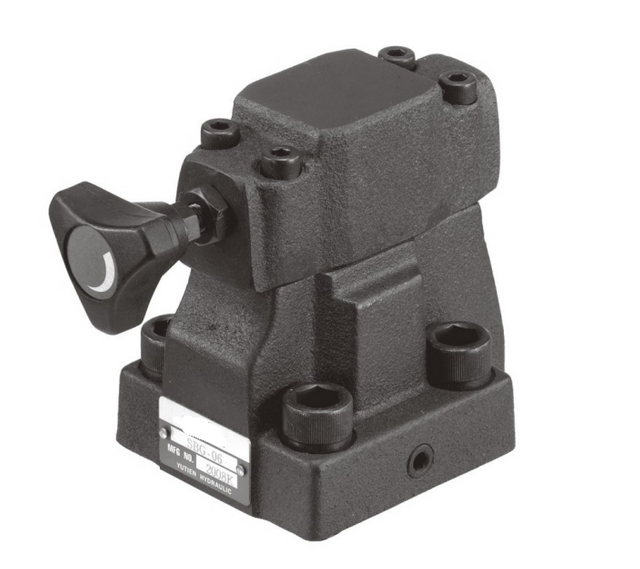
A check valve is easy to underestimate because it often looks too small to stop a whole machine.
The cylinder creeps down after the lever returns to neutral. A hydraulic motor will not coast the same way after a hose change. A boom holds for ten minutes in the workshop, then settles when the oil warms in the sun. A pump sounds loaded even though the operator is not moving any function. Someone finds a small inline valve, reads the arrow on the body, and says the answer is simple: replace the hydraulic check valve.
Sometimes that is the answer.
Often, though, the check valve is only one door in the oil path. The real problem may be trapped pilot pressure. It may be contamination under a poppet, or a spring that is correct on the bench but wrong in the circuit. Sometimes the return line cannot breathe. Sometimes the valve is installed in the correct direction but in the wrong place for the machine's load.
This guide is for buyers, maintenance teams, repair shops, and equipment builders who need a practical way to choose or troubleshoot a hydraulic check valve. It also covers pilot operated check valves, inline check valves, and load holding valves. The goal is not to make every buyer a valve designer. It is to show which field questions usually separate a simple replacement from a repeated failure.
Quick Reference: What the Complaint Usually Means
Field complaint
First place to check
What it may mean
Cylinder drifts after the lever returns to neutral
Cylinder ports, valve work ports, and check valve seat
Oil may be leaking through the cylinder, directional valve, pilot check valve, or a contaminated seat
Load holds cold but moves when oil warms
Oil temperature, piston seal leakage, pilot pressure, and cracking pressure
Warm oil may reveal leakage or partial pilot opening
Pump sounds loaded while no function is being used
Check valve position, trapped pressure, return path, and relief behavior
A blocked path or trapped load can keep the pump working
Hydraulic motor stops too sharply after a hose or valve change
Make-up check valve, brake release path, and return pressure
The replacement may have changed coast, anti-cavitation, or load-holding behavior
New check valve fits the thread but the machine runs hot
Flow rating, cracking pressure, fittings, and pressure drop across the valve
The valve may be correct as a part but wrong for the duty cycle
Pilot operated check valve will not release smoothly
Pilot line pressure, pilot ratio, drain path, and trapped pressure
The release command may not reach the valve strongly or cleanly enough
Key Takeaways
A hydraulic check valve should be selected by circuit role, not only by thread size or body shape.
Reverse leakage is not always valve leakage. Cylinder seals, directional valve spools, pilot pressure, hose expansion, and thermal expansion can create the same field complaint.
Cracking pressure is small on the datasheet but large in the machine. It can change heat, response, pump load, and holding behavior.
Pilot operated check valves need a release condition, not just a command from the operator. The pilot line is part of the diagnosis.
A valve that works at idle may become a restriction under real flow. Pressure before and after the valve should be checked while the fault is happening.
The best quote request includes the symptom, the actuator function, pressure readings, oil temperature, recent changes, and photos of the valve location.
This article follows a field-diagnosis path rather than a catalog path. It starts with the movement that failed, then works backward through the oil path, pilot signal, pressure drop, installation position, and replacement data. That is the same reason a machine buyer should not send only a valve photo and a thread size. A small valve can be the correct part on the bench and still be the wrong decision in the circuit.
Start With What Moved, Not the Valve Body
Before choosing a hydraulic check valve, write down the movement first. Not the thread. Not the catalog name. The movement.
A cylinder may need to hold a raised load while the operator is away from the lever. A return line may only need to stop oil draining back after shutdown. A pump outlet may need protection from reverse flow. An accumulator may need to stay charged overnight. In a motor circuit, the same-looking valve may be there for make-up oil or brake release behavior, not ordinary one-way flow. If release must be controlled, the question changes again: what pressure, from which line, is supposed to unlock the load?
That description narrows the choice. It may still lead to a simple check valve. It may point toward a pilot operated check, a counterbalance valve, a shuttle valve, a brake release valve, or a different circuit correction altogether.
The outside shape can mislead the repair. I have seen valves with the same thread, port size, and arrow mark behave very differently once installed. One opens with very little pressure. Another needs more pressure than the small power unit can spare. One is acceptable in a return line but unreliable for load holding. Another will not open in reverse until a pilot signal arrives from the correct side of the circuit.
So if the request starts and ends with "I need a 1/2 inch hydraulic check valve," the useful part of the story has not arrived yet.
For field work, write the symptom in plain words first:
Where is oil allowed to go, where must it be stopped, and what condition should open the stopped path?
That sentence is more useful than a photograph of the thread.
What the Check Valve Is Doing in the Oil Path
A hydraulic check valve is a one-way gate for oil. In a simple version, a poppet, ball, or spool rests against a seat. Spring force and reverse pressure help keep it closed. Forward flow has to do enough work to lift that element off the seat, and downstream pressure can make the opening harder than it looks on a bench.
That opening pressure is usually called cracking pressure.
Cracking pressure is not a decoration in the catalog. It changes how the machine feels. A low cracking pressure check valve may open easily and create little pressure loss. A higher cracking pressure valve may help keep a line charged or resist unwanted movement, but it can also create heat, slow a function, or make a pump work harder than expected.
A pilot operated check valve is different. It blocks reverse flow until pilot pressure pushes the internal poppet open. These valves are useful where a load must be held but also released on command. A lift table, clamp, outrigger, dump bed, press, or boom circuit may use this behavior. The important detail is that the valve does not open only because the operator wants movement. It opens because enough pilot pressure reaches the pilot port at the right time.
That is where many wrong diagnoses begin.
The solenoid clicks. The main directional valve shifts. Pump pressure rises. The operator expects the cylinder to move. But if pilot pressure is weak, trapped, blocked, or connected to the wrong side of the circuit, the pilot operated check valve may stay closed. The machine then looks like it has a bad cylinder, weak pump, sticky directional valve, or undersized hose.
Signal pressure, contamination, delayed shifting, wrong signal source
Load holding valve
Prevents uncontrolled movement of a loaded actuator
Load direction, pilot source, adjustment, thermal expansion, hose failure behavior
It is tempting to group all of these under "hydraulic one way valve." That wording may be fine for a quick search, but it is not enough for a repair decision. A one way valve that only stops drain-back in a return line is not the same thing as a valve that holds a suspended load over a worker's head.
Flow Direction Is Only the First Check
The arrow on the body matters, but it does not finish the diagnosis.
A check valve can be installed in the correct direction and still create trouble. The internal passage may be too small for the actual flow. The cracking pressure may be wrong. The seat may be damaged. A fitting may reduce the bore immediately before the valve. The valve may be placed so far from the actuator that hose expansion still allows movement. A pilot operated valve may be installed near the valve block when it should be closer to the cylinder port for safer load control.
In mobile machinery, a replacement often happens after a hose bursts, an attachment is added, or a manifold is rebuilt. The thread fits, the arrow points the right way, and the machine runs at idle. Then the operator works under real load, oil warms, and the complaint returns.
That is why the first check should include the whole path around the valve:
Which port supplies forward flow?
Which port sees reverse pressure?
What flow rate must pass through the valve?
What cracking pressure did the old valve use?
Does the actuator rely on this valve for load holding?
Is there a pilot line, and where does it get pressure?
Has any hose, fitting, coupler, manifold plug, or directional valve section changed recently?
If the complaint began after a hose or quick coupler change, compare the internal bore, not only the thread. The recent Blince article Hydraulic Quick Coupler Pressure Drop Guide: Flow Loss, Heat, And Slow Attachments covers the same idea from another part of the circuit: a connection can look correct outside and still restrict the oil path inside.
Reverse Leakage: Is the Check Valve Really Leaking?
Reverse leakage is the complaint most people associate with check valves.
A load moves when it should hold. A cylinder drifts overnight. An accumulator loses pressure. A line drains back to tank. A machine starts with a delay because oil has left a circuit that should have stayed full.
The check valve may be leaking, but the test has to be fair.
Oil can move through several paths. It may pass through the check valve seat. It may leak across a directional valve spool. It may pass around a cylinder piston seal. It may escape through a pilot line. It may move because a hose expands under trapped pressure. It may move because temperature changes expand oil and force a valve open. If the machine uses a pilot operated check valve, contamination may hold the poppet slightly open or pilot pressure may not fully release.
A basic reverse leakage check should answer these questions:
Question
Why it matters
Does the load move with the pump off, pump running, or both?
Separates static leakage from valve control problems
Does the movement change when oil is hot?
Warm oil may reveal leakage that cold oil hides
Is the actuator single acting or double acting?
The available leakage paths are different
Is a pilot operated check valve installed near the actuator or at the valve block?
Hose volume between valve and cylinder can affect holding behavior
Is there trapped pilot pressure?
A pilot valve can be partly opened without an obvious command
Was a hose, valve, or fitting changed before the complaint began?
New parts may change pressure drop or pilot behavior
Do not condemn the check valve only because it is the easiest part to remove. Block, isolate, and measure where possible. A clean bench test may prove a valve seals in one condition, while the installed machine still fails because heat, side load, contamination, or pilot pressure changes the real condition.
Cracking Pressure: A Small Number That Changes the Circuit
Cracking pressure is easy to ignore until the machine becomes slow or hot.
Set the cracking pressure too low and the valve may open at a moment when the circuit was supposed to stay charged. Set it too high and the pump has to spend pressure just to push oil through a small part that nobody expected to matter. On a gauge this may look like a minor number. In the oil, it shows up as heat, noise, and a slower function.
A drain-back valve in a low-pressure return line does not need to behave like a valve holding a suspended boom. On a small hydraulic power unit, a little extra opening pressure can make the function feel lazy. On a high-flow attachment circuit, the same kind of difference may show up as temperature rise because the oil pays that pressure loss every cycle.
The useful field question is not only "What is the maximum pressure rating?"
Ask:
What pressure must be overcome during normal flow, at the real oil temperature and real flow rate?
That question sounds fussy, but it prevents many small mistakes. A valve can survive 250 bar and still be wrong for a low-pressure return path. A valve can have the correct thread and still create enough pressure drop to change actuator speed. A valve can open during a cold workshop test and then behave differently after oil warms, viscosity drops, and leakage increases elsewhere.
When heat appears after a check valve replacement, put gauges on both sides of the suspect area while the same function is running. A higher-than-normal drop does not automatically condemn the pump. The tight spot may be the new valve, a reduced fitting, an old hose, or a nearby coupler that looked harmless during assembly.
Pilot Operated Check Valves: Holding the Load Is the Easy Half
Pilot operated check valves are valuable because they hold a load until the machine deliberately releases it. They are also a common source of confusion.
The holding side may work perfectly. The release side may not.
A lift table may hold overnight but refuse to lower smoothly. An outrigger may lock under load and then chatter when retracting. A clamp may release only when the operator revs the engine. A cylinder may extend normally but retract slowly because pilot pressure cannot open the check valve far enough. On a cold morning it may work; after oil warms and leakage grows, it may hesitate.
These symptoms often lead to the wrong replacement. The cylinder is blamed because it moves. The directional valve is blamed because the lever controls the function. The pump is blamed because the pressure gauge rises. The pilot operated check valve is blamed because it holds the load too well. Any of those may be involved, but the pilot circuit needs its own measurement.
Check these items before ordering another valve:
Pilot source: Is pilot pressure taken from the correct line?
Pilot ratio: Is the valve suitable for the load pressure and available pilot pressure?
Drain path: Does the pilot section need a separate drain, and is it free?
Trapped pressure: Can oil be trapped between the actuator and valve?
Hose volume: Is the valve close enough to the actuator for the holding function?
Contamination: Is the poppet or pilot piston sticking?
Thermal expansion: Does heat build pressure in a closed section of line?
If the operator says the function works only when another function is moved at the same time, pay attention. That can mean the pilot pressure or return path changes only under a certain valve spool condition. A pressure gauge at the pump outlet will not show that neatly.
Heat and Pressure Drop Around Check Valves
A check valve is not usually the first part people blame for heat. It should be considered anyway.
Heat is often the receipt for lost hydraulic power. A check valve can add to that bill if it is too small, not fully open, dirty at the seat, boxed in by restrictive fittings, or used in a line that now carries more flow than the original circuit ever saw. A pilot operated check can be especially awkward: it may open just enough for the actuator to move, but not enough to avoid a heavy pressure drop. The operator does not see a blocked machine. He sees a weak, noisy, hot one.
This problem is common after a machine is modified. A small circuit that once handled short cylinder strokes may later run a hydraulic motor attachment. A line that once carried intermittent flow may now carry continuous return flow. A check valve that looked acceptable in the old duty cycle becomes a heat source in the new one.
When overheating is the complaint, do not look at the check valve alone. Check the return line, filter, cooler, couplers, and valve block at the same time. The article Hydraulic Oil Cooler Sizing Guide: Stop Overheating Without Back Pressure explains why adding cooling may hide a restriction for a while without fixing the pressure loss that makes heat.
A practical heat check is simple:
Measure pressure before and after the suspected valve while the real function is operating. Then compare line temperature, return pressure, and actuator speed. If a small part of the circuit is much hotter than the surrounding components, do not ignore it. It may be the place where pump power is being spent.
Contamination Under the Seat
Check valves depend on a small sealing line.
It does not take much dirt to change the result. One hard particle under the poppet can leave a load creeping. A faint scratch on the seat can turn into reverse leakage that only shows up when the oil is warm. After a hose replacement, a loose piece of liner may travel to the valve hours later. Pump debris is worse; it can hide in a manifold, return with the next flow surge, and mark the next precision surface. Water and air add their own trouble: corrosion, poor lubrication, spongy movement, and test results that seem to disagree with each other.
If a check valve fails soon after another component failed, treat the oil path as suspect.
Do not install a new valve into the same dirty line and call the repair finished. Inspect the reservoir, filters, hoses, manifold passages, and return path. The Blince article Hydraulic Contamination Control Guide: Filters, Oil Cleanliness, and System Checks covers this habit in more detail. The short version is blunt: if dirt damaged one precision sealing surface, it can damage the next one too.
For field teams, the warning signs are familiar:
The old valve has a bright scratch or pitted seat.
A new valve works for a few hours and then leaks again.
The circuit changed after a hose replacement.
Oil looks cloudy, foamy, or unusually dark.
Filters plug early after a pump or motor failure.
Several valves in the same manifold become sticky.
In that situation, the next correct part may still fail unless the oil path is cleaned.
Check Valves in Manifolds and Valve Blocks
A check valve hidden inside a manifold can be harder to diagnose than an inline valve.
The outside port labels may not reveal the internal path. A cartridge may look easy to replace, but a nearby plug, shuttle, or orifice may decide how the pressure signal moves. If one cartridge is installed in the wrong cavity, or if two similar cartridges are swapped during repair, the machine can behave in a way that seems impossible from the hose layout.
Valve blocks deserve slow inspection.
Look for stamped cavity numbers, circuit drawings, previous repair marks, missing plugs, damaged O-rings, and small screens. Check whether the cartridge has backup rings or seals that can be cut during installation. If the check valve is part of a larger hydraulic valve assembly, the replacement decision should include the surrounding spool, relief valve, pressure reducing valve, shuttle valve, and any pilot galleries.
If the check valve is too far from the actuator, hose volume between the valve and actuator may still allow movement. If it is placed where heat collects, seal life may shorten. If it is buried where no one can test pressure, future diagnosis becomes expensive. If a pilot operated check valve is installed without a clear pilot source, the machine may hold safely but release poorly.
An inline location may be fine when the only job is to stop drain-back. Load holding is less forgiving; the valve often belongs close to the actuator port, otherwise hose volume or hose failure can still let the load move. Pump protection has a different concern again. The valve has to stop reverse flow without making the inlet side hungry or leaving a service technician with a blocked section of trapped oil.
Ask a plain question:
If this hose fails, if this fitting plugs, or if this valve sticks, where will the load and oil pressure go?
That question belongs in every load-holding discussion. Around hydraulic cylinders, lift circuits, outriggers, clamps, and tilt mechanisms, it is usually more useful than asking whether the thread matches.
Where the Same Valve Behaves Differently
Agricultural Machinery
Farm machines have a rough rhythm. They sit through weather and storage, then run long days in dust, rain, fertilizer residue, and heat. Couplers are connected beside the field, not on a clean bench. Hoses drag near soil and plant material. Oil top-ups sometimes come from a container that has already lived a hard life.
A check valve complaint on agricultural machinery may be contamination, not only wear. A sticky poppet, weak spring, damaged seal, or plugged pilot orifice can appear after storage. If the machine holds cold but drifts hot, inspect oil condition, cylinder seals, valve leakage, and the check valve together.
Construction and Road Maintenance Equipment
Construction machines see vibration, impact, attachment changes, and high return flow. A check valve that survives on one attachment may create heat on another. Flat face couplers, long hoses, and auxiliary valve sections can change pressure drop quickly.
If one attachment runs slow or hot while others work, compare attachment flow demand, hose length, coupler size, check valve location, and return routing. Do not replace the base machine pump before mapping the pressure drop.
Industrial Hydraulic Power Units
Industrial power units may use check valves around pumps, accumulators, pressure lines, and unloading circuits. These machines can look cleaner than mobile equipment, but small changes still matter. A replacement valve with different cracking pressure may change pump unloading behavior or cause pressure to decay faster than expected.
On a power unit, the useful notes are plain but specific: pump type, accumulator size, standby pressure, unloading behavior, and how quickly pressure decays after shutdown. If two pumps share a circuit, check whether one pump can push backward through the other when a check valve leaks or opens too easily.
Hydraulic Motor Circuits
A check valve near a hydraulic motor may be doing quiet work: anti-cavitation make-up, brake release support, bypass control, or protection during overrun. Replace it with a plain inline check only because the thread fits, and the motor may coast differently, stop harder, or hesitate when the load comes on.
After valve work, a motor that slows, chatters, or runs hot deserves more than a pump-outlet reading. Compare inlet pressure, outlet pressure, case drain pressure, and make-up flow while the fault is present. The article Hydraulic Pump Motor Matching: Flow, Pressure & Heat Guide is a useful companion because motor complaints often mix flow shortage, pressure differential, and oil temperature in the same complaint.
Field Case: The Valve That Held Cold and Drifted Hot
A repair shop once described the problem in one line: "The cylinder holds in the morning, then drops after the machine works for a while."
The first guess was a bad pilot operated check valve. That guess made sense from the outside. The valve was close to the cylinder, the load moved in neutral, and the operator said the drift became worse after the oil warmed. A new valve would have been easy to order.
The test did not start with the part number. It started with the failure condition. The machine was run until the oil reached the temperature where the drift appeared. Then pressure was checked at both cylinder ports, the pilot line was checked during neutral and release, and the directional valve section was watched while another function was operated.
The check valve was not clean, but it was not the whole story. A small amount of pilot pressure remained in the line after the directional valve returned to neutral. Cold oil hid the problem. Warm oil let the load move. The repair included cleaning the pilot path, checking the valve block, and replacing the contaminated check valve only after the circuit had been corrected.
The expensive mistake would have been simple: install a new valve into the same pilot condition and call the second failure a bad supplier problem.
Practical Checklist Before Ordering
Use this checklist before ordering a replacement hydraulic check valve, hydraulic non return valve, inline check valve, or pilot operated check valve.
Check item
What to record
Why it matters
Function
Load holding, anti-drain-back, pump protection, accumulator isolation, motor make-up, signal selection
Different functions need different valve behavior
Flow direction
Normal flow and blocked reverse direction
Arrow direction alone is not enough if the circuit role is misunderstood
Flow rate
Actual pump or actuator flow through the valve
Undersized valves create pressure drop and heat
Cracking pressure
Old valve value and required opening pressure
Too high or too low can change machine response
Pressure rating
Maximum working pressure and peak pressure
Survival pressure is not the same as correct operation
Pilot data
Pilot source, pilot pressure, pilot ratio, drain path
Pilot operated valves fail when release conditions are wrong
Oil condition
Cleanliness, water, foam, recent pump failure
Contamination can hold the valve open or damage the seat
Installation location
Distance from actuator, access for testing, hose failure behavior
Placement affects load holding and future diagnosis
Pressure before and after the valve under real load
Confirms whether the valve is a restriction or leakage path
If several items are still unknown, a supplier can make a preliminary choice, but it should be treated that way. Each missing number leaves room for a valve that screws into the port and still misses the machine.
Mistakes That Keep Repeating in the Shop
Mistake 1: The Thread Fits, So the Valve Must Be Right
Thread size proves the valve can be installed. It does not prove the valve has the correct cracking pressure, flow capacity, sealing style, spring range, or pilot behavior. A check valve with the same port size can still create heat, fail to hold load, or open too late.
Mistake 2: Calling Any Reverse-Flow Block a Load-Holding Valve
A simple check valve can block reverse flow on paper and still be the wrong device for a suspended load. Load holding may need a pilot operated check, a counterbalance valve, hose-failure protection, controlled lowering, or a combination of those measures. The risk in the machine decides the valve. The catalog name is only a starting point.
Mistake 3: Looking Past the Pilot Line
On a pilot operated check valve, the pilot line is the release command. If that signal is weak, trapped, restricted, or taken from the wrong point, the main poppet may only lift partway. From the operator's seat the fault may look like a bad cylinder, a weak pump, or a directional valve that refuses to shift cleanly.
Mistake 4: Installing a Clean Valve Into a Dirty Oil Path
When contamination damaged the first valve, the replacement is not entering a fresh circuit. It is entering the same oil path. Clean the line, inspect the filters, check the reservoir bottom, and look for debris from failed pumps, motors, hoses, or cylinders before calling the job finished.
Mistake 5: Forgetting the Return Side
A check valve may be on the pressure side, but the return side still matters. High return pressure reduces useful pressure differential across motors and cylinders. It can also prevent pilot operated valves from releasing smoothly. Check return filters, coolers, couplers, hoses, and tank ports when heat or slow movement appears.
Mistake 6: Trusting an Idle Test Too Much
A valve that behaves at idle may fail under real flow. Test at the duty cycle that caused the complaint: hot oil, normal engine speed, real load, and the actual attachment or actuator. A quick no-load test can miss pressure drop, leakage, and pilot release problems.
What Information Should Be Sent for a Check Valve Review?
For a useful review, do not send only "need hydraulic check valve" or a close-up photo of the thread. Send the machine story first.
Finds the point where the circuit behavior may have changed
Required replacement data
Flow, pressure, cracking pressure, seal material, thread, body style, mounting space
Prevents a valve that fits physically but behaves incorrectly
This information helps decide whether the next step is a simple inline hydraulic check valve, a pilot operated check valve, a load holding valve review, a valve block cleaning, a cylinder leakage test, a hose correction, or a wider hydraulic system check.
FAQ
What is the difference between a hydraulic check valve and a pilot operated check valve?
A hydraulic check valve allows free flow in one direction and blocks reverse flow. A pilot operated check valve also blocks reverse flow, but it can be opened by pilot pressure from another part of the circuit. That makes it useful for load holding and controlled release, but it also means pilot pressure must be checked during diagnosis.
Can a check valve cause hydraulic system overheating?
Yes. If the valve is undersized, partly stuck, contaminated, installed with restrictive fittings, or not opening fully, it can create pressure drop. That lost pressure becomes heat. Heat may also come from return restrictions, relief flow, poor cooler flow, or other valve losses, so the pressure drop should be measured instead of assumed.
Why does a cylinder still drift if a check valve is installed?
The oil may be moving through another path. Possible causes include cylinder piston seal leakage, directional valve spool leakage, pilot pressure holding a valve slightly open, hose expansion, thermal expansion, or contamination under the check valve seat. Isolate the circuit before blaming one part.
What does cracking pressure mean on a check valve?
Cracking pressure is the pressure needed to start opening the valve in the free-flow direction. A higher cracking pressure can be useful in some circuits, but it can also create unwanted pressure drop and heat. The correct value depends on the circuit function, flow rate, oil temperature, and required response.
Can I replace a check valve with one that has the same thread?
Not safely without checking more details. Thread size, port size, flow capacity, pressure rating, cracking pressure, seal material, valve style, pilot ratio, and installation position all matter. A valve can screw into the port and still behave differently.
Where should a pilot operated check valve be mounted?
For load holding, it is often mounted close to the actuator port so the load remains controlled if an upstream hose fails. The exact position depends on the machine design, load direction, pilot source, and service access. Do not move a load-holding valve just because another location is easier to pipe.
Why does the valve work cold but fail hot?
Warm oil has lower viscosity, so leakage through worn seats, seals, spools, or cylinder pistons can increase. Heat can also expand trapped oil and change pilot behavior. A hot-oil test is often more useful than a clean cold workshop test.
Should I install a bigger check valve to reduce pressure drop?
Sometimes, but only after confirming the cause. A larger valve may reduce pressure drop if flow capacity is the problem. It will not fix contamination, wrong cracking pressure, poor pilot supply, a blocked return path, or a damaged cylinder seal.
Final Takeaway
Hydraulic check valve troubleshooting should begin with the oil path, not the part number.
If a load drifts, ask where oil can escape. If a valve will not release, ask what pilot pressure actually reaches it. If the machine runs hot after a valve change, ask how much pressure is being lost across the valve, fittings, couplers, and return line. If the replacement valve has the same thread but the machine behaves differently, the missing detail is probably not visible in the photo.
A good replacement decision explains what the valve is supposed to hold, what should open it, how much flow it must pass, what pressure it sees on both sides, and what changed before the complaint appeared. If those details are missing, the new valve may fit the port and still fail the machine.
For hydraulic check valve replacement, pilot operated check valve selection, load holding problems, reverse leakage, or heat around a small valve section, send Blince the machine model, photos of the valve and ports, actuator function, flow estimate, pressure readings before and after the valve, pilot pressure if available, oil temperature, recent repair history, and the symptom that appeared first. Blince can review the valve together with the surrounding pump, cylinder, motor, hoses, fittings, cooler, pressure gauge, and hydraulic system components before you commit to the next part.
This article is a general engineering guide. Final component selection should be based on machine drawings, measured hydraulic data, working conditions, safety requirements, and confirmation from a qualified hydraulic engineer or supplier.
Blince Hydraulic Team
Blince Hydraulic is an industry-leading company dedicated to precision-engineered fluid power manufacturing and custom hydraulic solutions. Backed by decades of deep field expertise in industrial machinery and thousands of successful global deployments, our engineering team focuses entirely on high-performance hydraulic component manufacturing, including specialized orbital motors, high-pressure travel drives motor, and robust directional control valves. Our production infrastructure utilizes state-of-the-art multi-axis CNC machining systems and is fully ISO 9001 certified to guarantee repeatable volumetric accuracy across every single manufacturing run.
We deliver fast, highly dependable, and cost-efficient hydraulic solutions to heavy industry distributors, machinery OEMs, and maintenance crews across more than 150 countries. Whether your active project calls for a small-volume batch of customized shaft profiles or a large-scale production run of severe-duty cast iron gear pump, we configure our flexible production schedules to meet your target lead times with total pricing predictability. Partnering with Blince means securing maximum system efficiency, elite material quality, and uncompromised fluid power professionalism.
To learn more about our complete product lineup, visit our official website: www.blince.com.