The complaint usually arrives in plain shop language: "the hydraulic cylinder will not stay up." Nobody starts with a leak path diagram. They start with a bed, boom, clamp, or table that slowly moves after the lever has been let go.
A dump trailer may be lower in the morning than it was at closing time. A clamp may feel firm with the pump running, then relax after the motor stops. A lift table may move just enough each minute to make the operator nervous. On a loader, the arm may settle in neutral while everyone stands around it deciding whether the cylinder, the valve, or yesterday's repair is to blame.
One of those guesses might be close. The awkward part is that several different faults can leave almost the same trail.
Cylinder drift looks like a cylinder problem because the rod is the part you can see moving. The oil path may tell a different story. Oil may be crossing a worn piston seal, sneaking through a valve spool, slipping past a check valve seat, compressing air in the line, or following a load that changes direction through the linkage. Even frame flex can fool the first inspection if nobody watches the machine closely.
The better first question is not "which cylinder should we buy?" It is: with the lever centered and the load pushing back, where is oil still allowed to go?
This article gives buyers, repair shops, equipment owners, and maintenance teams a practical route before parts are ordered. It covers the point where a seal kit makes sense, where a valve needs testing, where hoses complicate the result, and where replacing the complete hydraulic cylinder is the cleaner repair.
Start With the Movement, Not the Part Number
Before choosing a replacement hydraulic cylinder, describe what the operator actually sees. Does the rod move only with a load on it? Does the machine settle after the pump stops, or while the pump is still running? Which way does the rod travel? Is the problem much worse after the oil warms up? Did it begin after a hose was changed, a valve was installed, a cylinder was rebuilt, or a new attachment was added?
Those details matter because the cylinder is only one possible leak path.
On a double acting hydraulic cylinder, both sides of the piston matter. Oil can bypass the piston seal and leave no wet spot outside. It can also leak through the directional valve while the piston seal is still serviceable. Add a pilot check valve or another load holding valve, and the number of possible paths grows again. On a single acting cylinder, the return side may be vented or plumbed differently, so the same test logic cannot simply be copied.
A useful work-order note can be as short as this:
Where is the load trying to push oil, and what path is still open?
That question keeps the diagnosis from turning into a parts list too early.
Why Cylinder Drift Gets Misdiagnosed
The visible part usually gets blamed first. A wet rod points everyone toward the rod seal. An old cylinder makes people suspect the piston seal. A newly fitted valve attracts suspicion for the opposite reason. If the machine is carrying a hard load, the load itself gets pulled into the argument. That is a messy way to diagnose, because several faults can make the same slow movement.
A rod seal leak leaves evidence. A piston leak often does not. Valve leakage stays inside the valve body, and a tiny hose or fitting leak may disappear before it makes a puddle. A load holding valve can behave perfectly on one cycle and seep on the next if pilot pressure is trapped or dirt sits on the poppet. Once the oil is hot and thinner, all of those small paths get easier to miss and easier to feel.
That is why the first test should not be a guess at which part to buy. It should be a short separation test: isolate the cylinder from the valve if the circuit allows it, measure pressure on both ports, watch the drift direction, and compare cold behavior with hot behavior.
If the machine also shows normal pump pressure but poor force, the problem may connect with wider hydraulic system losses. The article Why Hydraulic Systems Show Normal Pressure But Lack Power is useful background because a pressure gauge can look acceptable while useful pressure is being lost through leakage or restriction.
Quick Diagnostic Map After the Symptom Is Clear
Use the table below after the basic symptom has been described. It is not a replacement for testing, but it helps keep the first inspection from wandering.
Field Symptom
More Likely Area
First Check
Cylinder drifts only under heavy load
Piston seal, valve leakage, load holding valve
Measure both cylinder port pressures under load
Cylinder holds cold but drifts hot
Seal wear, valve spool leakage, oil viscosity change
Repeat the test after oil reaches working temperature
Rod is wet and dirt sticks to the gland
Rod seal, wiper, rod surface
Inspect rod chrome, gland, wiper, and seal condition
Check circuit before blaming the replacement cylinder
Rebuilt cylinder drifts quickly
Seal installation, barrel scoring, piston damage
Inspect bore, piston, seal orientation, and test pressure
Notice the pattern. Drift is not a single-component diagnosis. It is a circuit behavior.
What Are We Calling Cylinder Drift?
In this article, cylinder drift means the rod moves even though nobody has asked it to move. In most cases, the load is pushing oil somewhere it should not go, or pressure is bleeding away from the side that is supposed to hold position.
Some drift is slow enough that people argue about whether it is normal settling. Some drift is fast enough that nobody should be standing near the load. A lift platform that loses a few millimeters overnight and a raised boom that drops several inches in a minute are not the same job, even though both get called "cylinder drift."
The pattern usually falls into one of these groups:
retraction drift, where the rod slowly moves into the cylinder;
extension drift, where the rod slowly moves out;
load drop, where a raised load settles even though the control is in neutral;
clamp release, where holding force fades after the pump stops;
hot oil drift, where the problem becomes worse after the machine warms up;
intermittent drift, where contamination or valve behavior changes from cycle to cycle.
The drift direction tells a lot. A loaded cylinder may retract because gravity or process force is pushing oil out of one side. A clamp cylinder may lose force without obvious rod travel. A steering or linkage cylinder may appear to drift when the mechanical load is actually pushing the linkage through clearance.
Write the movement down before the first hose is loosened. It feels like a small step, but it prevents a lot of circular troubleshooting later.
Is the Leak in the Cylinder or in the Valve?
This is the split that causes the most argument in the field.
If the cylinder drifts, many people assume the piston seal is leaking. A worn piston seal is common, especially on older cylinders or cylinders that have been run with contaminated oil. But a valve can leak enough to let the cylinder move while the cylinder itself is still serviceable.
A directional control valve has internal clearances. Some leakage is normal, and leakage rises with pressure, temperature, wear, and oil viscosity. A valve that worked acceptably on a light load may not hold a heavier vertical load. A replacement valve may also have a different spool center, leakage class, or neutral flow path. That matters more than the port layout.
If the machine has a load that must stay in position, a plain directional valve may not be enough. A pilot operated check valve, counterbalance valve, overcenter valve, or other load holding valve may be needed depending on the circuit. If that valve is contaminated, wrongly piloted, or installed in the wrong location, the cylinder may drift even though the cylinder seals are fine.
When you review the valve side of the circuit, the hydraulic valve choice should be checked against function, not only pressure rating. A valve that shifts the cylinder is not always a valve that safely holds the load.
A Practical Isolation Test
The safest test depends on the machine, the load, and the circuit. Do not trap an unsafe suspended load or disconnect a line that can drop a boom, bed, clamp, or platform. Use mechanical supports before testing any loaded cylinder.
For a safe and supported cylinder, the basic idea is to separate the cylinder from the rest of the circuit. If the cylinder is extended under load and both ports can be safely blocked or capped, movement after isolation points toward internal cylinder leakage or a mechanical issue. If the cylinder holds when isolated but drifts when connected to the valve, the leak path is likely through the valve, load holding valve, hose routing, or another connected component.
This is not a perfect test in every circuit. Thermal expansion, trapped pressure, hose stretch, and load direction can influence the result. Still, isolation is often the point where guesswork starts to shrink.
For a double acting hydraulic cylinder, test both directions if the complaint happens both ways. For a single acting hydraulic cylinder, account for how the return side is connected or vented. For telescopic hydraulic cylinders, be more careful because stages can leak or bypass differently, and the mechanical support risk is higher.
A liquid filled pressure gauge and correct test points make this test much more useful. Guessing by sound or hand temperature is a thin way to diagnose a load holding problem.
Internal Piston Seal Leakage
Piston leakage is an inside-the-barrel problem. Oil that should stay on one side of the piston finds its way to the other side. From the outside, the cylinder may look dry and tidy, while pressure slowly falls and the load begins to move.
This is why a clean cylinder can still be bad.
Common causes include:
worn piston seals;
cut or rolled seals after a poor rebuild;
barrel scoring;
piston wear;
seal material not matched to oil temperature or fluid type;
contamination scratching the bore;
pressure spikes that damaged the seal;
incorrect seal orientation.
Heat changes the test. A cylinder may hold during a cold shop check and then start creeping after the machine has worked for an hour. That pattern does not convict the piston seal by itself, but it is a good reason to inspect the seal, bore, piston support, and valve leakage at working temperature.
If the cylinder was just rebuilt and still drifts, pause before buying the same hydraulic cylinder seal kit again. The failed unit needs to be opened and read like evidence: barrel marks, piston fit, rod condition, wear bands, and seal groove damage all matter. Fresh seals will not rescue a scored barrel or a piston that no longer supports the sealing lip.
Rod Seal Leakage and Rod Surface Damage
A leaking rod seal is the obvious leak. Oil gathers at the gland, then dust and grit stick to the wet film. The wiper may be cut, the rod may be pitted or scratched, and chrome damage may only show when the rod is cleaned and rotated under good light.
That visible leak does not automatically explain every holding complaint. A rod seal leak makes a mess and lowers oil level over time, but the load may still be moving because of piston bypass or valve leakage. Still, a wet rod deserves repair because the leak is a two-way door: oil leaves, dirt enters, and the next failure moves deeper into the system.
Inspect the rod slowly. Do not only look at the first shiny area. Extend the rod fully if safe, clean it, and check the full stroke. A scratch near the end of travel may cut the new seal every cycle. A bent rod may load one side of the gland and wear the seal quickly. A cylinder mounted with poor alignment may destroy a new seal kit in a short time.
When the rod is badly damaged, the barrel is scored, the piston is worn, or the mounting has been distorted, another rebuild may only buy a short pause. In that situation, a replacement actuator can be the cleaner decision. Blince supplies hydraulic cylinders for industrial, agricultural, construction, and mobile machinery, but the order still needs real bore, rod, stroke, mounting, pressure, and load information.
Side Load and Mechanical Binding
Hydraulic technicians sometimes chase a seal problem that is really a mounting problem.
A hydraulic cylinder is happiest when the load stays in line with the rod. Worn clevis pins, a bent bracket, a twisted linkage, or a load that swings through the stroke can push the rod sideways. Once that happens, the gland, wear bands, piston, and barrel start wearing in places the seal kit was never meant to fix.
Side load symptoms include:
rod chrome polished more on one side;
one clevis pin wearing faster than the other;
rod seal leaking soon after repair;
cylinder moving smoothly off the machine but poorly on the machine;
drift or sticking only at one part of the stroke;
repeated failure of the same seal kit.
This is a good place to slow down. A hydraulic cylinder repair that ignores alignment may work just long enough to disappoint everyone. Check pin fit, bracket flatness, rod straightness, and whether the load changes direction during the stroke.
Hoses, Fittings, and Trapped Pressure Can Blur the Test
Hoses and fittings are easy to walk past during a drift check. That is a mistake on machines that have been serviced often.
A hose is not a rigid pipe. Under pressure it grows a little, and a long hose can store enough volume to let a loaded cylinder settle slightly after the valve is centered. Quick couplers may not open fully. A reduced-bore fitting can change speed and pressure. A damaged inner liner can behave like a one-way restriction. A pinhole leak may show only while the load is high and disappear before the machine is parked.
If the complaint started after hose replacement, compare the new hose to the old one instead of only checking the thread. Length, inside diameter, pressure rating, fitting bore, bend radius, and routing can all change how the cylinder behaves.
The hydraulic hoses and fittings around the actuator deserve a look after service work, especially on mobile equipment where hoses are bent, pulled, twisted, and replaced more often than anyone logs carefully.
Load Holding Valves and Pilot Check Valves
Suspended or overrunning loads usually need a holding device, not just a spool in neutral. Depending on the circuit, that device may be a pilot operated check valve, counterbalance valve, overcenter valve, or another load holding arrangement.
Those parts improve safety, but they also add their own failure modes.
Wrong pilot plumbing can make the valve open late or not fully. Dirt on a seat can leave just enough leakage for the load to creep. A low setting may not hold the load with margin. A valve mounted too far from the cylinder leaves hose volume between the valve and actuator. Two holding valves placed without thinking through the circuit can make the cylinder chatter, lock, or move in small steps.
When a load holding complaint appears, check:
valve type and setting;
pilot ratio;
pilot line connection;
location relative to the cylinder port;
contamination;
whether the valve is suitable for the load direction;
whether thermal expansion can trap pressure.
A cylinder that holds safely in a horizontal fixture may behave differently when installed on a boom, dump bed, press, clamp, or lift table. The load direction matters.
Cylinder Size and Load Capacity
Sometimes drift complaints are mixed with force complaints. The cylinder does not hold, and it also feels weak. In that case, size should be checked, but not as the first guess.
Cylinder force depends on pressure and piston area. On the cap end, the full bore area is available. On the rod end, the effective area is smaller because the rod takes up space. This means extension and retraction force are different in a double acting hydraulic cylinder.
Two cylinders can fit the same pins and still behave differently. A smaller bore or larger rod changes available force. A larger bore may lift harder but need more oil to keep the same speed. A slim rod may be fine in pull but risky in compression. A slightly wrong stroke can push the machine into a mechanical stop and send oil over relief.
Before ordering a replacement cylinder, confirm:
Dimension or Rating
Why It Matters
Bore diameter
Sets force on the piston side
Rod diameter
Affects retract force, strength, and buckling risk
Stroke
Determines machine travel and stop position
Pin-to-pin length
Controls fit in the linkage
Mounting style
Clevis, flange, trunnion, foot, or custom mount affects load path
Working pressure
Must match machine pressure and safety margin
Port size and position
Affects plumbing and flow
Seal material
Must match oil, temperature, and environment
Rod surface
Must resist wear, rust, and seal damage
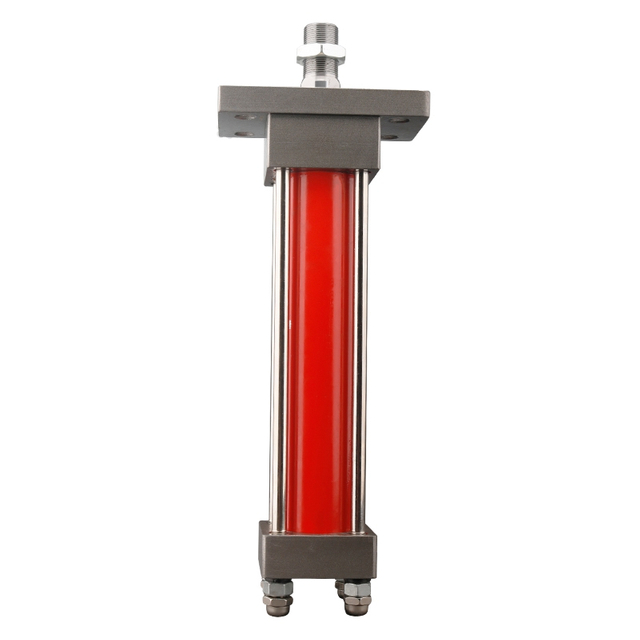
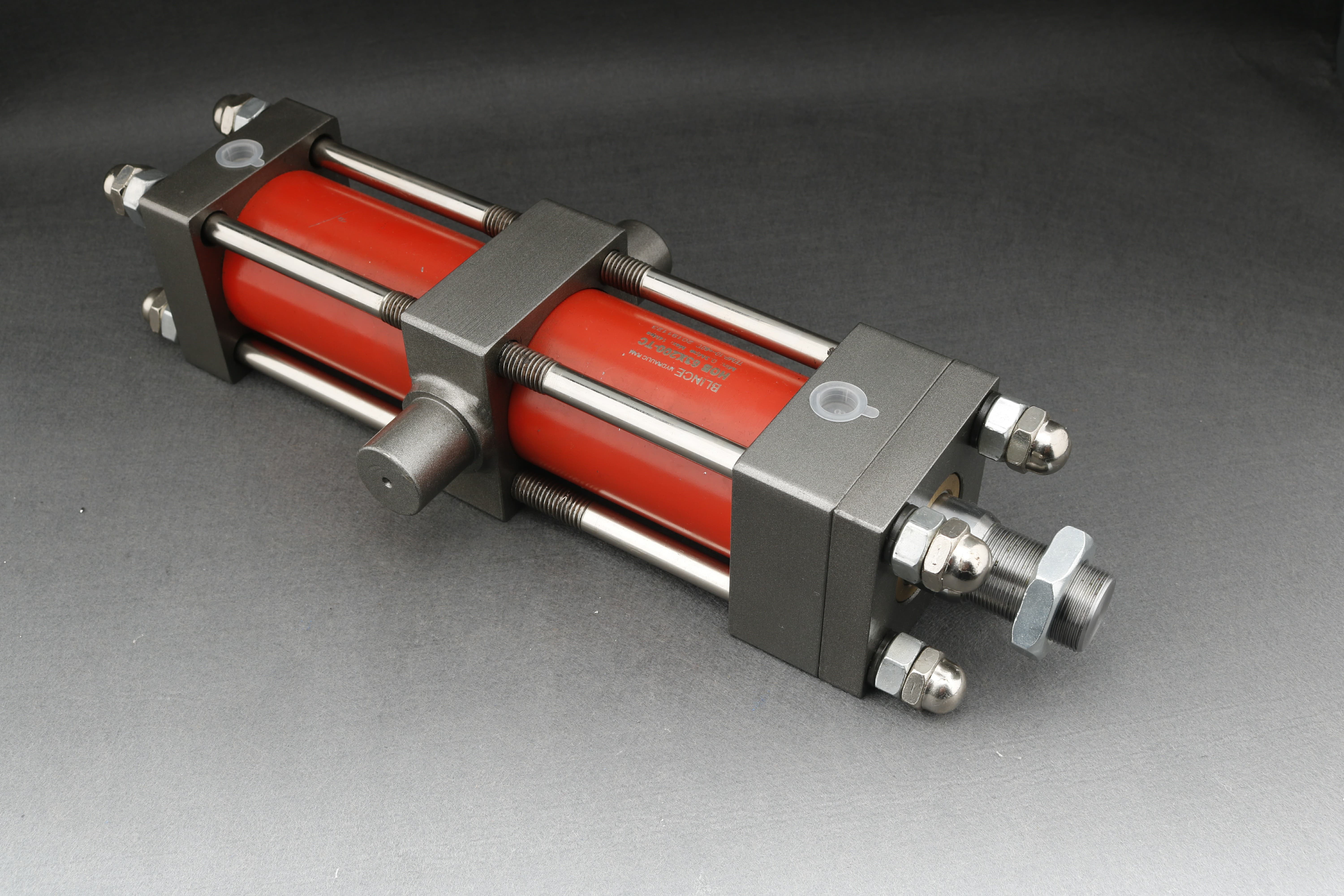
This is why the HOB series double acting hydraulic cylinders page is useful as a reference for bore, stroke, mounting, pressure range, and heavy-duty tie-rod style selection. The final choice still has to be matched to the machine, not only the catalog family.
Seal Kit Replacement: When It Helps and When It Does Not
A hydraulic cylinder seal kit can solve drift when the main issue is worn or damaged seals and the metal parts are still serviceable. It will not solve a bent rod, scored barrel, cracked piston, wrong valve, contaminated load holding valve, or side-loaded mount.
Before installing a seal kit, inspect:
rod straightness;
rod chrome condition;
barrel scoring;
piston wear;
gland wear;
seal groove damage;
wiper condition;
bearing and wear band condition;
contamination in the oil;
whether the old seal failed from age or from a repeat cause.
Seal orientation deserves real attention. Some seals look nearly identical until pressure direction is considered. Put one in backward and the leak may appear immediately. Material choice matters too: the seal that behaves well in a clean indoor press may have a short life on outdoor mobile equipment that sees heat, dirt, water, and side load.
When the same cylinder has already been rebuilt twice, the history is no longer background noise. It is evidence. Look harder at the linkage, valve leakage, oil cleanliness, barrel condition, and the reason the first two repairs did not last.
Cold Drift, Hot Drift, and Oil Viscosity
Temperature changes the diagnosis.
Cold oil is thicker. It leaks less through small clearances. A worn piston seal or valve spool may still hold acceptably during a short cold test. After the oil warms up, viscosity drops and leakage increases. That is when drift appears.
Hot drift often points toward clearance-related leakage:
worn piston seals;
valve spool leakage;
load holding valve leakage;
pump or motor leakage elsewhere in the circuit;
oil grade too thin for operating temperature.
But do not stop at oil viscosity. If the oil is getting too hot, the heat source should also be found. A hydraulic cylinder that drifts hot may be suffering from both internal leakage and a system overheating problem.
The oil cooler article Hydraulic Oil Cooler Sizing Guide can be linked after the cooling article is published with its exact URL. Until then, the Product News category can guide readers to related system temperature content.
Field Test Example: Boom Cylinder Settles Overnight
A compact machine came in with a boom cylinder that settled overnight. The rod was dry. The customer wanted a hydraulic cylinder rebuild kit because the cylinder looked old.
The first cold test was not very convincing. The boom held for twenty minutes in the shop. After the machine worked outside for an hour, the boom settled faster. That small detail changed the direction of the test.
With the boom safely supported, pressure was measured on both cylinder ports. The rod side pressure changed slowly while the valve was in neutral. When the cylinder ports were isolated safely, the boom movement slowed much more. That pointed away from the piston seal as the only fault. The directional valve and load holding circuit had to be checked.
The final finding was not dramatic. A small check valve had contamination on the seat, and the directional valve had more internal leakage than expected when hot. The cylinder seals were not perfect, but replacing only the seal kit would not have fixed the complaint. The repair included valve cleaning, oil filtration, and seal replacement because the cylinder was already apart.
The useful lesson is this: a drifting cylinder can have more than one leak path. Testing should find the biggest path first.
Field Test Example: Rebuilt Cylinder Still Leaks at the Rod
Another case looked simpler. A cylinder on a small press had a wet rod. The seal kit was replaced, and the leak returned within two weeks.
The second inspection found a narrow scratch on the rod that was hard to see until the rod was cleaned and rotated under light. The scratch crossed the seal lip every cycle. The gland bearing also showed uneven wear, and the rear mount had enough play to side-load the rod under pressure.
The first repair changed the seal. The second repair fixed the cause. The rod was repaired, the bearing was replaced, and the mounting pin was corrected. After that, the rod seal lasted.
This is why "hydraulic cylinder repair" should not mean "install seals and hope." A good repair asks why the old seals failed.
Replacement Cylinder Selection Checklist
When repair is not the best option, gather enough information before ordering a replacement hydraulic cylinder. A photo helps, but a photo is not a specification.
Item to Confirm
Field Note
Machine type
Dump trailer, press, loader, clamp, lift table, agricultural machine, etc.
Cylinder function
Lift, push, clamp, steer, tilt, swing, open, close
Drift, rod leak, bent rod, scored barrel, repeated seal failure
If the cylinder is part of a safety-critical load holding system, do not select by dimension alone. The valve and load holding arrangement must be reviewed with the cylinder.
Common Mistakes
1. Assuming a Dry Cylinder Is a Good Cylinder
Piston seal leakage is internal. The outside of the cylinder can be dry while the load still drifts. A clean rod does not clear the piston seal, valve, or load holding circuit.
2. Replacing Seals Without Inspecting the Metal
New seals cannot fix a scored barrel, bent rod, worn gland, damaged piston, or side-loaded mount. If seals fail again quickly, the metal parts and machine alignment need attention.
3. Blaming the Cylinder Before Checking the Valve
A directional valve can leak in neutral. A load holding valve can leak across a contaminated seat. A check valve can be piloted incorrectly. If the cylinder holds when isolated but drifts when connected, the valve side deserves attention.
4. Ignoring Hot Oil Behavior
A cold test may pass while the hot machine still drifts. Repeat important tests at working temperature when the complaint happens after the machine warms up.
5. Copying the Old Cylinder Without Asking Why It Failed
The old cylinder may have failed because of side load, wrong size, dirty oil, poor mounting, or an unsuitable seal material. Copying it exactly may copy the same weakness.
6. Treating Load Holding as a Cylinder Job Only
A cylinder creates force. A load holding circuit controls whether a load stays safely in place. For vertical or overrunning loads, the correct valve arrangement may be as important as the cylinder.
How Blince Can Help
Blince can review hydraulic cylinders together with hydraulic valves, pumps, hoses, fittings, gauges, and related hydraulic system components. That matters because cylinder drift is rarely proven by a photo alone.
For a useful recommendation, send:
machine type and function;
photos of the cylinder and mounting;
bore, rod, stroke, and pin-to-pin length;
port size and position;
working pressure and load direction;
whether the drift happens hot, cold, loaded, or unloaded;
whether the rod is leaking externally;
whether the cylinder was recently rebuilt;
valve type and any load holding valve information;
hose routing and recent service changes.
If the rebuild-or-replace decision is unclear, send photos of the rod surface, gland, piston, seals, and barrel when the cylinder is already open. If it has not been opened yet, start with machine photos, drift behavior, load direction, and any pressure readings available.
FAQ
What causes a hydraulic cylinder to drift?
Cylinder drift can be caused by piston seal leakage, directional valve leakage, load holding valve leakage, external leaks, air in the oil, side load, mechanical movement, or wrong circuit design. The drift direction and test results decide which cause is most likely.
Can a hydraulic cylinder drift without leaking oil outside?
Yes. Internal piston seal leakage can let oil pass from one side of the piston to the other without any visible external oil leak. Valve leakage can also cause movement while the cylinder body stays dry.
How do I know if the cylinder seal or control valve is leaking?
If it is safe, isolate the cylinder from the valve and watch whether the load still moves. If the cylinder holds when isolated but drifts when connected, the valve or load holding circuit is likely involved. Pressure readings on both ports help confirm the path.
Why does my hydraulic cylinder hold cold but drift hot?
Hot oil is thinner and leaks more easily through worn seals, valve clearances, and load holding valves. Hot drift often points to clearance-related leakage, but the reason the oil is hot should also be checked.
Will a hydraulic cylinder seal kit fix drift?
It will help if worn or damaged seals are the main cause and the rod, barrel, piston, gland, and alignment are still good. It will not fix valve leakage, side load, scored metal, or a wrong load holding circuit.
Why does a new hydraulic cylinder still drift?
The leak path may be in the valve, pilot check valve, counterbalance valve, hose routing, or circuit design. The replacement cylinder may also have the wrong bore, rod size, seal type, or mounting geometry for the load.
What is the difference between single acting and double acting hydraulic cylinder drift?
A double acting hydraulic cylinder has pressure connections on both sides of the piston, so leakage paths must be considered on both sides. A single acting cylinder often uses pressure in one direction and load, spring, or gravity in the other, so the return path and venting arrangement change the diagnosis.
Can a bent rod cause cylinder leakage?
Yes. A bent rod can side-load the gland and rod seal, causing repeated leakage. It can also damage bearings, wear bands, and the barrel. Replacing seals without correcting the rod or mounting usually leads to repeat failure.
What information should I send for hydraulic cylinder replacement?
Send bore, rod diameter, stroke, retracted and extended length, mounting style, pin size, port size, working pressure, load direction, machine type, photos, and the failure symptom. If you do not know the dimensions, clear photos with a ruler or caliper help.
Is cylinder drift dangerous?
It can be. Any cylinder holding a raised, suspended, clamped, or overrunning load can create a safety risk if it drifts. Mechanically support the load before testing or disconnecting hydraulic lines.
Conclusion
Hydraulic cylinder drift should not be diagnosed from the cylinder photo alone. A drifting load can come from piston seal leakage, valve leakage, load holding valve leakage, side load, hot oil, hose effects, or mechanical movement.
Start with the symptom. Record when the cylinder moves, which direction it moves, whether the oil is hot or cold, whether the pump is running, and whether the load is supported by a valve or by the cylinder alone. Then use pressure readings and safe isolation tests to separate the cylinder from the rest of the circuit.
For hydraulic cylinder repair, seal kit selection, or replacement cylinder sizing, send Blince the machine photos, cylinder dimensions, load direction, pressure, drift behavior, rod condition, valve information, and recent service history. A good recommendation should check the cylinder and the circuit together before choosing a final part.
This article is a general engineering guide. Final component selection should be based on machine drawings, measured hydraulic data, working conditions, safety requirements, and confirmation from a qualified hydraulic engineer or supplier.
Blince Hydraulic Team
Blince Hydraulic is an industry-leading company dedicated to precision-engineered fluid power manufacturing and custom hydraulic solutions. Backed by decades of deep field expertise in industrial machinery and thousands of successful global deployments, our engineering team focuses entirely on high-performance hydraulic component manufacturing, including specialized orbital motors, high-pressure travel drives motor, and robust directional control valves. Our production infrastructure utilizes state-of-the-art multi-axis CNC machining systems and is fully ISO 9001 certified to guarantee repeatable volumetric accuracy across every single manufacturing run.
We deliver fast, highly dependable, and cost-efficient hydraulic solutions to heavy industry distributors, machinery OEMs, and maintenance crews across more than 150 countries. Whether your active project calls for a small-volume batch of customized shaft profiles or a large-scale production run of severe-duty cast iron gear pump, we configure our flexible production schedules to meet your target lead times with total pricing predictability. Partnering with Blince means securing maximum system efficiency, elite material quality, and uncompromised fluid power professionalism.
To learn more about our complete product lineup, visit our official website: www.blince.com.